Book Details
Format
Paperback / softback
ISBN-10
1433111365
ISBN-13
9781433111365
Edition
New
Publisher
Peter Lang Publishing Inc
Imprint
Peter Lang Publishing Inc
Country of Manufacture
US
Country of Publication
GB
Publication Date
Sep 28th, 2012
Print length
169 Pages
Weight
278 grams
Dimensions
15.20 x 22.50 x 1.50 cms
Product Classification:
Communication studiesMedia studiesMedia studiesSocial theory
KSh 5,500.00
Manufactured on Demand
Delivery in 49 days
2 copies in stock
Delivery Location
Delivery fee: Select location
Delivery in 49 days
Secure
Quality
Fast
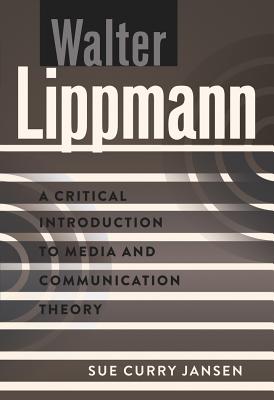
Walter Lippmann has been widely misrepresented in media and communication scholarship. Focusing primarily on his early career when Lippmann directly addressed the challenges posed to democracy by the emergence of new communication technologies, this book is part of that renaissance.
Walter Lippmann has been widely misrepresented in media and communication scholarship. Classified as a utilitarian and characterized as an antidemocratic adversary of philosopher John Dewey in a legendary debate in the 1920s about the role of the public in modern democracies, Lippmann has been portrayed as the bête noir of the post-1980s revival of pragmatism and humanistic studies within the field. Consequently, his formative contributions to the field have not only been under-valued, but more importantly, the richness and continuing relevance of his generative work to the challenges of the twenty-first century are largely under-appreciated.
There are, however, some recent signs of the beginnings of a Lippmann renaissance. Focusing primarily on his early career when Lippmann directly addressed the challenges posed to democracy by the emergence of new communication technologies, this book is part of that renaissance. It presents a radical reconsideration of Lippmann’s thought and legacy and offers a broad-based introduction to his theories of mass communication.
Arguing that he was a political ally rather than an adversary of Dewey as well as a humanist and a democrat, influenced by William James’ pragmatism and George Santayana’s critical realism, Jansen contends that Lippmann developed a fully formed social constructivism decades before Peter L. Berger and Thomas Luckman’s seminal 1966 treatise, The Social Construction of Reality. She boldly concludes that Lippmann deserves to be recognized as a founder of the field of media and communication research.
There are, however, some recent signs of the beginnings of a Lippmann renaissance. Focusing primarily on his early career when Lippmann directly addressed the challenges posed to democracy by the emergence of new communication technologies, this book is part of that renaissance. It presents a radical reconsideration of Lippmann’s thought and legacy and offers a broad-based introduction to his theories of mass communication.
Arguing that he was a political ally rather than an adversary of Dewey as well as a humanist and a democrat, influenced by William James’ pragmatism and George Santayana’s critical realism, Jansen contends that Lippmann developed a fully formed social constructivism decades before Peter L. Berger and Thomas Luckman’s seminal 1966 treatise, The Social Construction of Reality. She boldly concludes that Lippmann deserves to be recognized as a founder of the field of media and communication research.
Get Walter Lippmann by Sue Curry Jansen at the best price and quality guaranteed only at Werezi Africa's largest book ecommerce store. The book was published by Peter Lang Publishing Inc and it has 169 pages.
Customers Who Bought This Also Bought

Cultish
KSh 2,350.00

How to Read the Bible for All Its Worth
KSh 3,250.00

The Art of Fighting
KSh 3,950.00

The Gutenberg Galaxy
KSh 6,000.00
Persuasion and Power
KSh 4,850.00

Helping College Students Write
KSh 6,850.00
Persuasion in Society
KSh 17,100.00

Nonviolent Communication: A Language of Life
KSh 3,050.00

The Dynamics of Persuasion
KSh 9,800.00

Fundamental Issues, Measurement and Study Design
KSh 35,100.00

The Psychology of Clear Leadership Communication
KSh 30,950.00

Patterns in Language and Communication
KSh 18,800.00