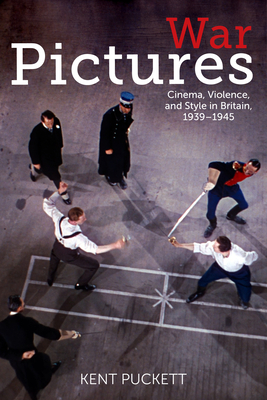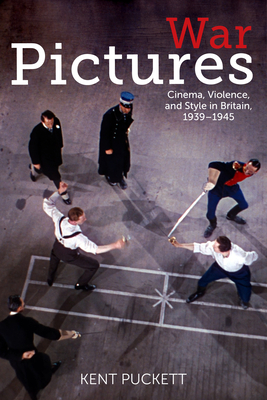
War Pictures : Cinema, Violence, and Style in Britain, 1939-1945
by
Kent Puckett
Book Details
Format
Paperback / softback
ISBN-10
0823276503
ISBN-13
9780823276509
Publisher
Fordham University Press
Imprint
Fordham University Press
Country of Manufacture
US
Country of Publication
GB
Publication Date
May 1st, 2017
Print length
288 Pages
Weight
352 grams
Dimensions
15.20 x 22.80 x 2.90 cms
Product Classification:
Film theory & criticism
KSh 4,850.00
Currently unavailable
0 in stock
Delivery Location
Delivery fee: Select location
Secure
Quality
Fast
In this original and engaging work, author Kent Puckett looks at how British filmmakers imagined, saw, and sought to represent its war during wartime through film. The Second World War posed unique representational challenges to Britain's filmmakers. Because of its logistical enormity, the unprecedented scope of its destruction, its conceptual status as total, and the way it affected everyday life through aerial bombing, blackouts, rationing, and the demands of total mobilization, World War II created new, critical opportunities for cinematic representation. Beginning with a close and critical analysis of Britain's cultural scene, War Pictures examines where the historiography of war, the philosophy of violence, and aesthetics come together. Focusing on three films made in Britain during the second half of the Second World War—Michael Powell and Emeric Pressburger's The Life and Death of Colonel Blimp (1943), Lawrence Olivier's Henry V (1944), and David Lean's Brief Encounter (1945)—Puckett treats these movies as objects of considerable historical interest but also as works that exploit the full resources of cinematic technique to engage with the idea, experience, and political complexity of war. By examining how cinema functioned as propaganda, criticism, and a form of self-analysis, War Pictures reveals how British filmmakers, writers, critics, and politicians understood the nature and consequence of total war as it related to ideas about freedom and security, national character, and the daunting persistence of human violence. While Powell and Pressburger, Olivier, and Lean developed deeply self-conscious wartime films, their specific and strategic use of cinematic eccentricity was an aesthetic response to broader contradictions that characterized the homefront in Britain between 1939 and 1945. This stylistic eccentricity shaped British thinking about war, violence, and commitment as well as both an answer to and an expression of a more general violence. Although War Pictures focuses on a particularly intense moment in time, Puckett uses that particularity to make a larger argument about the pressure that war puts on aesthetic representation, past and present. Through cinema, Britain grappled with the paradoxical notion that, in order to preserve its character, it had not only to fight and to win but also to abandon exactly those old decencies, those "sporting-club rules," that it sought also to protect.
Get War Pictures by Kent Puckett at the best price and quality guaranteed only at Werezi Africa's largest book ecommerce store. The book was published by Fordham University Press and it has 288 pages.
Customers Who Bought This Also Bought
Film Theory Goes to the Movies
KSh 8,350.00

Fassbinder Thousands of Mirrors
KSh 2,350.00

Mark Kermode''s Surround Sound
KSh 3,400.00
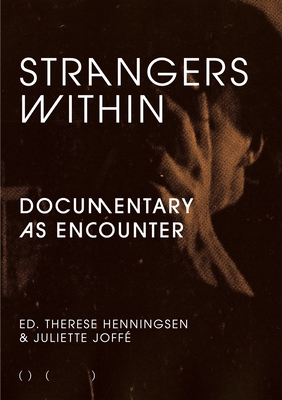
Strangers Within
KSh 2,700.00

Marvel Studios'' The Infinity Saga - Black Panther: The Art of the Movie
KSh 6,650.00
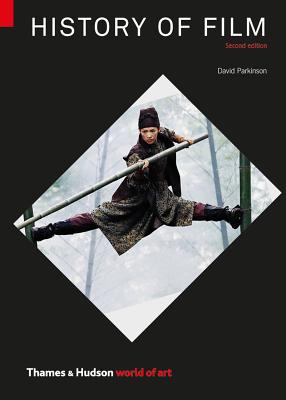
History of Film
KSh 2,550.00

Greta Gerwig’s Barbie
KSh 4,700.00
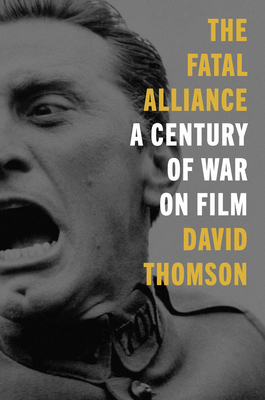
The Fatal Alliance
KSh 4,500.00
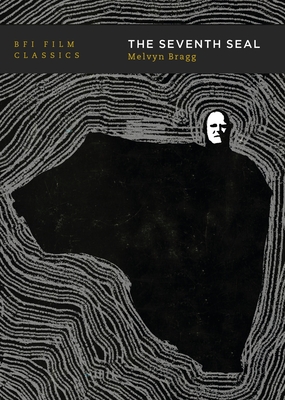
Seventh Seal
KSh 2,350.00
Disaster Mon Amour
KSh 3,400.00

Spider-Man
KSh 9,550.00
Revolutionary Melodrama
KSh 9,250.00