

Water Reuse : Understanding Public Perception and Participation
Book Details
Format
Paperback / softback
Book Series
WERF Research Report Series
ISBN-10
1843396696
ISBN-13
9781843396697
Publisher
IWA Publishing
Imprint
IWA Publishing
Country of Manufacture
GB
Country of Publication
GB
Publication Date
Jun 30th, 2003
Print length
193 Pages
Weight
508 grams
Dimensions
28.00 x 21.20 x 1.50 cms
Product Classification:
Water supply & treatmentWater supply and treatment
KSh 26,100.00
Werezi Extended Catalogue
Delivery in 12 days
7 copies in stock
Delivery Location
Delivery fee: Select location
Delivery in 12 days
Secure
Quality
Fast
Non-potable and potable (principally in-direct potable) water reuse initiatives in the United States have faced increasing public opposition. Several high-profile initiatives have been halted after several years of planning and tremendous expenditures. To understand why the public holds the perceptions they do and what public participation options exist to address water reuse more constructively, a multidisciplinary analysis was undertaken by a team of social scientists, engineers, and water professionals. Through a comprehensive literature review, three in-depth case studies, and a 2-day interactive symposium this framework was developed for water professionals. The framework summarizes five underlying principles that contribute to shaping public perception and acts as a guide for water professionals in their selection of public outreach, education, and participation activities. Adhering to the principles outlined in this report contributes to building public confidence and trust, which in turn helps water utilities engage constructively with the public on challenging, contentious issues. The five principles are: ? Manage information for all ? Maintain individual motivation and demonstrate organizational commitment ? Promote communication and public dialog ? Ensure fair and sound decision making and decisions ? Build and maintain trust However, no checklist of "to-do''s" exists for establishing public confidence and trust. Quite the opposite, this research suggests that a one-size-fits-all model cannot work because the most appropriate ways to achieve the principles can vary from case to case. Thus, the framework includes an analytical structure to assess the community in which a water reuse initiative is underway. Using diagnostic questions and analytical techniques, a comprehensive picture of the community can be generated and monitored over time. Through application of the diagnostic tools and a commitment to the principles outlined above, water professionals can build the public confidence and trust they need to engage with the public on difficult water reuse issues.
Get Water Reuse by T. W. Hartley at the best price and quality guaranteed only at Werezi Africa's largest book ecommerce store. The book was published by IWA Publishing and it has 193 pages.
Customers Who Bought This Also Bought

Hydroworks and Underflows
KSh 15,800.00
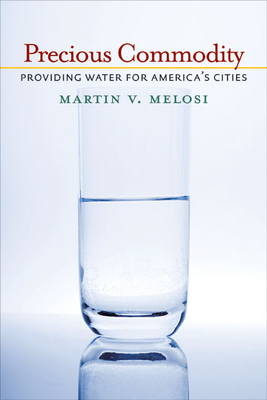
Precious Commodity
KSh 9,400.00
Sustainable Development in Energy and Environment
KSh 36,000.00
Green Methods for Wastewater Treatment
KSh 23,400.00
Novel Materials for Dye-containing Wastewater Treatment
KSh 23,400.00

Progress on Transboundary Water Cooperation Under the Water Convention
KSh 6,500.00

Water and Development
KSh 16,200.00

Land and Disaster Management Strategies in Asia
KSh 25,200.00
Water and Disasters
KSh 26,100.00

Impacts of Shallow Geothermal Energy on Groundwater Quality
KSh 25,200.00

Water, Power and Citizenship
KSh 16,200.00

Water Politics and Political Culture
KSh 8,100.00
More in This Genre
Hydroworks and Underflows
KSh 15,800.00
Precious Commodity
KSh 9,400.00
Sustainable Development in Energy and Environment
KSh 36,000.00
Green Methods for Wastewater Treatment
KSh 23,400.00
Novel Materials for Dye-containing Wastewater Treatment
KSh 23,400.00
Progress on Transboundary Water Cooperation Under the Water Convention
KSh 6,500.00
