
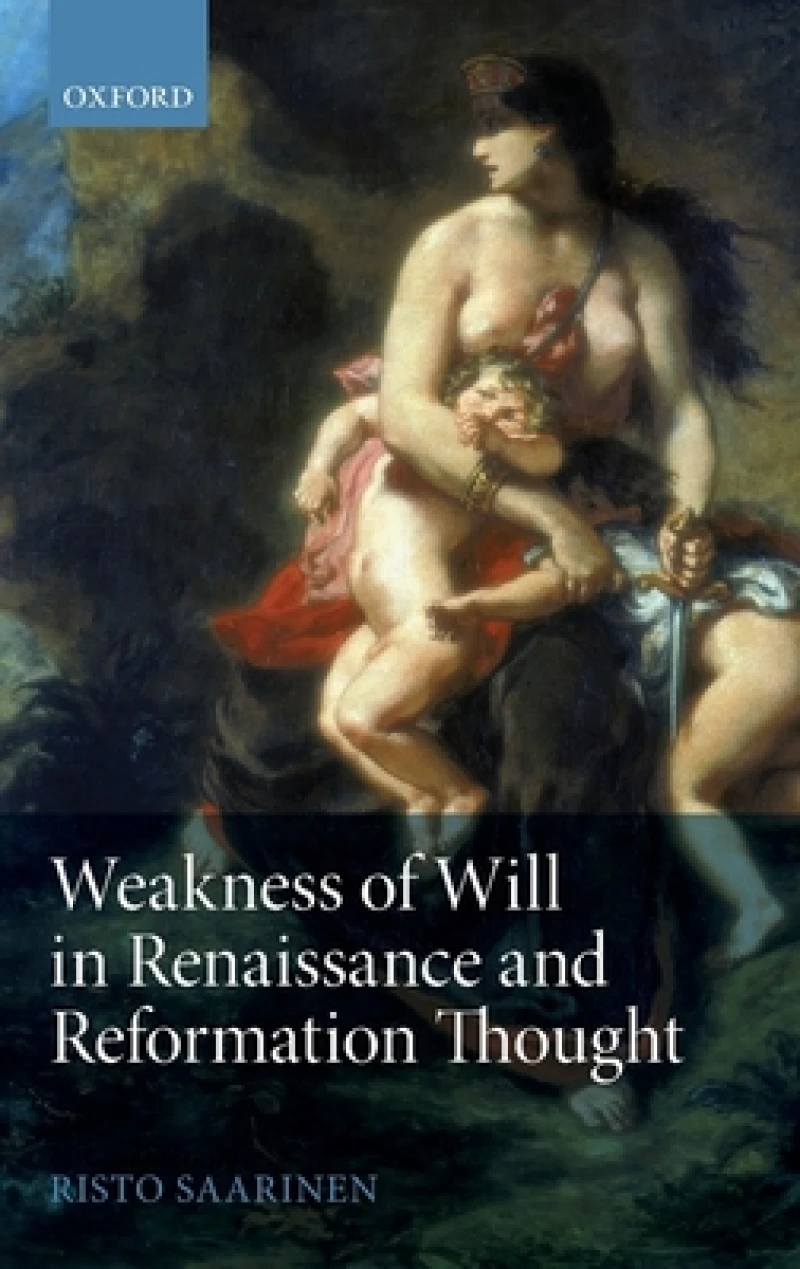
Weakness of Will in Renaissance and Reformation Thought
Book Details
Format
Hardback or Cased Book
ISBN-10
0199606811
ISBN-13
9780199606818
Publisher
Oxford University Press
Imprint
Oxford University Press
Country of Manufacture
GB
Country of Publication
GB
Publication Date
Jun 30th, 2011
Print length
258 Pages
Weight
540 grams
Dimensions
23.90 x 16.10 x 1.90 cms
Ksh 17,850.00
Manufactured on Demand
0 in stock
Delivery Location
Delivery fee: Select location
Secure
Quality
Fast
The question of why people act against their better judgment has always been prominent in philosophy. Risto Saarinen presents the first study of ideas about weakness of the will between 1350 and 1650. He shows how the understanding of human conduct and free will changed in this formative period between medieval times and modernity.
Weakness of will, the phenomenon of acting contrary to one''s own better judgment, has remained a prominent discussion topic of philosophy. The history of this discussion in ancient, medieval, and modern times has been outlined in many studies. Weakness of Will in Renaissance and Reformation Thought is, however, the first book to cover the fascinating source materials on weakness of will between 1350 and 1650. In addition to considering the work of a broad range of Renaissance authors (including Petrarch, Donato Acciaiuoli, John Mair, and Francesco Piccolomini), Risto Saarinen explores the theologically coloured debates of the Reformation period, such as those provided by Martin Luther, Philip Melanchthon, John Calvin, and Lambert Daneau. He goes on to discuss the impact of these authors on prominent figures of early modernity, including Shakespeare, Descartes, Spinoza, and Leibniz.While most of the historical research on weakness of will has focused on the reception history of Aristotle''s Nicomachean Ethics, Saarinen pays attention to the Platonic and Stoic discussions and their revival during the Renaissance and the Reformation. He also shows the ways in which Augustine''s discussion of the divided will is intertwined with the Christian reception of ancient Greek ethics, and argues that the theological underpinnings of early modern authors do not rule out weakness of will, but transform the philosophical discussion and lead it towards new solutions.
Get Weakness of Will in Renaissance and Reformation Thought by at the best price and quality guaranteed only at Werezi Africa's largest book ecommerce store. The book was published by Oxford University Press and it has pages.

