
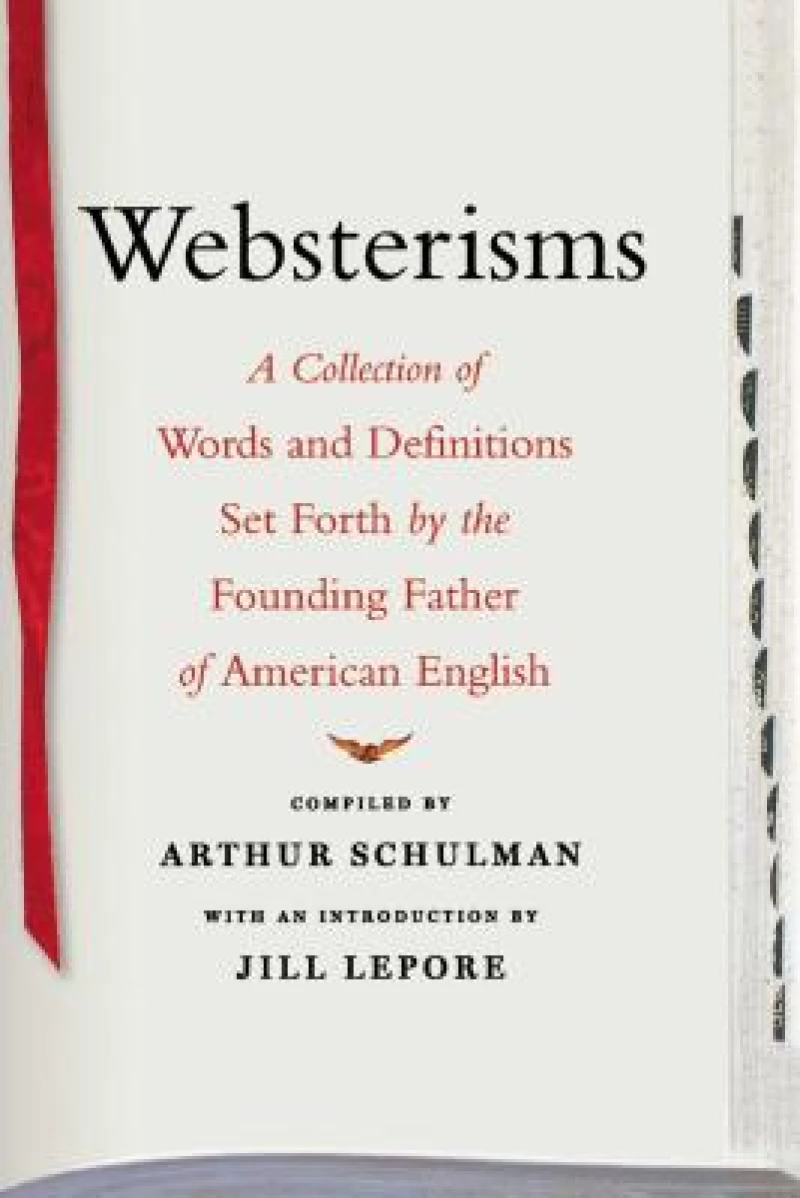
Websterisms : A Collection of Words and Definitions Set Forth by the Founding Father of American English
Annotated
Book Details
Format
Paperback / Softback
ISBN-10
1416577017
ISBN-13
9781416577010
Edition
Annotated
Publisher
Simon & Schuster
Imprint
The Free Press
Country of Manufacture
GB
Country of Publication
GB
Publication Date
Nov 15th, 2010
Print length
304 Pages
Weight
449 grams
Dimensions
22.90 x 15.20 x 1.70 cms
Ksh 3,600.00
Manufactured on Demand
0 in stock
Delivery Location
Delivery fee: Select location
Secure
Quality
Fast
"A national language is a national tie, and what country wants it more than America?"
-- Noah Webster
What makes American English American? In 1800, irascible patriot Noah Webster set out to answer this question by tirelessly recording the vocabulary of a novel breed -- the American citizen. Though he was a political conservative, his American Dictionary of the English Language was born out of his deeply held and profoundly democratic conviction that language was by and for the people. A word''s popularity, no matter how lowly its origins, was its criterion for inclusion. Webster''s original American dictionary, the granddaddy of them all, helped define the American character.
In a light-footed introductory essay, Harvard historian and New Yorker contributor Jill Lepore brilliantly revives the curmudgeonly Webster: his rigor, his passion for words, and his paradoxical ideas about language and politics. Arthur Schulman, longtime crossword puzzle creator for The New York Times, has culled fifteen hundred of Webster''s entries from the original book, revealing Webster''s interpretive powers as well as his pervasive moralism. Incisively annotated and delightfully illustrated with quotes from contemporary American sources, these excerpts paint a fascinating picture of a budding Republic.
For everyone who''s ever gone to "look it up in Webster''s" Websterisms offers a crisp new view both of the man justifiably called the Founding Father of American English and of his magnum opus. It took Webster twenty-eight years to compile and publish his monumental work, during which time he was much mocked: what could American English be but a perversion of the King''s English? But his dictionary stuck, and its influence grew and grew. We still use most of the words Webster defined, like spank and caucus. Others, like musquash, haven''t fared as well. Websterisms tells the tale of a language that once was and that lives on.
-- Noah Webster
What makes American English American? In 1800, irascible patriot Noah Webster set out to answer this question by tirelessly recording the vocabulary of a novel breed -- the American citizen. Though he was a political conservative, his American Dictionary of the English Language was born out of his deeply held and profoundly democratic conviction that language was by and for the people. A word''s popularity, no matter how lowly its origins, was its criterion for inclusion. Webster''s original American dictionary, the granddaddy of them all, helped define the American character.
In a light-footed introductory essay, Harvard historian and New Yorker contributor Jill Lepore brilliantly revives the curmudgeonly Webster: his rigor, his passion for words, and his paradoxical ideas about language and politics. Arthur Schulman, longtime crossword puzzle creator for The New York Times, has culled fifteen hundred of Webster''s entries from the original book, revealing Webster''s interpretive powers as well as his pervasive moralism. Incisively annotated and delightfully illustrated with quotes from contemporary American sources, these excerpts paint a fascinating picture of a budding Republic.
For everyone who''s ever gone to "look it up in Webster''s" Websterisms offers a crisp new view both of the man justifiably called the Founding Father of American English and of his magnum opus. It took Webster twenty-eight years to compile and publish his monumental work, during which time he was much mocked: what could American English be but a perversion of the King''s English? But his dictionary stuck, and its influence grew and grew. We still use most of the words Webster defined, like spank and caucus. Others, like musquash, haven''t fared as well. Websterisms tells the tale of a language that once was and that lives on.
Get Websterisms by at the best price and quality guaranteed only at Werezi Africa's largest book ecommerce store. The book was published by Simon & Schuster and it has pages.

