

Welfare Goes Global : Making Progress and Catching Up
by
Richard Rose
Book Details
Format
Hardback
ISBN-10
0198908466
ISBN-13
9780198908463
Publisher
Oxford University Press
Imprint
Oxford University Press
Country of Manufacture
GB
Country of Publication
GB
Publication Date
Feb 8th, 2024
Print length
224 Pages
Weight
508 grams
Dimensions
24.10 x 16.40 x 2.10 cms
Product Classification:
Population & demographyPopulation and demographyComparative politicsPublic administrationPublic administration / Public policyDevelopment economics & emerging economiesDevelopment economics and emerging economiesPolitical economyHealth economicsWelfare economicsHealth economicsWelfare economics
KSh 16,400.00
Currently unavailable
0 in stock
Delivery Location
Delivery fee: Select location
Secure
Quality
Fast
In this innovative book, Richard Rose draws on a systematic analysis of the Global Welfare Database to explore the globalization of welfare over the last three decades, and to examine its impact on the health, education, and employment of billions of people across the world.
This innovative book shows that the health, education, and employment of billions of people have been improving on every continent in the past three decades. The globalization of welfare has had the biggest impact in developing countries, where more than five-sixths of the world''s population lives. In Africa, Asia, Latin America, and the Middle East there has been great progress in eradicating infant mortality and illiteracy, people are living longer, and more young people are able to obtain a secondary education. These achievements are the product of a welfare mix combining resources of the household, the market, and the state. Given low starting points, only a minority of developing countries have already caught up with the high standards of welfare in Europe, the United States and Canada, and the Asia Pacific region. Slow but steady rates of progress show that people in a majority of developing countries can expect to catch up with the high, fixed standards of welfare in the next three decades. This will happen sooner in China and later in India, because China has been unusually successful in using its resources to promote welfare while India has been below the global average. These conclusions are based on Richard Rose''s systematic analysis of the Global Welfare Database, which combines official and unofficial data covering 95 per cent of the world''s population. The success of highly developed countries raises questions about how much is enough welfare. At what age will young people learn more by leaving classrooms and becoming employees? Is length of life or quality of life more important for older people? Should unpaid work caring for children and older family members have the same value as working and paying taxes in the official economy?
Get Welfare Goes Global by Richard Rose at the best price and quality guaranteed only at Werezi Africa's largest book ecommerce store. The book was published by Oxford University Press and it has 224 pages.
Customers Who Bought This Also Bought

Risky Behavior among Youths – An Economic Analysis
KSh 18,000.00

Causes and Consequences of Human Migration
KSh 18,200.00

Reproductive Rights and Wrongs
KSh 3,950.00
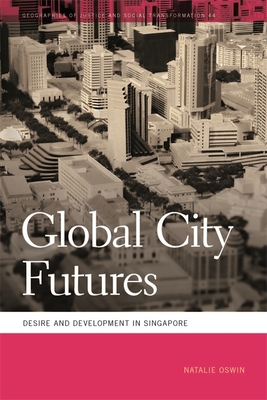
Global City Futures
KSh 22,600.00
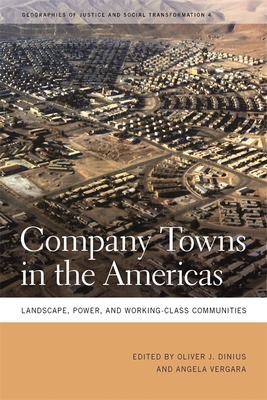
Company Towns in the Americas
KSh 5,400.00
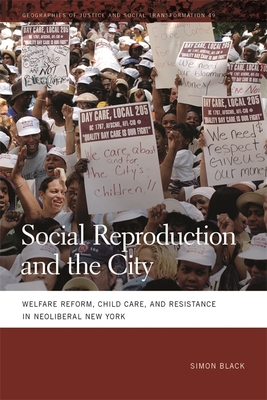
Social Reproduction and the City
KSh 22,600.00

Shadows of a Sunbelt City – The Environment, Racism, and the Knowledge Economy in Austin
KSh 15,050.00

Nuked
KSh 26,700.00

From Roots to Roses – The Autobiography of Tilda Kemplen
KSh 4,600.00

North Mississippi Homeplace
KSh 10,450.00
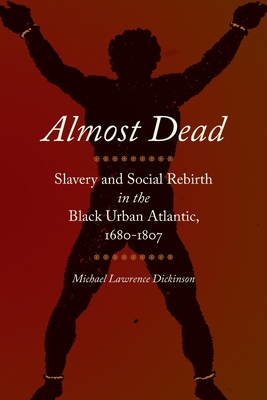
Almost Dead
KSh 5,450.00
Company Towns in the Americas
KSh 14,800.00
More by Richard Rose

Life Story Therapy with Traumatized Children
KSh 5,050.00

How Russia Votes
KSh 12,050.00
The Postmodern President
KSh 12,050.00

Redefining the Whole Curriculum for Pupils with Learning Difficulties
KSh 23,650.00

The International Almanac of Electoral History
KSh 23,400.00

Lesson-drawing in Public Policy
KSh 12,050.00

The disruption of the British party system
KSh 15,300.00

Russia Transformed
KSh 17,100.00

Taxation by Political Inertia
KSh 16,600.00

Elections Without Order
KSh 17,800.00

Taxation by Political Inertia
KSh 5,300.00

How Referendums Challenge European Democracy
KSh 14,400.00
