
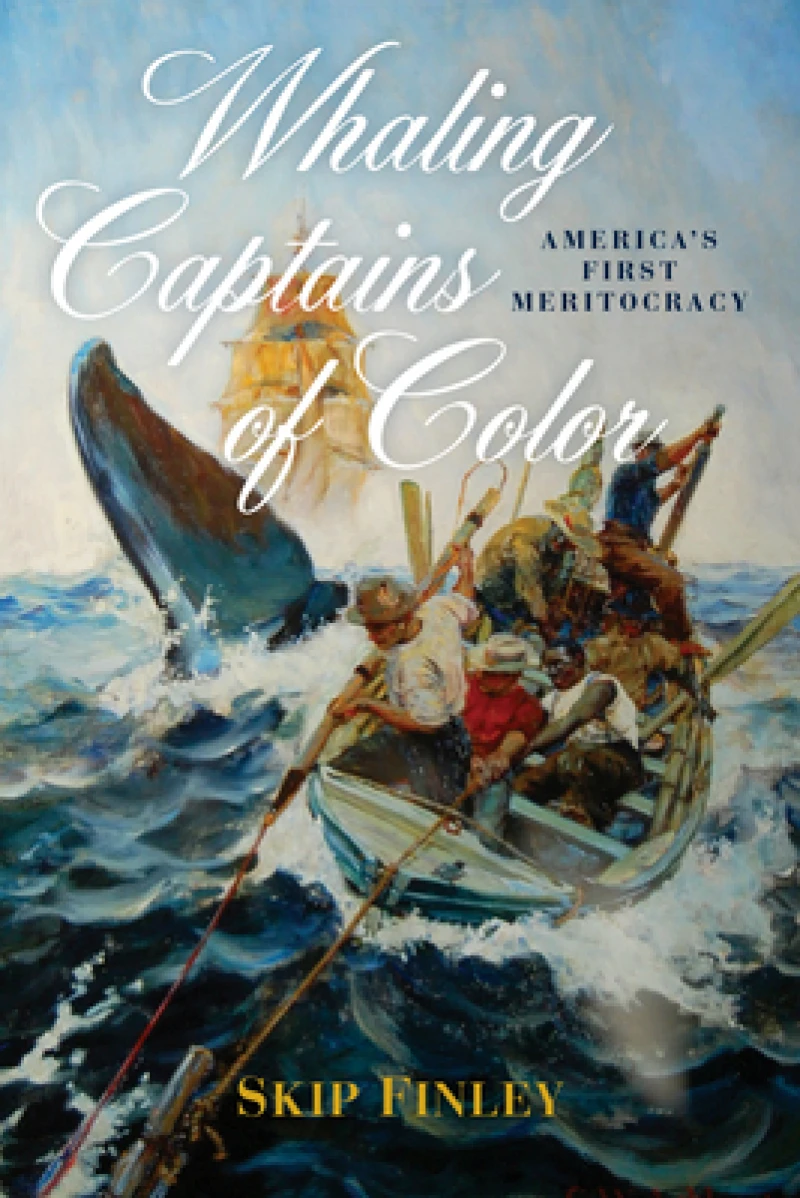
Whaling Captains of Color : America's First Meritocracy
by
Skip Finley
Book Details
Format
Hardback or Cased Book
ISBN-10
1682475093
ISBN-13
9781682475096
Publisher
Naval Institute Press
Imprint
Naval Institute Press
Country of Manufacture
US
Country of Publication
GB
Publication Date
Jul 30th, 2020
Print length
304 Pages
Weight
652 grams
Dimensions
16.60 x 24.20 x 2.90 cms
Product Classification:
History of the AmericasSocial & cultural historyMaritime historyBlack & Asian studies
Ksh 5,950.00
Re-Printing
0 in stock
Delivery Location
Delivery fee: Select location
Secure
Quality
Fast
Whaling was the first American industry to exhibit any diversity. Working with archival records at museums, in libraries, archives and interviews with people whose ancestors were whaling masters, Finley culls stories from the lives of 54 black whaling captains to create a portrait of what life was like for these leaders of colour on the high seas.
The history of whaling as an industry on this continent has been well-told in books, including some that have been bestsellers, but what hasn‘t been told is the story of whaling‘s leaders of color in an era when the only other option was slavery. Whaling was one of the first American industries to exhibit diversity. A man became a captain not because he was white or well connected, but because he knew how to kill a whale. Along the way, he could learn navigation and reading and writing. Whaling presented a tantalizing alternative to mainland life. Working with archival records at whaling museums, in libraries, from private archives and interviews with people whose ancestors were whaling masters, Finley culls stories from the lives of over 50 black whaling captains to create a portrait of what life was like for these leaders of color on the high seas. Each time a ship spotted a whale, a group often including the captain would jump into a small boat, row to the whale, and attack it, at times with the captain delivering the killing blow. The first, second, or third mate and boat steerer could eventually have opportunities to move into increasingly responsible roles. Finley explains how this skills-based system propelled captains of color to the helm. The book concludes as facts and factions conspire to kill the industry, including wars, weather, bad management, poor judgment, disease, obsolescence, and a non-renewable natural resource. Ironically, the end of the Civil War allowed the African Americans who were captains to exit the difficult and dangerous occupation—and make room for the Cape Verdean who picked up the mantle, literally to the end of the industry.
Get Whaling Captains of Color by at the best price and quality guaranteed only at Werezi Africa's largest book ecommerce store. The book was published by Naval Institute Press and it has pages.

