
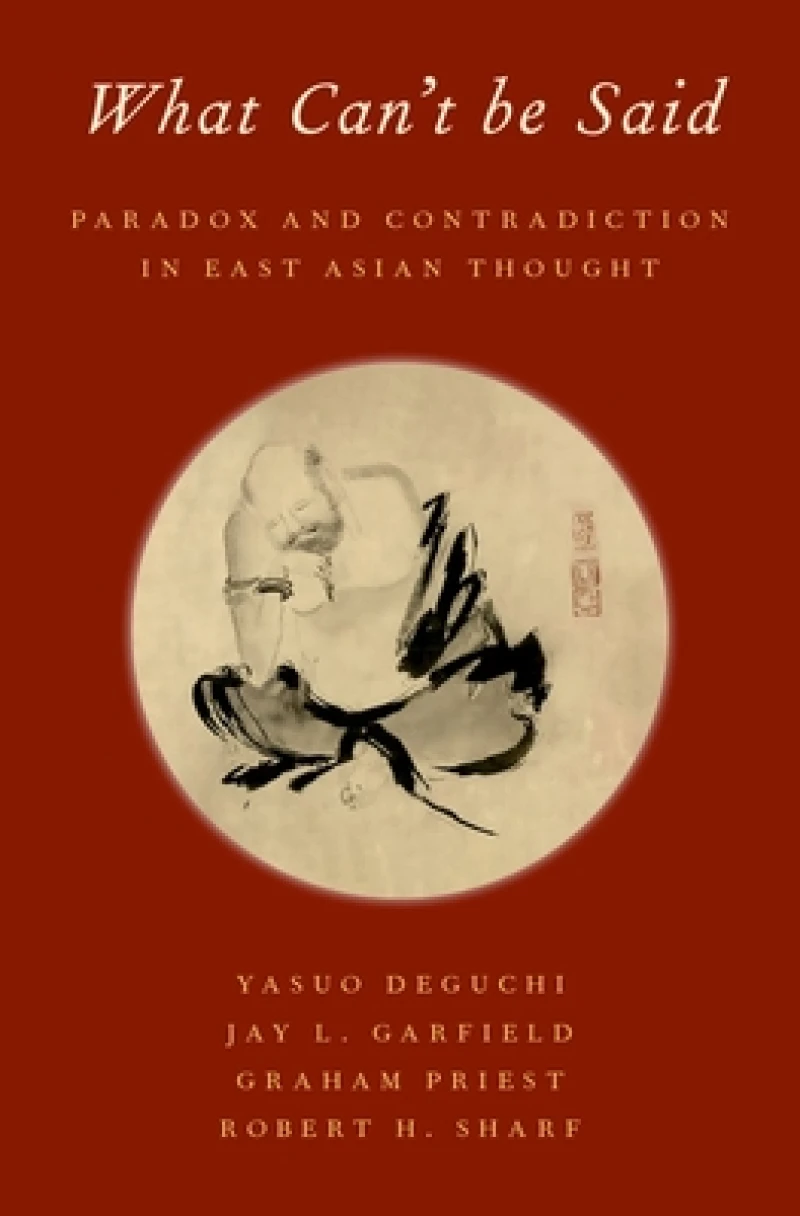
What Can't be Said : Paradox and Contradiction in East Asian Thought
Book Details
Format
Hardback or Cased Book
ISBN-10
0197526187
ISBN-13
9780197526187
Publisher
Oxford University Press Inc
Imprint
Oxford University Press Inc
Country of Manufacture
US
Country of Publication
GB
Publication Date
Apr 21st, 2021
Print length
204 Pages
Weight
362 grams
Dimensions
21.70 x 14.70 x 2.20 cms
Product Classification:
PhilosophyPhilosophy of religionBuddhismTaoismHistory of ideas
Ksh 15,800.00
Werezi Extended Catalogue
0 in stock
Delivery Location
Delivery fee: Select location
Secure
Quality
Fast
This multi-authored monograph argues that the use of paradox and contradictions, in contrast to in typical Western thought, can deepen rather than disprove philosophical thought and discussion. Here the authors apply this view to East Asian philosophy, examining two classical Daoist texts, the Daodejing and the Zhuangzi, and the trajectory of Buddhism in East Asia, including the San Lun, Tiantai, Chan, and Zen traditions, culminating with the Kyoto school of philosophy in the twentieth century. The work ultimately concludes that contradictory positions illuminate deeper understandings of inconsistencies in reality and in the world.
Typically, in the Western philosophical tradition, the presence of paradox and contradictions is taken to signal the failure or refutation of a theory or line of thinking. This aversion to paradox rests on the commitment-whether implicit or explicit-to the view that reality must be consistent.In What Can''t be Said, Yasuo Deguchi, Jay L. Garfield, Graham Priest, and Robert H. Sharf extend their earlier arguments that the discovery of paradox and contradiction can deepen rather than disprove a philosophical position, and confirm these ideas in the context of East Asian philosophy. They claim that, unlike most Western philosophers, many East Asian philosophers embraced paradox, and provide textual evidence for this claim. Examining two classical Daoist texts, the Daodejing and the Zhaungzi, as well as the trajectory of Buddhism in East Asia, including works from the Sanlun, Tiantai, Chan, and Zen traditions and culminating with the Kyoto school of philosophy, they argue that these philosophers'' commitment to paradox reflects an understanding of reality as inherently paradoxical, revealing significant philosophical insights.
Get What Can't be Said by at the best price and quality guaranteed only at Werezi Africa's largest book ecommerce store. The book was published by Oxford University Press Inc and it has pages.

