
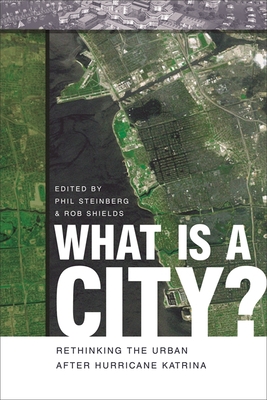
What Is a City? : Rethinking the Urban after Hurricane Katrina
Book Details
Format
Paperback / softback
ISBN-10
0820330949
ISBN-13
9780820330945
Publisher
University of Georgia Press
Imprint
University of Georgia Press
Country of Manufacture
US
Country of Publication
GB
Publication Date
May 1st, 2008
Print length
248 Pages
Weight
567 grams
Dimensions
22.90 x 15.20 x 1.50 cms
KSh 5,500.00
Currently unavailable
0 in stock
Delivery Location
Delivery fee: Select location
Secure
Quality
Fast
The devastation brought upon New Orleans by Hurricane Katrina and the subsequent levee system failure has forced urban theorists to revisit the fundamental question of urban geography and planning: What is a city? These essays unpack post-Katrina discourse, examining what expert and public responses tell us about current attitudes.
The devastation brought upon New Orleans by Hurricane Katrina and the subsequent levee system failure has forced urban theorists to revisit the fundamental question of urban geography and planning: What is a city? Is it a place of memory embedded in architecture, a location in regional and global networks, or an arena wherein communities form and reproduce themselves?Planners, architects, policymakers, and geographers from across the political spectrum have weighed in on how best to respond to the destruction wrought by Hurricane Katrina. The thirteen contributors to What Is a City? are a diverse group from the disciplines of anthropology, architecture, geography, philosophy, planning, public policy studies, and sociology, as well as community organizing. They believe that these conversations about the fate of New Orleans are animated by assumptions and beliefs about the function of cities in general. They unpack post-Katrina discourse, examining what expert and public responses tell us about current attitudes not just toward New Orleans, but toward cities. As volume coeditor Phil Steinberg points out in his introduction, “Even before the floodwaters had subsided . . . scholars and planners were beginning to reflect on Hurricane Katrina and its disastrous aftermath, and they were beginning to ask bigger questions with implications for cities as a whole.”The experience of catastrophe forces us to reconsider not only the material but the abstract and virtual qualities of cities. It requires us to revisit how we think about, plan for, and live in them.
Get What Is a City? at the best price and quality guaranteed only at Werezi Africa's largest book ecommerce store. The book was published by University of Georgia Press and it has 248 pages.
Customers Who Bought This Also Bought

We Wish to Inform You That Tomorrow We Will Be Killed With Our Families
KSh 2,150.00

Shock Doctrine
KSh 3,050.00
Plague Year
KSh 2,000.00

Famine in Cambodia
KSh 26,700.00
Living Conditions, Disasters and Development
KSh 5,050.00

Second Language Learning and the COVID-19 Pandemic
KSh 21,250.00

Famine in Cambodia
KSh 6,650.00
Minority Citizens in Disasters
KSh 5,500.00
Silent Violence – Food, Famine, and Peasantry in Northern Nigeria
KSh 9,350.00

The Weather Report
KSh 3,250.00
Bush Wives and Girl Soldiers
KSh 16,550.00

Anti-Catastrophe League
KSh 2,000.00