
Cart 0
What Is Art for?
Click to zoom

Share this book

What Is Art for?

Book Details

Format Paperback / Softback
Book Series What Is Art for?
ISBN-10 0295970170
ISBN-13 9780295970172
Publisher University of Washington Press
Imprint University of Washington Press
Country of Manufacture US
Country of Publication GB
Publication Date Jun 1st, 1990
Print length 275 Pages
Weight 428 grams
Dimensions 15.70 x 23.00 x 1.70 cms
Product Classification: Theory of artAnthropology
Ksh 5,900.00
Werezi Extended Catalogue Delivery in 14 days 2 copies in stock

Delivery Location

Delivery fee: Select location

Delivery in 14 days

Secure
Quality
Fast
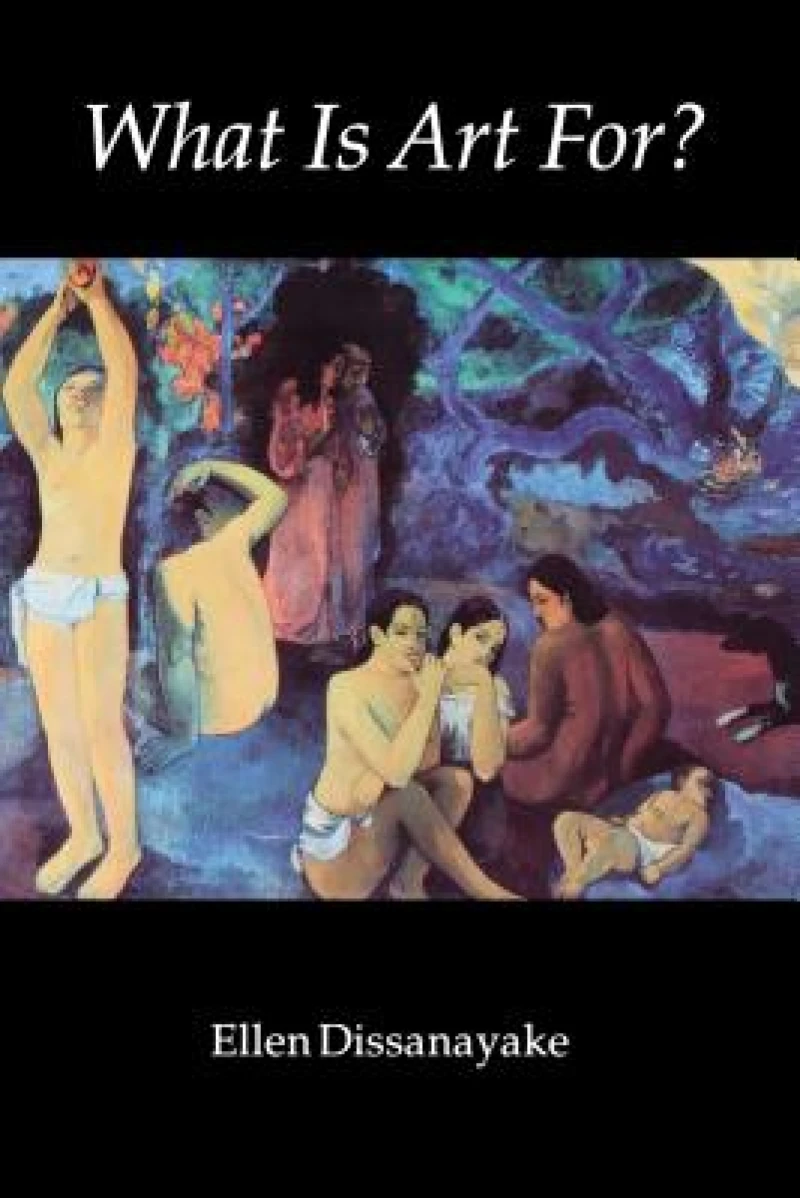
Every human society displays some form of behavior that can be called "art," and in most societies other than our own the arts play an integral part in social life. Those who wish to understand art in its broadest sense, as a universal human endowment, need to go beyond modern Western elitist notions that disregard other cultures and ignore the human species' four-million-year evolutionary history. This book offers a new and unprecedentedly comprehensive theory of the evolutionary significance of art. Art, meaning not only visual art, but music, poetic language, dance, and performance, is for the first time regarded from a biobehavioral or ethical viewpoint. It is shown to be a biological necessity in human existence and fundamental characteristic of the human species. In this provocative study, Ellen Dissanayake examines art along with play and ritual as human behaviors that "make special," and proposes that making special is an inherited tendency as intrinsic to the human species as speech and toolmaking. She claims that the arts evolved as means of making socially important activities memorable and pleasurable, and thus have been essential to human survival. Avoiding simplism and reductionism, this original synthetic approach permits a fresh look at old questions about the origins, nature, purpose, and value of art. It crosses disciplinary boundaries and integrates a number of divers fields: human ethology; evolutionary biology; the psychology and philosophy of art; physical and cultural anthropology; "primitive" and prehistoric art; Western cultural history; and children's art. The final chapter, "From Tradition to Aestheticism," explores some of the ways in which modern Western society has diverged from other societies--particularly the type of society in which human beings evolved--and considers the effects of the aberrance on our art and our attitudes toward art. This book is addressed to readers who have a concerned interest in the arts or in human nature and the state of modern society.

Every human society displays some form of behavior that can be called “art,” and in most societies other than our own the arts play an integral part in social life. Those who wish to understand art in its broadest sense, as a universal human endowment, need to go beyond modern Western elitist notions that disregard other cultures and ignore the human species’ four-million-year evolutionary history.

This book offers a new and unprecedentedly comprehensive theory of the evolutionary significance of art. Art, meaning not only visual art, but music, poetic language, dance, and performance, is for the first time regarded from a biobehavioral or ethical viewpoint. It is shown to be a biological necessity in human existence and fundamental characteristic of the human species.

In this provocative study, Ellen Dissanayake examines art along with play and ritual as human behaviors that “make special,” and proposes that making special is an inherited tendency as intrinsic to the human species as speech and toolmaking. She claims that the arts evolved as means of making socially important activities memorable and pleasurable, and thus have been essential to human survival.

Avoiding simplism and reductionism, this original synthetic approach permits a fresh look at old questions about the origins, nature, purpose, and value of art. It crosses disciplinary boundaries and integrates a number of divers fields: human ethology; evolutionary biology; the psychology and philosophy of art; physical and cultural anthropology; “primitive” and prehistoric art; Western cultural history; and children’s art. The final chapter, “From Tradition to Aestheticism,” explores some of the ways in which modern Western society has diverged from other societies--particularly the type of society in which human beings evolved--and considers the effects of the aberrance on our art and our attitudes toward art.

This book is addressed to readers who have a concerned interest in the arts or in human nature and the state of modern society.


Get What Is Art for? by at the best price and quality guaranteed only at Werezi Africa's largest book ecommerce store. The book was published by University of Washington Press and it has pages.


Mind, Body, & Spirit

Price

Ksh 5,900.00

Shopping Cart

Africa largest book store

Sub Total:
Ebooks

Digital Library
Coming Soon

Our digital collection is currently being curated to ensure the best possible reading experience on Werezi. We'll be launching our Ebooks platform shortly.