
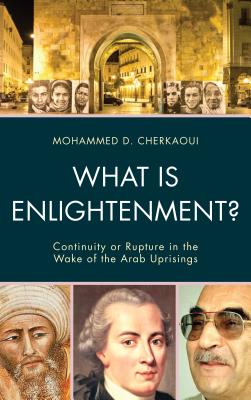
What Is Enlightenment? : Continuity or Rupture in the Wake of the Arab Uprisings
Book Details
Delivery Location
Delivery fee: Select location
Political sociology has struggled with predicting the next turn of transformation in the MENA countries after the 2011 Uprisings. Arab activists did not articulate explicitly any modalities of their desired system, although their slogans ushered to a fully-democratic society. These unguided Uprisings showcase an open-ended freedom-to question after Arabs underwent their freedom-from struggle from authoritarianism. The new conflicts in Egypt, Syria, Yemen, and Libya have fragmented shar’iya (legitimacy) into distinct conceptualizations: “revolutionary legitimacy,” “electoral legitimacy,” “legitimacy of the street,” and “consensual legitimacy.” This volume examines whether the Uprisings would introduce a replica of the European Enlightenment or rather stimulate an Arab/Islamic awakening with its own cultural specificity and political philosophy. By placing Immanuel Kant in Tahrir Square, this book adopts a comparative analysis of two enlightenment projects: one Arab, still under construction, with possible progression toward modernity or regression toward neo-authoritarianism, and one European, shaped by the past two centuries.
Mohammed D. Cherkaoui and the contributing authors use a hybrid theoretical framework drawing on three tanwiri (enlightenment) philosophers from different eras: Ibn Rushd, known in the west as Averroes (the twelfth century), Immanuel Kant (the eighteenth century), and Mohamed Abed Al-Jabri (the twentieth century). The authors propose a few projections about the outcome of the competition between an Islamocracy vision and what Cherkaoui terms as a Demoslamic vision, since it implies the Islamist movements’ flexibility to reconcile their religious absolutism with the prerequisites of liberal democracy. This book also traces the patterns of change which point to a possible Arab Axial Age. It ends with the trials of modernity and tradition in Tunisia and an imaginary speech Kant would deliver at the Tunisian Parliament after those vibrant debates of the new constitution in 2014.
Get What Is Enlightenment? by Mohammed D. Cherkaoui at the best price and quality guaranteed only at Werezi Africa's largest book ecommerce store. The book was published by Bloomsbury Publishing Plc and it has 404 pages.
Customers Who Bought This Also Bought

End of History and the Last Man
KSh 2,700.00

12 Rules for Life
KSh 2,350.00
The 48 Laws of Power
KSh 4,700.00

Second Treatise of Government – Norton Library
KSh 1,600.00
Discipline and Punish
KSh 2,350.00
The Prince The Original Classic
KSh 2,150.00
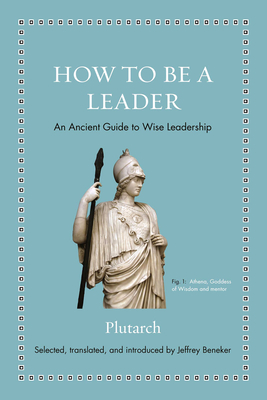
How to Be a Leader – An Ancient Guide to Wise Leadership
KSh 2,800.00
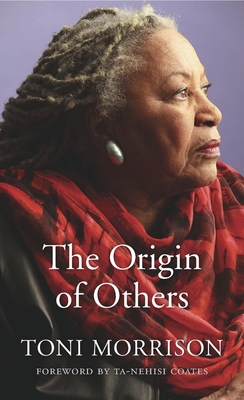
The Origin of Others
KSh 3,600.00
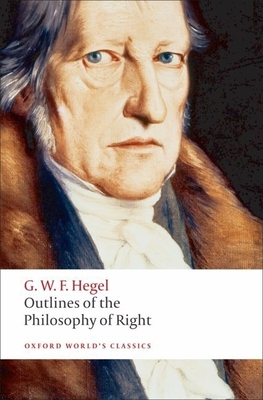
Outlines of the Philosophy of Right
KSh 2,500.00
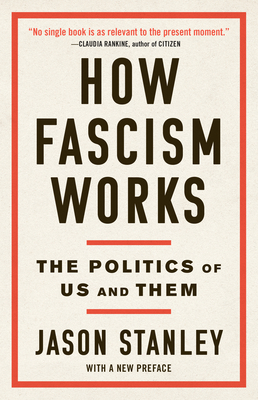
How Fascism Works
KSh 2,900.00
The Prince
KSh 1,800.00
Who''s Afraid of Gender?
KSh 2,350.00
