
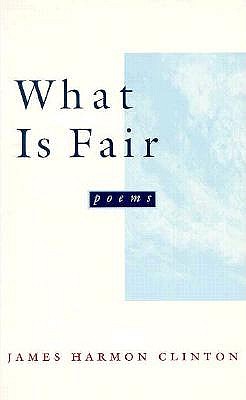
What Is Fair : Poems
Book Details
Format
Paperback / softback
ISBN-10
0807121967
ISBN-13
9780807121962
Publisher
Louisiana State University Press
Imprint
Louisiana State University Press
Country of Manufacture
US
Country of Publication
GB
Publication Date
Sep 1st, 1997
Print length
64 Pages
Weight
118 grams
Dimensions
22.70 x 13.90 x 0.50 cms
Product Classification:
Poetry / poems by individual poetsPoetry by individual poets
KSh 2,700.00
Publisher Out of Stock
0 in stock
Delivery Location
Delivery fee: Select location
Secure
Quality
Fast
A collection of poems which focus on the corners of James Harmon Clinton's life. Love, family and exile are among his dominant themes, but throughout, a voice raises the issues of justice, rightness and fairness, especially to the past.
Infused with sensory detail that pulls its readers into its labyrinth of memory, What Is Fair is a construct of dissonant forces, a world of emotional exile. Throughout the collection's tales of family, love, connection, and betrayal, James Harmon Clinton seems to put into practice Elizabeth Bishop's exhortation to ""practice losing farther, losing faster."" But loss is not disaster and the accumulation of things lost becomes the important thing gained, the fuel for a voyage of transcendence.
The voice that rises from the melée is that of a survivor, at once romantic and sardonic, constantly concerned with the central issues of justice, rightness, and fairness. Just as its title is both question and answer, the collection itself is both a pensive exploration and a bold statement.
What Is Fair commences with a vision of a childhood baseball game that takes place on a makeshift playing field in the corner of a park. With no umpire present, the matter of judgment is slippery and the pivotal question of fairness is stated for this poem and all those that follow. While the players in this game are exiled to a field with no boundaries, a solitary worker is drawing chalklines on the park's main playing field, ""the almost perfect vectors that show, now for later, / what is fair.""
The collection introduces potent characters, many of whom make recurring appearances. There is a father who dies early, leaving the protagonist to question the memory of his voice. There is a mother who endures even as she forecasts her own demise: ""That's me, Son. When I die I will be a bluebird; / I will sing in your backyard.""
Clinton cites influences from James Joyce to Fellini and Bergman to rock stars. In ""The Ephebe's Way,"" he winds all of his disparate themes and influences into a singular vision, a willful misprision of both A Portrait of the Artist as a Young Man and Finnegans Wake: ""and finally, eerily sober, chill of blue sky, a voice / to be feared swerved from shore and bay, smithy / of the heart forging an artifice: echo, wing.
The voice that rises from the melée is that of a survivor, at once romantic and sardonic, constantly concerned with the central issues of justice, rightness, and fairness. Just as its title is both question and answer, the collection itself is both a pensive exploration and a bold statement.
What Is Fair commences with a vision of a childhood baseball game that takes place on a makeshift playing field in the corner of a park. With no umpire present, the matter of judgment is slippery and the pivotal question of fairness is stated for this poem and all those that follow. While the players in this game are exiled to a field with no boundaries, a solitary worker is drawing chalklines on the park's main playing field, ""the almost perfect vectors that show, now for later, / what is fair.""
The collection introduces potent characters, many of whom make recurring appearances. There is a father who dies early, leaving the protagonist to question the memory of his voice. There is a mother who endures even as she forecasts her own demise: ""That's me, Son. When I die I will be a bluebird; / I will sing in your backyard.""
Clinton cites influences from James Joyce to Fellini and Bergman to rock stars. In ""The Ephebe's Way,"" he winds all of his disparate themes and influences into a singular vision, a willful misprision of both A Portrait of the Artist as a Young Man and Finnegans Wake: ""and finally, eerily sober, chill of blue sky, a voice / to be feared swerved from shore and bay, smithy / of the heart forging an artifice: echo, wing.
Get What Is Fair by James Harmon Clinton at the best price and quality guaranteed only at Werezi Africa's largest book ecommerce store. The book was published by Louisiana State University Press and it has 64 pages.
Customers Who Bought This Also Bought
Perfect Nine
KSh 2,350.00

Collected Poems of Samuel Beckett
KSh 4,500.00
Milk and Honey
KSh 2,350.00
The Divine Comedy
KSh 2,150.00

And Still I Rise
KSh 2,000.00
Paradise Lost
KSh 1,600.00
Forest of Noise
KSh 1,800.00
The Odyssey
KSh 1,800.00
The Odyssey
KSh 1,600.00

The Iliad
KSh 1,450.00
Citizen
KSh 2,350.00
Paradise Lost
KSh 2,000.00
