
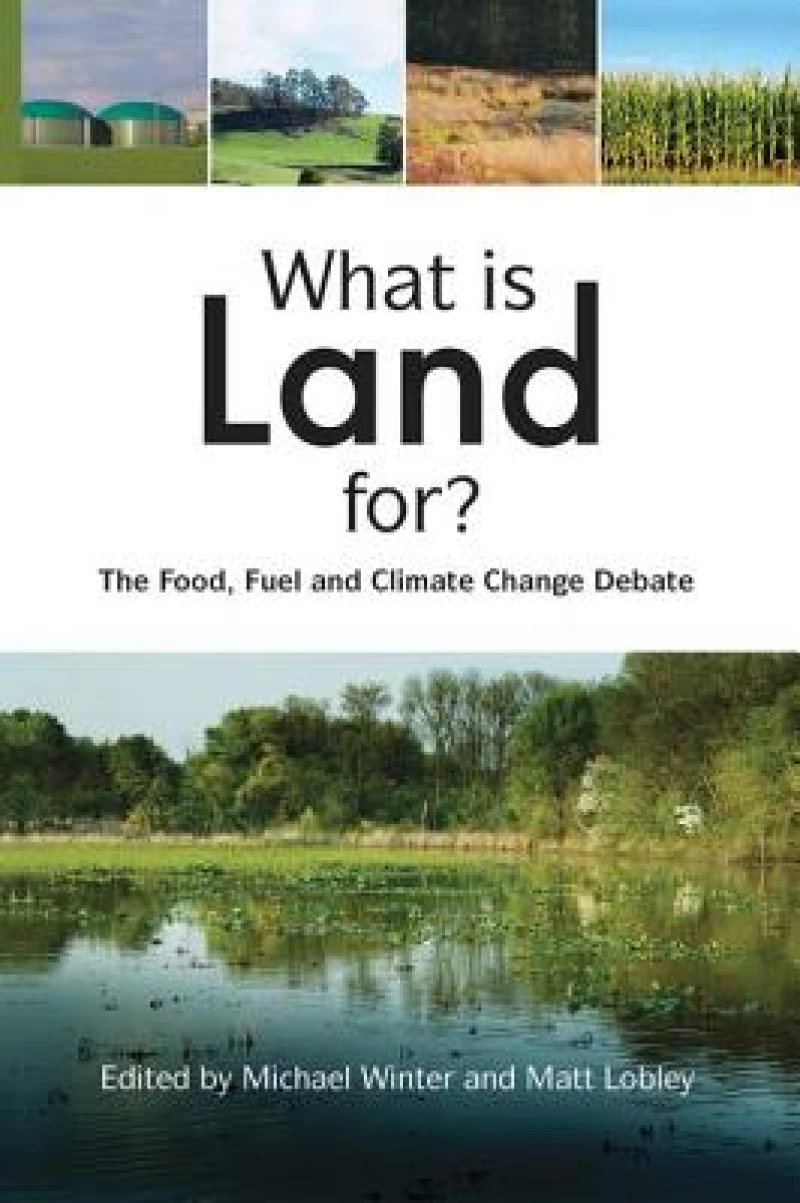
What is Land For? : The Food, Fuel and Climate Change Debate
Book Details
Format
Paperback / Softback
ISBN-10
1138881228
ISBN-13
9781138881228
Publisher
Taylor & Francis Ltd
Imprint
Routledge
Country of Manufacture
GB
Country of Publication
GB
Publication Date
May 22nd, 2015
Print length
360 Pages
Weight
544 grams
Dimensions
15.80 x 23.30 x 3.00 cms
Product Classification:
Environmental economicsSustainable agriculture
Ksh 8,900.00
Werezi Extended Catalogue
0 in stock
Delivery Location
Delivery fee: Select location
Secure
Quality
Fast
In recent decades agricultural commodity surpluses in the developed world have contributed to a mantra of 'land surplus' in which set-aside, extensification, alternative land uses and 'wilding' have been key terms in debates over land. Quite suddenly all this has changed as a consequence of rapidly shifting commodity markets. Prices for cereals, oil seeds and other globally traded commodities have risen sharply. A contributor to this has been the shift to bioenergy cropping, fuelled by concerns over post-peak oil and climate change. Agricultural supply chain interests have embraced the 'new environmentalism' of climate change with enthusiasm, proudly proclaiming the readiness of the industry to produce both food and energy crops, and to do so with a neo-liberal confidence in markets to determine the balance between food and non-food crops in land use. But policy and politics have not necessarily caught up with these market and industry-led changes and some environmentalists are beginning to challenge the assumptions of the new 'productivism'. Is it necessarily the case, they ask, that agriculture's best contribution to tackling climate change is to grow bioenergy crops or invest in anaerobic-digesters or make land over for windfarms? Might not there be an equally important role in maximising the carbon sequestration or water-holding properties of biodiverse land? What is Land For? tackles these key cutting-edge issues of this new debate by setting out a baseline of evidence and ideas.
In recent decades agricultural commodity surpluses in the developed world have contributed to a mantra of ''land surplus'' in which set-aside, extensification, alternative land uses and ''wilding'' have been key terms in debates over land. Quite suddenly all this has changed as a consequence of rapidly shifting commodity markets. Prices for cereals, oil seeds and other globally traded commodities have risen sharply. A contributor to this has been the shift to bioenergy cropping, fuelled by concerns over post-peak oil and climate change. Agricultural supply chain interests have embraced the ''new environmentalism'' of climate change with enthusiasm, proudly proclaiming the readiness of the industry to produce both food and energy crops, and to do so with a neo-liberal confidence in markets to determine the balance between food and non-food crops in land use. But policy and politics have not necessarily caught up with these market and industry-led changes and some environmentalists are beginning to challenge the assumptions of the new ''productivism''. Is it necessarily the case, they ask, that agriculture''s best contribution to tackling climate change is to grow bioenergy crops or invest in anaerobic-digesters or make land over for windfarms? Might not there be an equally important role in maximising the carbon sequestration or water-holding properties of biodiverse land? What is Land For? tackles these key cutting-edge issues of this new debate by setting out a baseline of evidence and ideas.
Get What is Land For? by at the best price and quality guaranteed only at Werezi Africa's largest book ecommerce store. The book was published by Taylor & Francis Ltd and it has pages.

