
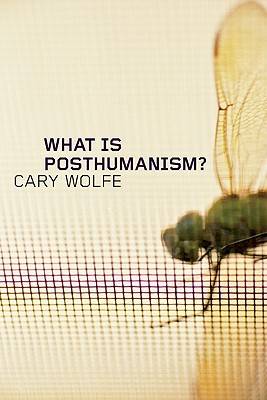
What Is Posthumanism?
Book Details
Delivery Location
Delivery fee: Select location
Delivery in 12 days
What does it mean to think beyond humanism? Is it possible to craft a mode of philosophy, ethics, and interpretation that rejects the classic humanist divisions of self and other, mind and body, society and nature, human and animal, organic and technological? Can a new kind of humanities-posthumanities-respond to the redefinition of humanity''s place in the world by both the technological and the biological or "green" continuum in which the "human" is but one life form among many?
Exploring how both critical thought along with cultural practice have reacted to this radical repositioning, Cary Wolfe-one of the founding figures in the field of animal studies and posthumanist theory-ranges across bioethics, cognitive science, animal ethics, gender, and disability to develop a theoretical and philosophical approach responsive to our changing understanding of ourselves and our world. Then, in performing posthumanist readings of such diverse works as Temple Grandin''s writings, Wallace Stevens''s poetry, Lars von Trier''s Dancer in the Dark, the architecture of Diller+Scofidio, and David Byrne and Brian Eno''s My Life in the Bush of Ghosts, he shows how this philosophical sensibility can transform art and culture.
For Wolfe, a vibrant, rigorous posthumanism is vital for addressing questions of ethics and justice, language and trans-species communication, social systems and their inclusions and exclusions, and the intellectual aspirations of interdisciplinarity. In What Is Posthumanism? he carefully distinguishes posthumanism from transhumanism (the biotechnological enhancement of human beings) and narrow definitions of the posthuman as the hoped-for transcendence of materiality. In doing so, Wolfe reveals that it is humanism, not the human in all its embodied and prosthetic complexity, that is left behind in posthumanist thought.
Get What Is Posthumanism? by Cary Wolfe at the best price and quality guaranteed only at Werezi Africa's largest book ecommerce store. The book was published by University of Minnesota Press and it has 400 pages.
Customers Who Bought This Also Bought

Thus Spoke Zarathustra
KSh 2,000.00

On War
KSh 1,200.00

Ecce Homo
KSh 1,800.00

On War
KSh 4,500.00

Kierkegaard
KSh 1,800.00

On Art, Religion, and the History of Philosophy
KSh 3,100.00

Critique Of Pure Reason
KSh 2,700.00

Grounding for the Metaphysics of Morals
KSh 2,700.00

Critique of Pure Reason, Abridged
KSh 3,600.00
Discourse on Political Economy and The Social Contract
KSh 1,800.00

Discourse on the Origin of Inequality
KSh 2,150.00

Selected Letters of Friedrich Nietzsche
KSh 4,700.00
More by Cary Wolfe

Jagged Ontologies Volume 81
KSh 3,800.00

Jagged Ontologies
KSh 15,650.00
Ecological Poetics; Or, Wallace Stevens's Birds
KSh 12,950.00
Ecological Poetics; Or, Wallace Stevens's Birds
KSh 4,500.00

Zoontologies
KSh 3,450.00
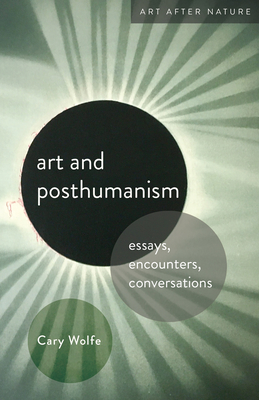
Art and Posthumanism
KSh 4,300.00
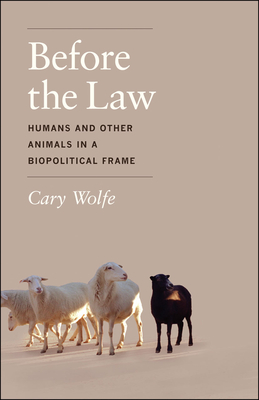
Before the Law
KSh 4,150.00

The Limits of American Literary Ideology in Pound and Emerson
KSh 17,300.00
Before the Law
KSh 14,400.00
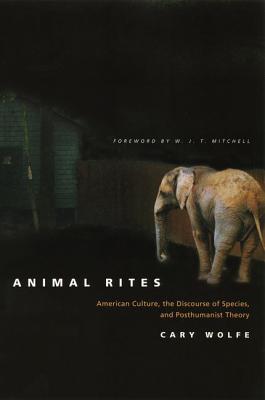
Animal Rites – American Culture, the Discourse of Species, and Posthumanist Theory
KSh 14,400.00

The Limits of American Literary Ideology in Pound and Emerson
KSh 6,800.00
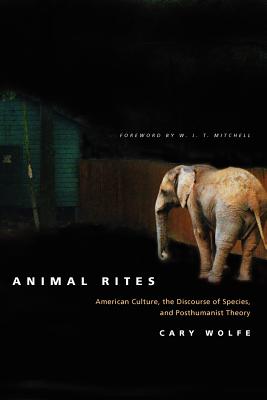
Animal Rites
KSh 5,500.00
