
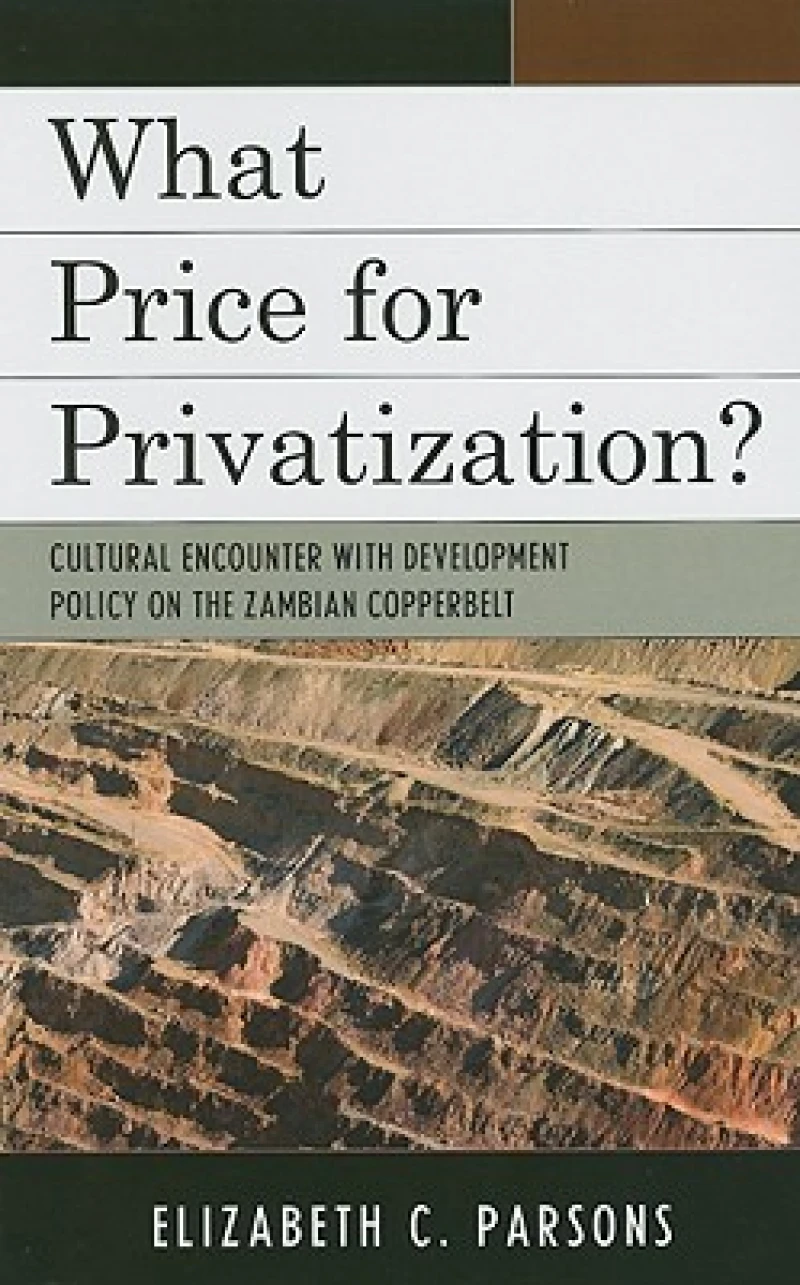
What Price for Privatization? : Cultural Encounter with Development Policy on the Zambian Copperbelt
Book Details
Format
Hardback or Cased Book
ISBN-10
0739140620
ISBN-13
9780739140628
Publisher
Bloomsbury Publishing Plc
Imprint
Lexington Books
Country of Manufacture
GB
Country of Publication
GB
Publication Date
Jun 10th, 2010
Print length
266 Pages
Weight
530 grams
Dimensions
23.80 x 23.70 x 2.60 cms
Product Classification:
Central government policies
Ksh 21,250.00
Manufactured on Demand
0 in stock
Delivery Location
Delivery fee: Select location
Secure
Quality
Fast
What Price for Privatization?: Cultural Encounter with Development Policy on the Zambian Copperbelt considers how one African community experienced the sale to foreign investors of its main industry, a group of state-owned copper mines. Everyday Zambians saw a series of uncertain, shifting interactions among individuals, corporations, immaterial forces, and material interests as running counter to hard facts about the state of the mines and the country's overall economy. Supernatural or spiritual forces played a powerful, negative role in what Zambians understood to be happening as a result of privatization. But there was no place within dominant development policy talk to account for this sort of knowledge. Indeed, many of the disappointments and failures that have long characterized development activities can be traced to profound discrepancies existing when local knowledge infused with a particular worldview is overlooked by policymakers. The types of policies that have undergirded development interventions for almost sixty years have elevated economic, political, and operational interests over all others. But such ways of thinking about the world leave huge gaps in comprehension. This is particularly true in regard to the cultural and religious experiences of both the people who devise policies and those who live with the policy consequences. What Price for Privatization? documents such an instance and suggests some intellectual and practical means by which things might change on behalf of the global common welfare.
What Price for Privatization?: Cultural Encounter with Development Policy on the Zambian Copperbelt considers how one African community experienced the sale to foreign investors of its main industry, a group of state-owned copper mines. Everyday Zambians saw a series of uncertain, shifting interactions among individuals, corporations, immaterial forces, and material interests as running counter to hard facts about the state of the mines and the country''s overall economy. Supernatural or spiritual forces played a powerful, negative role in what Zambians understood to be happening as a result of privatization. But there was no place within dominant development policy talk to account for this sort of knowledge. Indeed, many of the disappointments and failures that have long characterized development activities can be traced to profound discrepancies existing when local knowledge infused with a particular worldview is overlooked by policymakers. The types of policies that have undergirded development interventions for almost sixty years have elevated economic, political, and operational interests over all others. But such ways of thinking about the world leave huge gaps in comprehension. This is particularly true in regard to the cultural and religious experiences of both the people who devise policies and those who live with the policy consequences. What Price for Privatization? documents such an instance and suggests some intellectual and practical means by which things might change on behalf of the global common welfare.
Get What Price for Privatization? by at the best price and quality guaranteed only at Werezi Africa's largest book ecommerce store. The book was published by Bloomsbury Publishing Plc and it has pages.

