
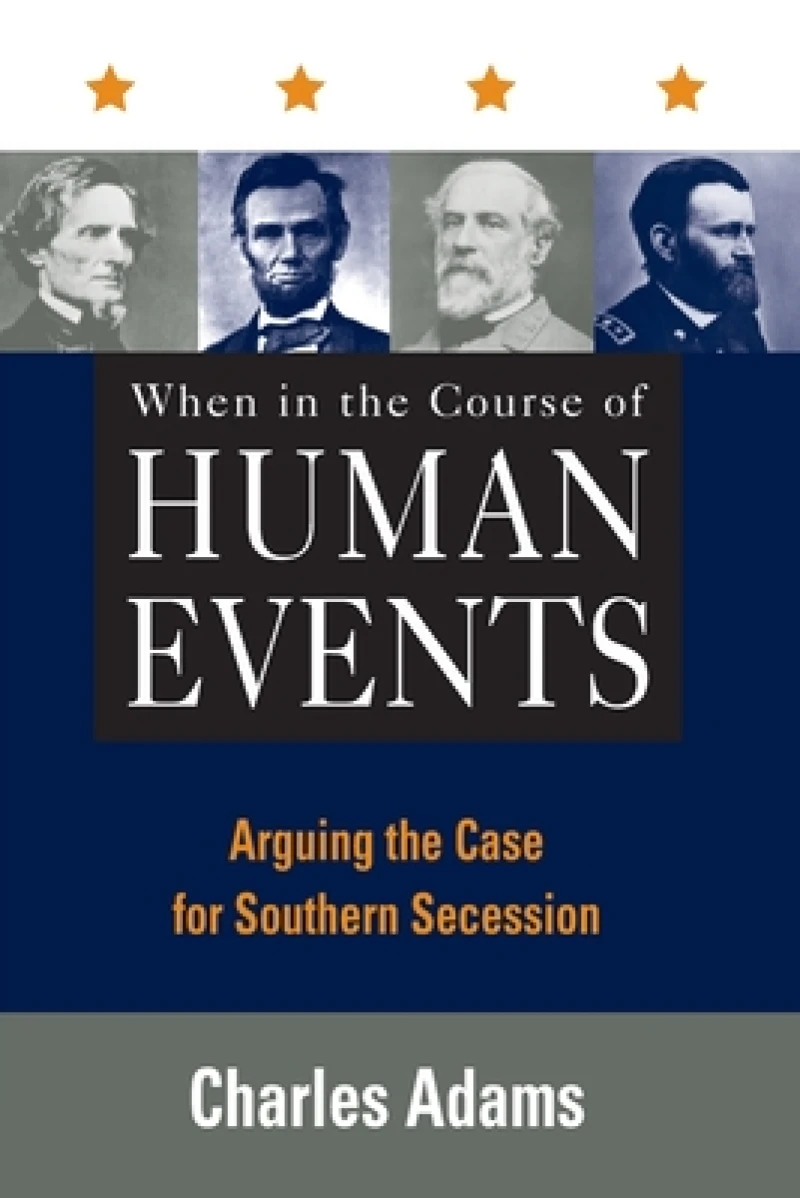
When in the Course of Human Events : Arguing the Case for Southern Secession
Book Details
Format
Paperback / Softback
ISBN-10
0847697231
ISBN-13
9780847697236
Publisher
Bloomsbury Publishing Plc
Imprint
Rowman & Littlefield Publishers
Country of Manufacture
GB
Country of Publication
GB
Publication Date
Feb 23rd, 2005
Print length
278 Pages
Weight
436 grams
Dimensions
22.80 x 15.20 x 2.00 cms
Product Classification:
History of the AmericasModern history to 20th century: c 1700 to c 1900
Ksh 3,900.00
Manufactured on Demand
0 in stock
Delivery Location
Delivery fee: Select location
Secure
Quality
Fast
"When in the Course of human events, it becomes necessary for one people to dissolve the political bonds which have connected them with one another, and to assume among the Powers of the earth, the separate and equal station to which the Laws of Nature and of Nature's God entitle them, a decent respect of the opinions of mankind requires that they should declare the causes which impel them to the separation." With these words, thirteen of the British colonies in North America unanimously declared independence from British rule. Eighty-five years later, adhering to principles articulated by their revolutionary forebears, the 11 Confederate States of America seceded from the United States, plunging the country into the bloodiest war of its history. Until the publication of this highly original book, most attempts to explain the origins of the American Civil War relied heavily on regional sympathies and mythology—that the South abandoned the Union to maintain slavery while President Lincoln's primary goal was to preserve the nation. Prominent scholar Charles Adams challenges this traditional wisdom. Using primary documents from both foreign and domestic observers, Adams makes a powerful and convincing case that the Southern states were legitimately exercising their political rights as expressed in the Declaration of Independence. Although conventional histories have taught generations of Americans that this was a war fought for lofty moral principles, Adams' eloquent history transcends simple Southern partisanship to show how the Civil War was primarily a battle over competing commercial interests, opposing interpretations of constitutional rights, and what English novelist Charles Dickens described as "a fiscal quarrel." Working from the premise that "wars have seldom been justified," Adams argues that the Civil War was an avoidable humanitarian disaster that nearly destroyed American democracy. This bold and controversial book will not only change how historians think about the causes of the Civil War bu
"When in the Course of human events, it becomes necessary for one people to dissolve the political bonds which have connected them with one another, and to assume among the Powers of the earth, the separate and equal station to which the Laws of Nature and of Nature''s God entitle them, a decent respect of the opinions of mankind requires that they should declare the causes which impel them to the separation." With these words, thirteen of the British colonies in North America unanimously declared independence from British rule. Eighty-five years later, adhering to principles articulated by their revolutionary forebears, the 11 Confederate States of America seceded from the United States, plunging the country into the bloodiest war of its history. Until the publication of this highly original book, most attempts to explain the origins of the American Civil War relied heavily on regional sympathies and mythology—that the South abandoned the Union to maintain slavery while President Lincoln''s primary goal was to preserve the nation. Prominent scholar Charles Adams challenges this traditional wisdom. Using primary documents from both foreign and domestic observers, Adams makes a powerful and convincing case that the Southern states were legitimately exercising their political rights as expressed in the Declaration of Independence. Although conventional histories have taught generations of Americans that this was a war fought for lofty moral principles, Adams'' eloquent history transcends simple Southern partisanship to show how the Civil War was primarily a battle over competing commercial interests, opposing interpretations of constitutional rights, and what English novelist Charles Dickens described as "a fiscal quarrel." Working from the premise that "wars have seldom been justified," Adams argues that the Civil War was an avoidable humanitarian disaster that nearly destroyed American democracy. This bold and controversial book will not only change how historians think about the causes of the Civil War bu
Get When in the Course of Human Events by at the best price and quality guaranteed only at Werezi Africa's largest book ecommerce store. The book was published by Bloomsbury Publishing Plc and it has pages.

