
When Solidarity Works : Labor-Civic Networks and Welfare States in the Market Reform Era
Book Details
Format
Hardback
Book Series
Structural Analysis in the Social Sciences
ISBN-10
110717404X
ISBN-13
9781107174047
Publisher
Cambridge University Press
Imprint
Cambridge University Press
Country of Manufacture
GB
Country of Publication
GB
Publication Date
Oct 18th, 2016
Print length
438 Pages
Weight
728 grams
Dimensions
16.10 x 26.10 x 2.90 cms
KSh 20,500.00
Currently unavailable
0 in stock
Delivery Location
Delivery fee: Select location
Secure
Quality
Fast
For scholars of comparative politics, political sociology and network analysis, Cheol-Sung Lee's account introduces the notion of 'embedded cohesiveness' in order to develop an explanatory model in which labor-civic solidarity and union-political party alliance jointly account for outcomes of welfare state retrenchment as well as welfare state expansion.
Why do some labor movements successfully defend the welfare state even under the pressures of neo-liberal market reform? Why do some unions (and their allied parties and civic associations) succeed in building more universal and comprehensive social policy regimes, while others fail to do so? In this innovative work, Cheol-Sung Lee explores these conundrums through a comparative historical analysis of four countries: Argentina, Brazil, South Korea and Taiwan. He introduces the notion of 'embedded cohesiveness' in order to develop an explanatory model in which labor-civic solidarity and union-political party alliance jointly account for outcomes of welfare state retrenchment as well as welfare state expansion. Lee's exploration of the critical roles of civil society and social movement processes in shaping democratic governance and public policies make this ideal for academic researchers and graduate students in comparative politics, political sociology and network analysis.
Get When Solidarity Works by Cheol-Sung Lee at the best price and quality guaranteed only at Werezi Africa's largest book ecommerce store. The book was published by Cambridge University Press and it has 438 pages.
Customers Who Bought This Also Bought

Caste
KSh 2,700.00

On Freedom
KSh 2,350.00

Extinction of Experience
KSh 3,950.00

Revenge of the Tipping Point
KSh 2,350.00

Lost Girls
KSh 2,000.00

Right to Sex
KSh 2,000.00
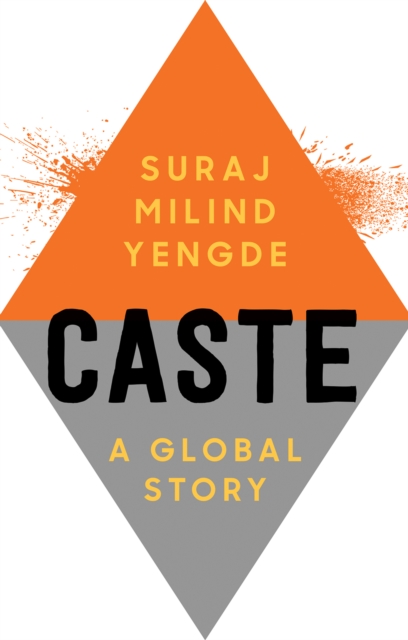
Caste
KSh 4,550.00

Revenge of the Tipping Point
KSh 4,500.00

Revenge of the Tipping Point
KSh 3,050.00

Can Feminism Be African
KSh 2,000.00

Can Feminism Be African
KSh 3,950.00

History of Sexuality: 2
KSh 2,350.00