
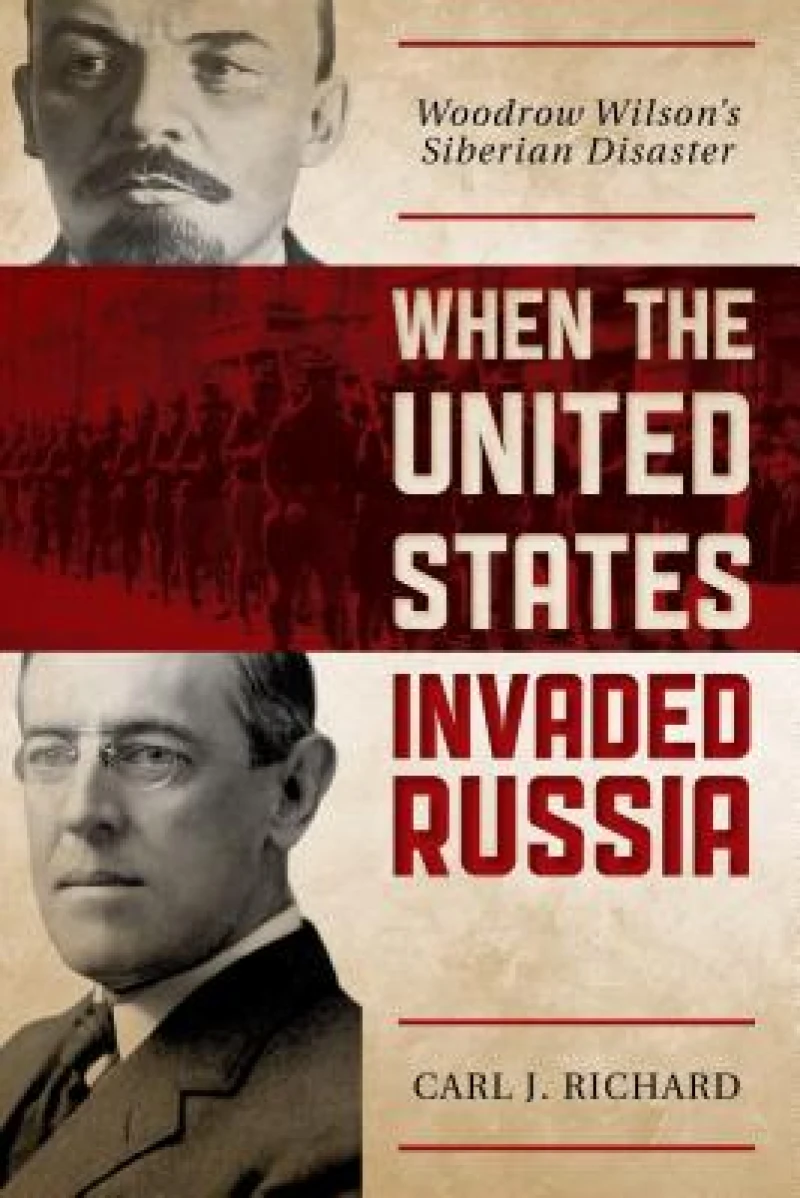
When the United States Invaded Russia : Woodrow Wilson's Siberian Disaster
Book Details
Format
Paperback / Softback
ISBN-10
0810896397
ISBN-13
9780810896390
Publisher
Bloomsbury Publishing Plc
Imprint
Rowman & Littlefield Publishers
Country of Manufacture
GB
Country of Publication
GB
Publication Date
Nov 13th, 2017
Print length
210 Pages
Weight
300 grams
Dimensions
15.50 x 22.70 x 1.10 cms
Ksh 4,700.00
Manufactured on Demand
0 in stock
Delivery Location
Delivery fee: Select location
Secure
Quality
Fast
In a little-known episode at the height of World War I, President Woodrow Wilson dispatched thousands of American soldiers to Siberia. Carl J. Richard convincingly shows that Wilson’s original intent was to enable Czechs and anti-Bolshevik Russians to rebuild the Eastern Front against the Central Powers. But Wilson continued the intervention for a year and a half after the armistice in order to overthrow the Bolsheviks and to prevent the Japanese from absorbing eastern Siberia. As Wilson and the Allies failed to formulate a successful Russian policy at the Paris Peace Conference, American doughboys suffered great hardships on the bleak plains of Siberia.Richard argues that Wilson’s Siberian intervention ironically strengthened the Bolshevik regime it was intended to topple. Its tragic legacy can be found in the seeds of World War II—which began with an alliance between Germany and the Soviet Union, the two nations most aggrieved by Allied treatment after World War I—and in the Cold War, a forty-five year period in which the world held its collective breath over the possibility of nuclear annihilation. One of the earliest U.S. counterinsurgency campaigns outside the Western Hemisphere, the Siberian intervention was a harbinger of policies to come. Richard notes that it teaches invaluable lessons about the extreme difficulties inherent in interventions and about the absolute need to secure widespread support on the ground if such campaigns are to achieve success, knowledge that U.S. policymakers tragically ignored in Vietnam and have later struggled to implement in Iraq and Afghanistan.
In a little-known episode at the height of World War I, President Woodrow Wilson dispatched thousands of American soldiers to Siberia. Carl J. Richard convincingly shows that Wilson’s original intent was to enable Czechs and anti-Bolshevik Russians to rebuild the Eastern Front against the Central Powers. But Wilson continued the intervention for a year and a half after the armistice in order to overthrow the Bolsheviks and to prevent the Japanese from absorbing eastern Siberia. As Wilson and the Allies failed to formulate a successful Russian policy at the Paris Peace Conference, American doughboys suffered great hardships on the bleak plains of Siberia. Richard argues that Wilson’s Siberian intervention ironically strengthened the Bolshevik regime it was intended to topple. Its tragic legacy can be found in the seeds of World War II—which began with an alliance between Germany and the Soviet Union, the two nations most aggrieved by Allied treatment after World War I—and in the Cold War, a forty-five year period in which the world held its collective breath over the possibility of nuclear annihilation. One of the earliest U.S. counterinsurgency campaigns outside the Western Hemisphere, the Siberian intervention was a harbinger of policies to come. Richard notes that it teaches invaluable lessons about the extreme difficulties inherent in interventions and about the absolute need to secure widespread support on the ground if such campaigns are to achieve success, knowledge that U.S. policymakers tragically ignored in Vietnam and have later struggled to implement in Iraq and Afghanistan.
Get When the United States Invaded Russia by at the best price and quality guaranteed only at Werezi Africa's largest book ecommerce store. The book was published by Bloomsbury Publishing Plc and it has pages.

