
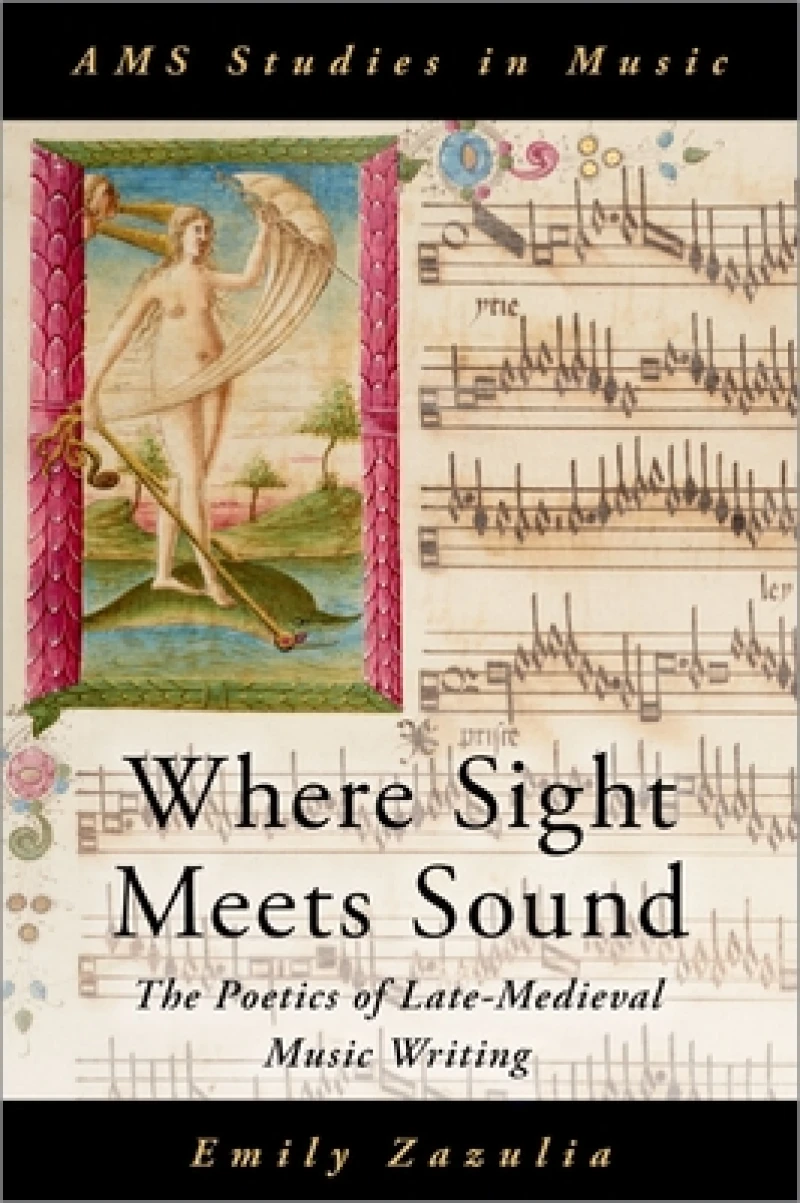
Where Sight Meets Sound : The Poetics of Late-Medieval Music Writing
Book Details
Format
Hardback or Cased Book
Book Series
AMS Studies in Music
ISBN-10
0197551912
ISBN-13
9780197551912
Publisher
Oxford University Press Inc
Imprint
Oxford University Press Inc
Country of Manufacture
US
Country of Publication
GB
Publication Date
Mar 24th, 2022
Print length
340 Pages
Weight
728 grams
Dimensions
16.20 x 24.30 x 2.30 cms
Ksh 8,900.00
Manufactured on Demand
0 in stock
Delivery Location
Delivery fee: Select location
Secure
Quality
Fast
Late-medieval composers delighted in complicating the relationship between their music''s written and sung forms, often tasking singers with reading their music in unusual ways-from slowing down a melodic line, to turning it backwards or upside down, even omitting certain notes or rests. These manipulations increasingly yielded music that was aurally all but unrecognizable as a derivative of the notated original. This book uses these unorthodox applications of notation to understand how late-medieval composers thought about the tool of musical notation. It argues that these compositions foreground notation in ways that resonate with discourses about media and technology today.
The main function of western musical notation is incidental: it prescribes and records sound. But during the fourteenth and fifteenth centuries, notation began to take on an aesthetic life all its own. In the early fifteenth century, a musician might be asked to sing a line slower, faster, or starting on a different pitch than what is written. By the end of the century composers had begun tasking singers with solving elaborate puzzles to produce sounds whose relationship to the written notes is anything but obvious. These instructions, which appear by turns unnecessary and confounding, challenge traditional conceptions of music writing that understand notation as an incidental consequence of the desire to record sound. This book explores innovations in late-medieval music writing as well as how modern scholarship on notation has informed—sometimes erroneously—ideas about the premodern era. Drawing on both musical and music-theoretical evidence, this book reframes our understanding of late-medieval musical notation as a system that was innovative, cutting-edge, and dynamic—one that could be used to generate music, not just preserve it.
Get Where Sight Meets Sound by at the best price and quality guaranteed only at Werezi Africa's largest book ecommerce store. The book was published by Oxford University Press Inc and it has pages.

