Cart 0
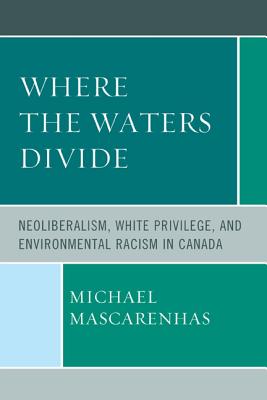
Where the Waters Divide
Click to zoom

Share this book

Where the Waters Divide : Neoliberalism, White Privilege, and Environmental Racism in Canada

Book Details

Format Paperback / Softback
ISBN-10 0739192892
ISBN-13 9780739192894
Publisher Bloomsbury Publishing Plc
Imprint Lexington Books
Country of Manufacture GB
Country of Publication GB
Publication Date Apr 25th, 2014
Print length 178 Pages
Weight 266 grams
Dimensions 15.40 x 22.90 x 1.60 cms
Ksh 9,700.00
Manufactured on Demand 0 in stock

Delivery Location

Delivery fee: Select location

Secure
Quality
Fast
This timely and important scholarship advances an empirical understanding of Canada’s contemporary “Indian” problem.  Where the Waters Divide is one of the few book monographs that analyze how contemporary neoliberal reforms (in the manner of de-regulation, austerity measures, common sense policies, privatization, etc.) are woven through and shape contemporary racial inequality in Canadian society.  Using recent controversies in drinking water contamination and solid waste and sewage pollution, Where the Waters Divide illustrates in concrete ways how cherished notions of liberalism and common sense reform — neoliberalism — also constitute a particular form of racial oppression and white privilege. Where the Waters Divide brings together theories and concepts from four disciplines — sociology, geography, Aboriginal studies, and environmental studies — to build critical insights into the race relational aspects of neoliberal reform.  In particular, the book argues that neoliberalism represents a key moment in time for the racial formation in Canada, one that functions not through overt forms of state sanctioned racism, as in the past, but via the morality of the marketplace and the primacy of individual solutions to modern environmental and social problems.  Furthermore, Mascarenhas argues, because most Canadians are not aware of this pattern of laissez faire racism, and because racism continues to be associated with intentional and hostile acts, Canadians can dissociate themselves from this form of economic racism, all the while ignoring their investment in white privilege. Where the Waters Divide stands at a provocative crossroads.  Disciplinarily, it is where the social construction of water, an emerging theme within Cultural Studies and Environmental Sociology, meets the social construction of expertise — one of the most contentious areas within the social sciences.  It is also where the political economy of natural resources, an emerging theme in Development and Globalization Studies, meets the Politics of Race Relations — an often-understudied area within Environmental Studies.  Conceptually, the book stands where the racial formation associated with natural resources reform is made and re-made, and where the dominant form of white privilege is contrasted with anti-neoliberal social movements in Canada and across the globe.
This timely and important scholarship advances an empirical understanding of Canada’s contemporary “Indian” problem.  Where the Waters Divide is one of the few book monographs that analyze how contemporary neoliberal reforms (in the manner of de-regulation, austerity measures, common sense policies, privatization, etc.) are woven through and shape contemporary racial inequality in Canadian society.  Using recent controversies in drinking water contamination and solid waste and sewage pollution, Where the Waters Divide illustrates in concrete ways how cherished notions of liberalism and common sense reform — neoliberalism — also constitute a particular form of racial oppression and white privilege.  Where the Waters Divide brings together theories and concepts from four disciplines — sociology, geography, Aboriginal studies, and environmental studies — to build critical insights into the race relational aspects of neoliberal reform.  In particular, the book argues that neoliberalism represents a key moment in time for the racial formation in Canada, one that functions not through overt forms of state sanctioned racism, as in the past, but via the morality of the marketplace and the primacy of individual solutions to modern environmental and social problems.  Furthermore, Mascarenhas argues, because most Canadians are not aware of this pattern of laissez faire racism, and because racism continues to be associated with intentional and hostile acts, Canadians can dissociate themselves from this form of economic racism, all the while ignoring their investment in white privilege.  Where the Waters Divide stands at a provocative crossroads.  Disciplinarily, it is where the social construction of water, an emerging theme within Cultural Studies and Environmental Sociology, meets the social construction of expertise — one of the most contentious areas within the social sciences.  It is also where the political economy of natural resources, an emerging theme in Development and Globalization Studies, meets the Politics of Race Relations — an often-understudied area within Environmental Studies.  Conceptually, the book stands where the racial formation associated with natural resources reform is made and re-made, and where the dominant form of white privilege is contrasted with anti-neoliberal social movements in Canada and across the globe.

Get Where the Waters Divide by at the best price and quality guaranteed only at Werezi Africa's largest book ecommerce store. The book was published by Bloomsbury Publishing Plc and it has pages.

Mind, Body, & Spirit

Shopping Cart

Africa largest book store

Sub Total:
Ebooks

Digital Library
Coming Soon

Our digital collection is currently being curated to ensure the best possible reading experience on Werezi. We'll be launching our Ebooks platform shortly.