
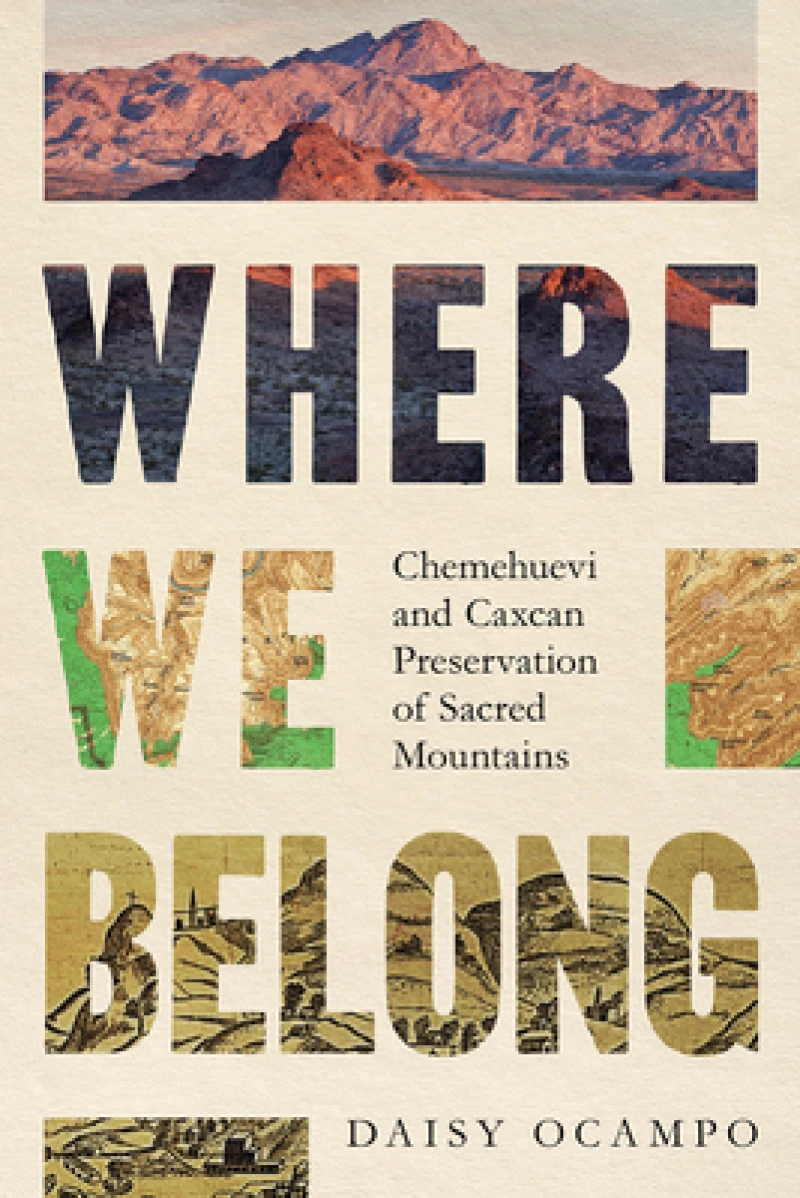
Where We Belong : Chemehuevi and Caxcan Preservation of Sacred Mountains
by
Daisy Ocampo
Book Details
Format
Paperback / Softback
ISBN-10
0816541817
ISBN-13
9780816541812
Publisher
University of Arizona Press
Imprint
University of Arizona Press
Country of Manufacture
GB
Country of Publication
GB
Publication Date
Jun 13th, 2023
Print length
296 Pages
Weight
175 grams
Dimensions
22.60 x 15.20 x 2.20 cms
Ksh 4,150.00
Werezi Extended Catalogue
0 in stock
Delivery Location
Delivery fee: Select location
Secure
Quality
Fast
A comparative work that dispels the harmful myth that Native people are unfit stewards of their sacred places. This work establishes Indigenous preservation practices as sustaining approaches to the caretaking of the land that embody ecological sustainability, spiritual landscapes, and community well-being.
This comparative work dispels the harmful myth that Native people are unfit stewards of their sacred places. This work establishes Indigenous preservation practices as sustaining approaches to the caretaking of the land that embody ecological sustainability, spiritual landscapes, and community well-being.
The author brings together the history and experiences of the Chemehuevi people and their ties with Mamapukaib, or the Old Woman Mountains in the East Mojave Desert, and the Caxcan people and their relationship with Tlachialoyantepec, or Cerro de las Ventanas, in Zacatecas, Mexico. Through a trans-Indigenous approach, Daisy Ocampo weaves historical methodologies (oral histories, archival research, ethnography) with Native studies and historic preservation to reveal why Native communities are the most knowledgeable and transformational caretakers of their sacred places.
This work transcends national borders to reveal how settler structures are sustained through time and space in the Americas. Challenging these structures, traditions such as the Chemehuevi Salt Songs and Caxcan Xuchitl Dance provide both an old and a fresh look at how Indigenous people are reimagining worlds that promote Indigenous-to-Indigenous futures through preservation.
Ultimately, the stories of these two peoples and places in North America illuminate Indigenous sovereignty within the field of public history, which is closely tied to governmental policies, museums, archives, and agencies involved in historic preservation.
The author brings together the history and experiences of the Chemehuevi people and their ties with Mamapukaib, or the Old Woman Mountains in the East Mojave Desert, and the Caxcan people and their relationship with Tlachialoyantepec, or Cerro de las Ventanas, in Zacatecas, Mexico. Through a trans-Indigenous approach, Daisy Ocampo weaves historical methodologies (oral histories, archival research, ethnography) with Native studies and historic preservation to reveal why Native communities are the most knowledgeable and transformational caretakers of their sacred places.
This work transcends national borders to reveal how settler structures are sustained through time and space in the Americas. Challenging these structures, traditions such as the Chemehuevi Salt Songs and Caxcan Xuchitl Dance provide both an old and a fresh look at how Indigenous people are reimagining worlds that promote Indigenous-to-Indigenous futures through preservation.
Ultimately, the stories of these two peoples and places in North America illuminate Indigenous sovereignty within the field of public history, which is closely tied to governmental policies, museums, archives, and agencies involved in historic preservation.
Get Where We Belong by at the best price and quality guaranteed only at Werezi Africa's largest book ecommerce store. The book was published by University of Arizona Press and it has pages.

