
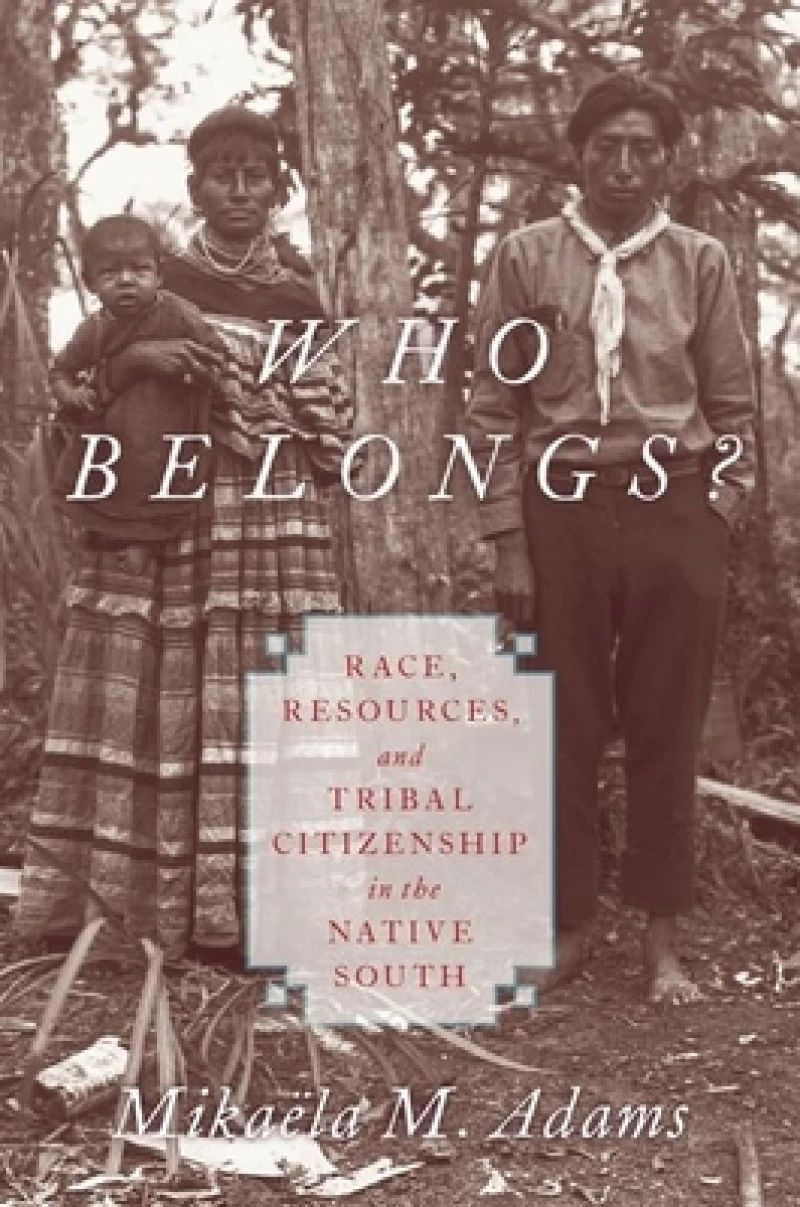
Who Belongs? : Race, Resources, and Tribal Citizenship in the Native South
Book Details
Format
Hardback or Cased Book
ISBN-10
0190619465
ISBN-13
9780190619466
Publisher
Oxford University Press Inc
Imprint
Oxford University Press Inc
Country of Manufacture
US
Country of Publication
GB
Publication Date
Nov 17th, 2016
Print length
352 Pages
Weight
618 grams
Dimensions
16.80 x 24.60 x 3.10 cms
Ksh 10,150.00
Manufactured on Demand
0 in stock
Delivery Location
Delivery fee: Select location
Secure
Quality
Fast
Who Belongs? tells the story of how in the late nineteenth and twentieth centuries, despite economic hardships and assimilationist pressures, six southern tribes insisted on their political identity as citizens of tribal nations and constructed tribally-specific citizenship.
For American Indians, the right to determine tribal citizenship is fundamental to the exercise of tribal sovereignty. The process of deciding who belongs to a given tribe has a complicated history, however, especially in the American South, where Indians who remained following the Indian Removal Act of 1830 became a marginalized and anomalous people in an emerging biracial world. Who Belongs? tells the story of how in the late nineteenth and twentieth centuries, despite economic hardships and assimilationist pressures, these tribes insisted on their political identities as citizens of tribal nations and rejected Euro-American efforts to reduce them to another racial minority. Drawing upon their cultural traditions, kinship patterns, and evolving needs to protect their land, resources, and identity from outsiders, southern Indians constructed tribally-specific citizenship criteria that went beyond the dominant society''s racial definitions of "Indian." Mikaëla Adams addresses how six southern tribes--the Pamunkey Indian Tribe of Virginia, the Catawba Indian Nation of South Carolina, the Mississippi Band of Choctaw Indians, the Eastern Band of Cherokee Indians of North Carolina, the Seminole Tribe of Florida, and the Miccosukee Tribe of Indians of Florida--decided who belonged. She examines how tribes repurposed older notions of kinship and culture to create new criteria of belonging that met the challenges of living in a world defined by racial classifications. The development of legal segregation encouraged tribal communities to make greater efforts to identify themselves publicly as Indian, in order to avoid being defined as "colored" or black, since Jim Crow laws often rested on the assumption that the South was biracial, and to avoid the erasure of their legal existence. In demonstrating their Indianness to state and federal authorities, Native communities often accepted and manipulated racial categories - like blood quantum - that were not elements of indigenous cultures in earlier eras.By focusing on the rights and resources at stake, the effects of state and federal recognition, the influence of kinship systems and racial ideologies, and the process of creating official tribal rolls, Who Belongs? historicizes the concept of belonging and reveals how Indians established legal identities. The varying experiences of these six tribes belie the notion of an essential "Indian," and instead show that citizenship in a tribe is a historically constructed and constantly evolving process.
Get Who Belongs? by at the best price and quality guaranteed only at Werezi Africa's largest book ecommerce store. The book was published by Oxford University Press Inc and it has pages.

