
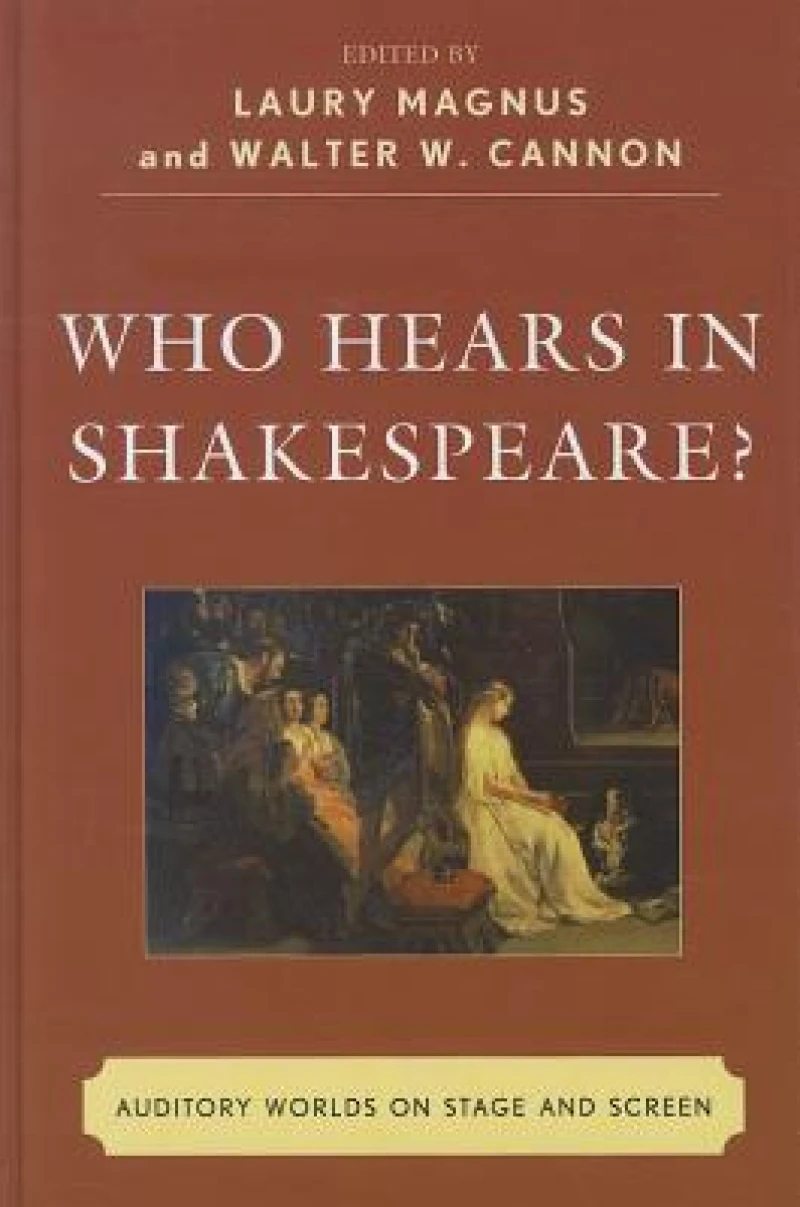
Who Hears in Shakespeare? : Shakespeare’s Auditory World, Stage and Screen
Book Details
Format
Hardback or Cased Book
ISBN-10
1611474744
ISBN-13
9781611474749
Publisher
Fairleigh Dickinson University Press
Imprint
Fairleigh Dickinson University Press
Country of Manufacture
GB
Country of Publication
GB
Publication Date
Dec 30th, 2011
Print length
313 Pages
Weight
585 grams
Dimensions
24.10 x 16.30 x 2.50 cms
Ksh 19,450.00
Manufactured on Demand
0 in stock
Delivery Location
Delivery fee: Select location
Secure
Quality
Fast
This volume, examining the ways in which Shakespeare’s plays are designed for hearers as well as spectators, has been prompted by recent explorations of the auditory dimension of early modern drama by such scholars as Andrew Gurr, Bruce Smith, and James Hirsh. To look at the dynamics of hearing in Shakespeare’s plays involves a paradigm shift that changes how we understand virtually everything about them, from the architecture of the buildings, to playing spaces, to blocking, and to larger interpretative issues, including our understanding of character based on players’ responses to what they hear, mishear, or refuse to hear. Who Hears in Shakespeare? Auditory Worlds on Stage and Screen is comprised of three sections on Shakespeare’s texts and performance history: “The Poetics of Hearing and the Early Modern Stage”; “Metahearing: Hearing, Knowing, and Audiences, Onstage and Off”; and “Transhearing: Hearing, Whispering, Overhearing, and Eavesdropping in Film and Other Media.”Chapters by noted scholars explore the complex reactions and interactions of onstage and offstage audiences and show how Shakespearean stagecraft, actualized on stage and adapted on screen, revolves around various situations and conventions of hearing—soliloquies,, asides, avesdropping, overhearing, and stage whispers. In short, Who Hears in Shakespeare? enunciates Shakespeare’s nuanced, powerful stagecraft of hearing. The volume ends with Stephen Booth’s afterword, his inspiring meditation on hearing that considers Shakespearean “audiences” and their responses to what they hear—or don’t hear—in Shakespeare’s plays.
This volume, examining the ways in which Shakespeare’s plays are designed for hearers as well as spectators, has been prompted by recent explorations of the auditory dimension of early modern drama by such scholars as Andrew Gurr, Bruce Smith, and James Hirsh. To look at the dynamics of hearing in Shakespeare’s plays involves a paradigm shift that changes how we understand virtually everything about them, from the architecture of the buildings, to playing spaces, to blocking, and to larger interpretative issues, including our understanding of character based on players’ responses to what they hear, mishear, or refuse to hear. Who Hears in Shakespeare? Auditory Worlds on Stage and Screen is comprised of three sections on Shakespeare’s texts and performance history: “The Poetics of Hearing and the Early Modern Stage”; “Metahearing: Hearing, Knowing, and Audiences, Onstage and Off”; and “Transhearing: Hearing, Whispering, Overhearing, and Eavesdropping in Film and Other Media.”Chapters by noted scholars explore the complex reactions and interactions of onstage and offstage audiences and show how Shakespearean stagecraft, actualized on stage and adapted on screen, revolves around various situations and conventions of hearing—soliloquies,, asides, avesdropping, overhearing, and stage whispers. In short, Who Hears in Shakespeare? enunciates Shakespeare’s nuanced, powerful stagecraft of hearing. The volume ends with Stephen Booth’s afterword, his inspiring meditation on hearing that considers Shakespearean “audiences” and their responses to what they hear—or don’t hear—in Shakespeare’s plays.
Get Who Hears in Shakespeare? by at the best price and quality guaranteed only at Werezi Africa's largest book ecommerce store. The book was published by Fairleigh Dickinson University Press and it has pages.

