
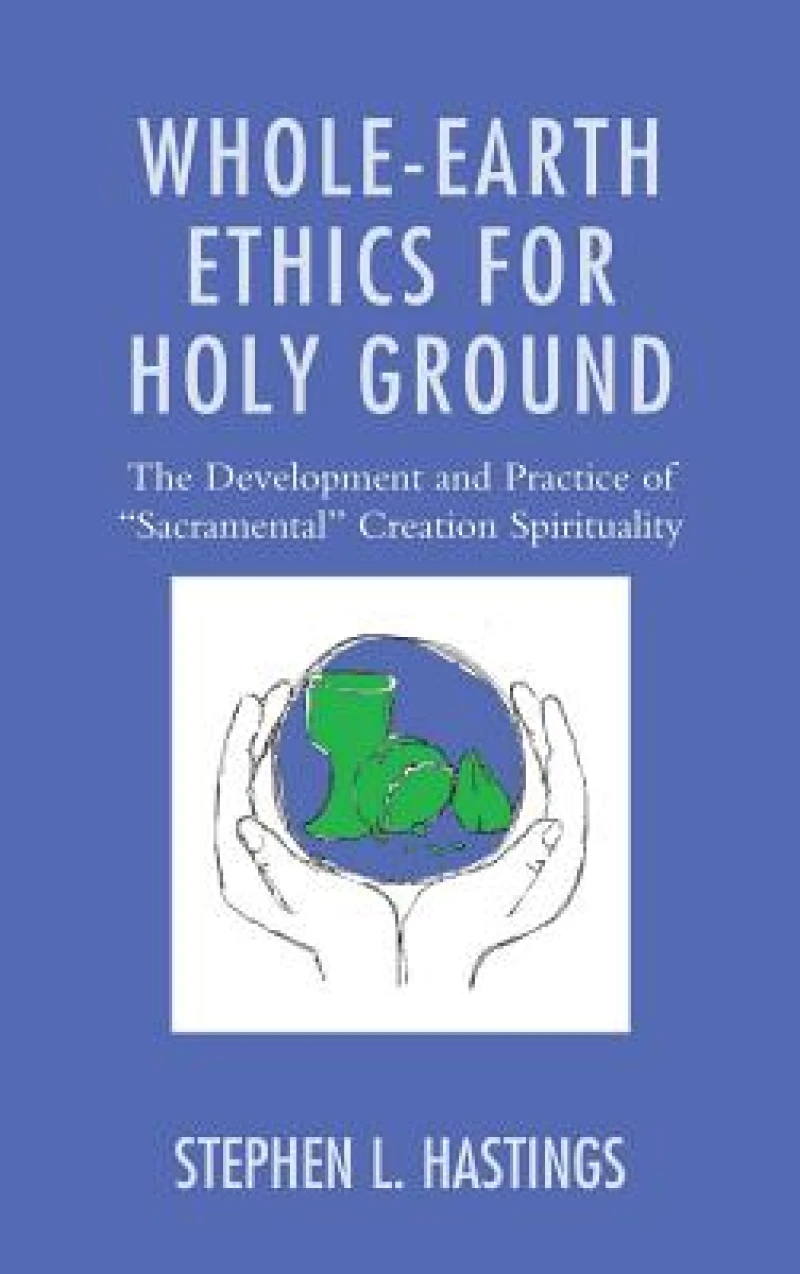
Whole-Earth Ethics for Holy Ground : The Development and Practice of "Sacramental" Creation Spirituality
Book Details
Format
Hardback or Cased Book
ISBN-10
1498531261
ISBN-13
9781498531269
Publisher
Bloomsbury Publishing Plc
Imprint
Lexington Books
Country of Manufacture
GB
Country of Publication
GB
Publication Date
Oct 19th, 2016
Print length
166 Pages
Weight
406 grams
Dimensions
23.80 x 15.90 x 2.40 cms
Product Classification:
Religion & scienceSpirituality & religious experienceHistory of scienceClimate change
Ksh 15,500.00
Manufactured on Demand
0 in stock
Delivery Location
Delivery fee: Select location
Secure
Quality
Fast
Over the last fifty years Western Christianity has been criticized as a cause and enabler of Earth’s ecological crisis. It has been said that Christianity promotes a spiritual-material dualism where the material side of life has little sacred value. Also noted in the critique is the hesitancy of many Christians to embrace modern scientific understandings of creation, especially evolution. Some Christian writers have responded by accepting modern cosmology and evolution, and advocating for a “sacramental” creation spirituality, oftentimes supported by fresh readings of earlier Christian writings. In Whole-Earth Ethics for Holy Ground, Dr. Stephen Hastings begins by offering a genre defining overview of late 20th century and early 21st century writings that he calls “sacramental” creation spirituality. These writings are characterized by their acceptance of the scientific creation story of cosmogenesis and evolution, and their recovery of authentic Christian nature mysticism. Hastings then looks at Teilhard de Chardin (1881–1955 CE), Maximus the Confessor (c.580–662 CE), and Nicholas of Cusa (1401–1464 CE). Together the teachings of Maximus and Nicholas support Teilhard’s call for a theology of a Creator God robust enough to encompass the most expansive and complicated propositions about creation made by science, while remaining as close as the real presence of Christ in the Eucharist. The integrated teachings of these three figures suggest the consecration of creation as its condition of being, meaning that God is present in all things. This consecration or presence inspires sacramental experiences that are revelations of God in and through creation. These complement the sacramental experience of Christ in the Eucharist. Together these sacramental encounters converge to support the conclusion that just as one receives and responds to Christ present in the elements of the communion table, so one ought to receive and respond to oneself, one’s neighbors, and all creation as the universal consecrated and sacramental neighborhood. This is a whole-Earth sacramental ethic that is what we need today, centered on all life and ecosystems.
Over the last fifty years Western Christianity has been criticized as a cause and enabler of Earth’s ecological crisis. It has been said that Christianity promotes a spiritual-material dualism where the material side of life has little sacred value. Also noted in the critique is the hesitancy of many Christians to embrace modern scientific understandings of creation, especially evolution. Some Christian writers have responded by accepting modern cosmology and evolution, and advocating for a “sacramental” creation spirituality, oftentimes supported by fresh readings of earlier Christian writings. In Whole-Earth Ethics for Holy Ground, Dr. Stephen Hastings begins by offering a genre defining overview of late 20th century and early 21st century writings that he calls “sacramental” creation spirituality. These writings are characterized by their acceptance of the scientific creation story of cosmogenesis and evolution, and their recovery of authentic Christian nature mysticism. Hastings then looks at Teilhard de Chardin (1881–1955 CE), Maximus the Confessor (c.580–662 CE), and Nicholas of Cusa (1401–1464 CE). Together the teachings of Maximus and Nicholas support Teilhard’s call for a theology of a Creator God robust enough to encompass the most expansive and complicated propositions about creation made by science, while remaining as close as the real presence of Christ in the Eucharist. The integrated teachings of these three figures suggest the consecration of creation as its condition of being, meaning that God is present in all things. This consecration or presence inspires sacramental experiences that are revelations of God in and through creation. These complement the sacramental experience of Christ in the Eucharist. Together these sacramental encounters converge to support the conclusion that just as one receives and responds to Christ present in the elements of the communion table, so one ought to receive and respond to oneself, one’s neighbors, and all creation as the universal consecrated and sacramental neighborhood. This is a whole-Earth sacramental ethic that is what we need today, centered on all life and ecosystems.
Get Whole-Earth Ethics for Holy Ground by at the best price and quality guaranteed only at Werezi Africa's largest book ecommerce store. The book was published by Bloomsbury Publishing Plc and it has pages.

