
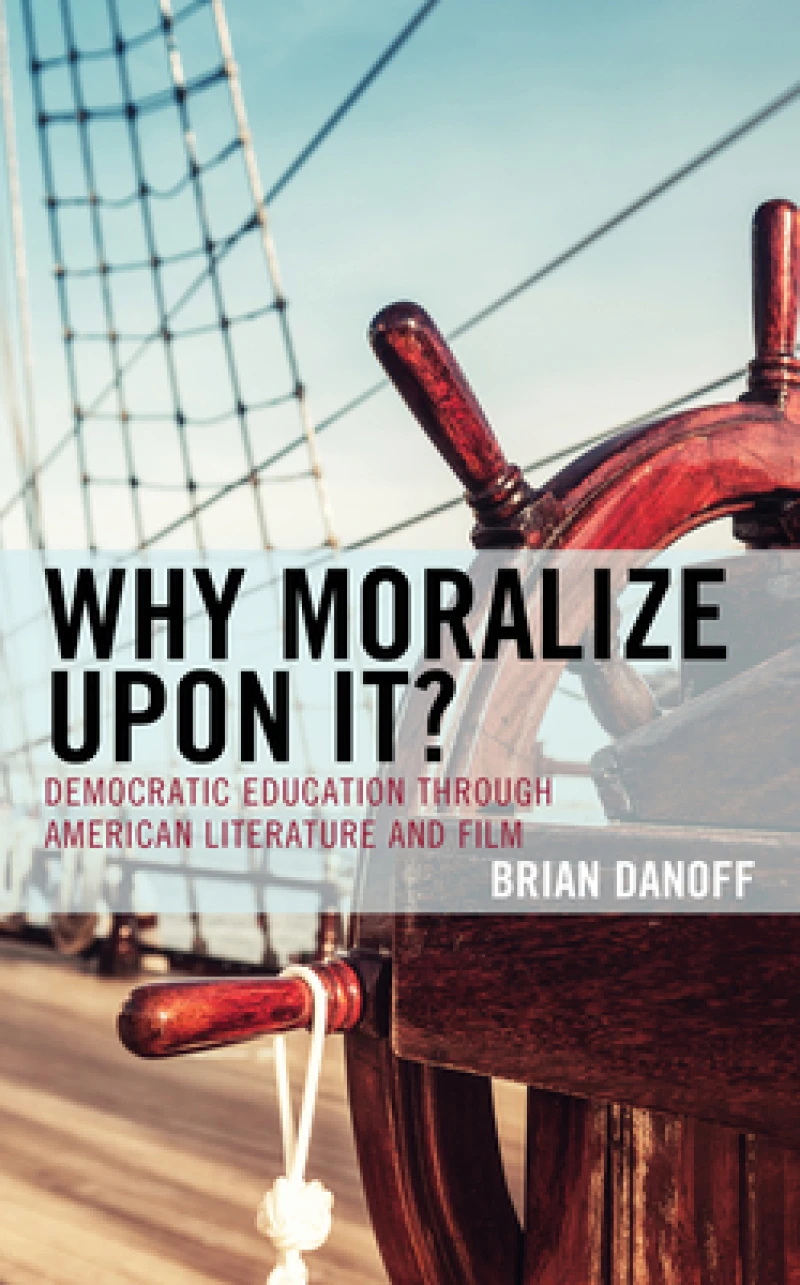
Why Moralize upon It? : Democratic Education through American Literature and Film
Book Details
Delivery Location
Delivery fee: Select location
Franklin Delano Roosevelt famously declared that “the greatest duty of a statesman is to educate." The central claim of Why Moralize upon It? is that it is not only statesmen who can help educate a democratic citizenry, but also novelists and filmmakers. This book’s title is drawn from Melville’s “Benito Cereno.” Near the end of this novella, after he has put down a rebellion of enslaved Africans, the American captain Amasa Delano claims that “the past is passed,” and thus there is no need to “moralize upon it.”Melville suggests, though, that it is crucial for Americans to critically examine American history and American political institutions; otherwise, they may be blind to the existence of injustices which will ultimately undermine democracy. Danoff argues that novels and films play a crucial role in helping democratic citizens undertake the kind of moral reflection that they must engage in if they are to not only preserve their political community, but also render it “forever worthy of the saving,” as Abraham Lincoln put it.
Contending that some of the most profound American thinking about the nature of democratic leadership has come through novels more so than treatises or essays, Danoff argues that the works of fiction examined in this book explore difficult questions rather than provide any easy answers. Because these works have an ambiguous, nuanced, and tragic outlook, they teach citizen-readers how to think through the moral complexities of the political issues on which they must render judgment. The rich and multi-faceted democratic education that citizens glean from outstanding works of fiction is particularly necessary at a time when the media-landscape is often dominated by superficial “viral moments,” “sound-bites,” and social media posts. Moreover, given that we today live in an era of sharp political polarization in which partisans often demonize one another, it is especially valuable for Americans to be exposed to literary and cinematic works of art which remind us that none of us have a monopoly on virtue, and that all of us inhabit what Melville called “the common continent of men.”
Get Why Moralize upon It? by at the best price and quality guaranteed only at Werezi Africa's largest book ecommerce store. The book was published by Bloomsbury Publishing Plc and it has pages.

