
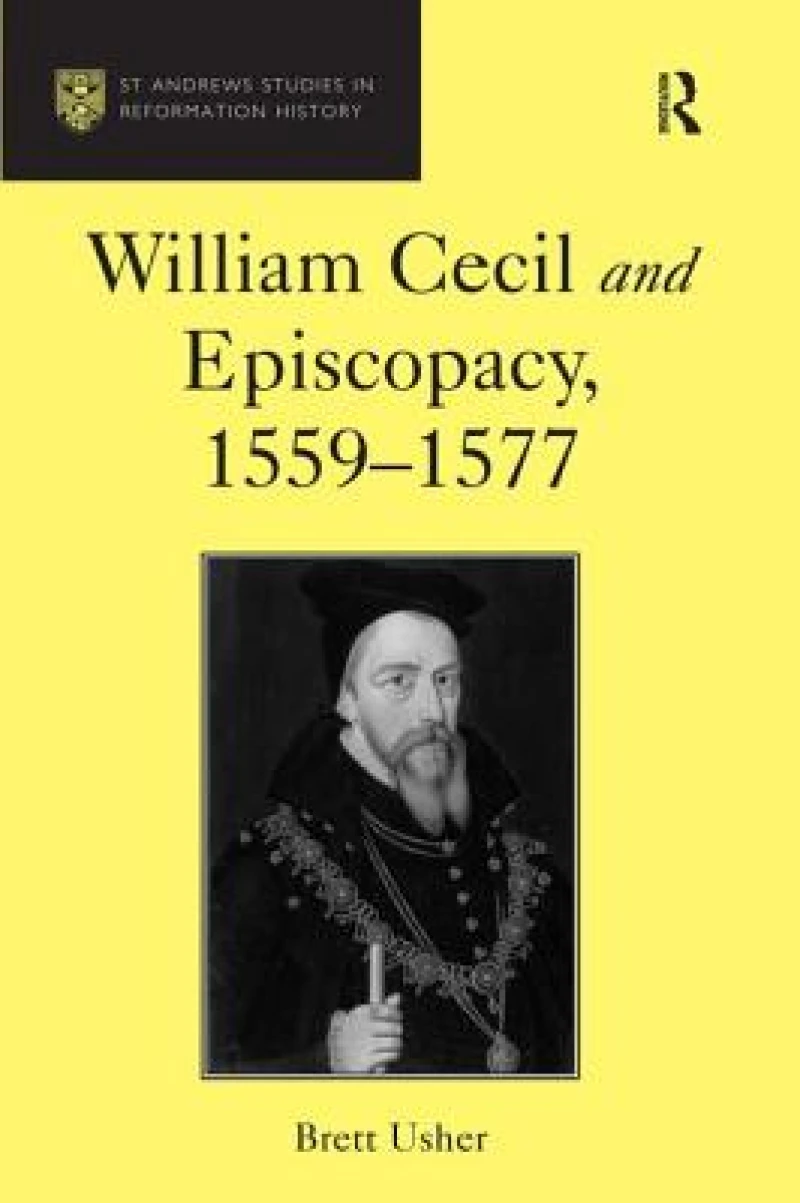
William Cecil and Episcopacy, 1559–1577
by
Brett Usher
Book Details
Format
Hardback or Cased Book
Book Series
St Andrews Studies in Reformation History
ISBN-10
0754608344
ISBN-13
9780754608349
Publisher
Taylor & Francis Ltd
Imprint
Routledge
Country of Manufacture
GB
Country of Publication
GB
Publication Date
Dec 18th, 2003
Print length
272 Pages
Weight
544 grams
Product Classification:
British & Irish historyEarly modern history: c 1450/1500 to c 1700Church history
Ksh 27,900.00
Werezi Extended Catalogue
0 in stock
Delivery Location
Delivery fee: Select location
Secure
Quality
Fast
Provides an explanation of the processes which went into the selection and creation of bishops during the early years of Elizabeth I's reign, when the conduct of ecclesiastical affairs was dominated by Cecil and his allies.
The figure of William Cecil dominates the court of Elizabeth I, and next to the queen herself, no one did more to shape the political, religious and economic landscape of late sixteenth century England. Nowhere is this influence more evident than in the ecclesiastical settlements that Elizabeth imposed on a country wracked by religious divisions and uncertainty. At the very heart of this settlement lay the question of the role of the bishops, and it is to this problem that Cecil was to devote much time and energy. Broadening our understanding of the Elizabethan Church, this study utilises a number of hitherto underused primary sources to re-examine the vexed issue of the role of bishops. It addresses the question of why certain men were appointed bishops whilst others, often seemingly better qualified, were passed over. Taking a broadly chronological approach, this book argues that Cecil, a committed protestant, hoped to remodel espiscopacy along ''reformed'' continental lines. Rather than great princes of the church, Cecil envisaged ''superintendents'' shorn of much of their traditional temporal power and wealth. Charting the first two decades of Elizabeth''s reign it is shown how Cecil tried to convince the queen to abandon the established economic foundations of ''prelacy'' in favour of a properly funded superintendency. In this he failed. Yet as long as Cecil remained a dominating voice at the council table the Church of England, through the mediation of a bench of conscientious and hard-working (if often hard-pressed) bishops, was assured of a broad base and an evangelical future. The remainder of Cecil''s career, from 1577 to 1598, will be dealt with in a subsequent volume Lord Burghley and Episcopacy.
Get William Cecil and Episcopacy, 1559–1577 by at the best price and quality guaranteed only at Werezi Africa's largest book ecommerce store. The book was published by Taylor & Francis Ltd and it has pages.

