
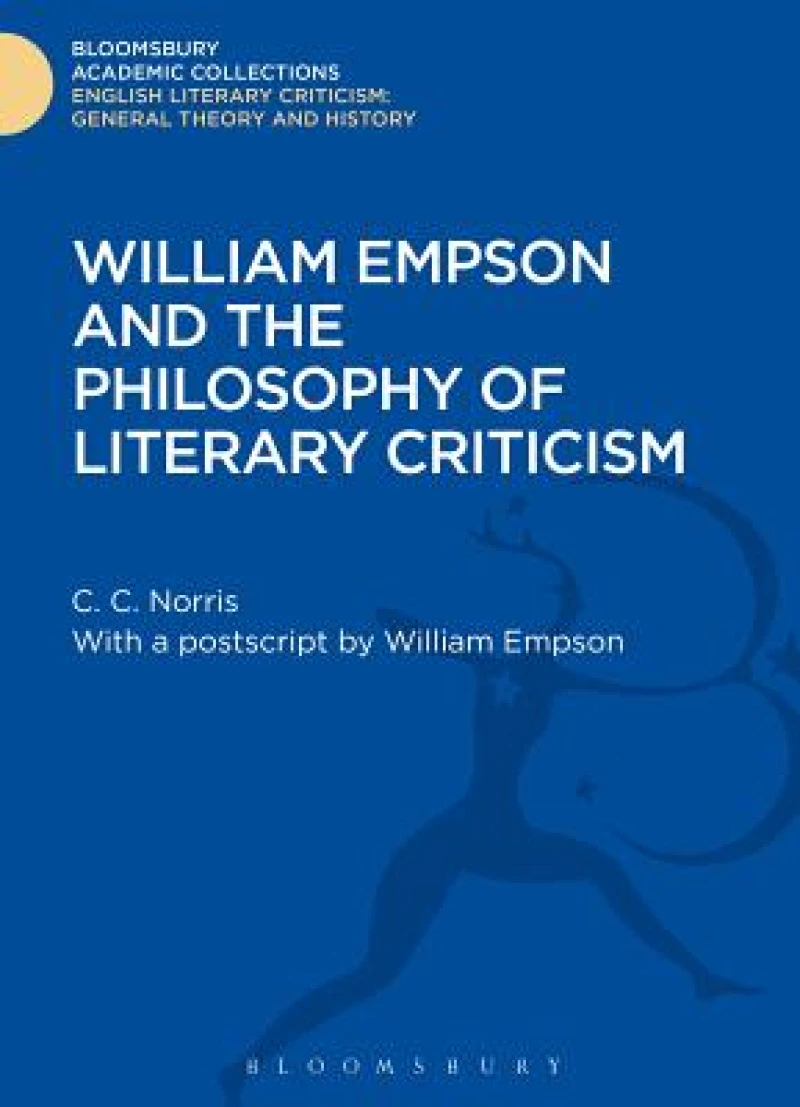
William Empson and the Philosophy of Literary Criticism
Book Details
Format
Hardback or Cased Book
ISBN-10
1472509706
ISBN-13
9781472509703
Publisher
Bloomsbury Publishing PLC
Imprint
Bloomsbury Academic
Country of Manufacture
GB
Country of Publication
GB
Publication Date
Nov 7th, 2013
Print length
222 Pages
Weight
278 grams
Product Classification:
Literary studies: general
Ksh 26,450.00
Manufactured on Demand
0 in stock
Delivery Location
Delivery fee: Select location
Secure
Quality
Fast
Following the publication of Seven Types of Ambiguity in 1930 William Empson was quickly recognised as a critic of great originality and unique creative gifts and he has inspired a whole new method and style of approach in literary criticism. But this is the first full-length study of his work and it is an important part of Dr Norris’s purpose to account for the gulf that has emerged between Empson’s viewpoint and the development of his ideas by others, especially the American New Critics, and for the consequent failure of Empson’s later books to generate the informed discussion they demand and deserve. Here particular attention is given to his critical summa, The Structure of Complex Words. To understand Empson’s work as a consistent whole, Dr Norris argues, one must relate it to his philosophy of humanistic rationalism. This is to give a new perspective not only to his practical criticism but also to his differences with Eliot and Leavis and to his anti-Christian polemic.
Get William Empson and the Philosophy of Literary Criticism by at the best price and quality guaranteed only at Werezi Africa's largest book ecommerce store. The book was published by Bloomsbury Publishing PLC and it has pages.

