
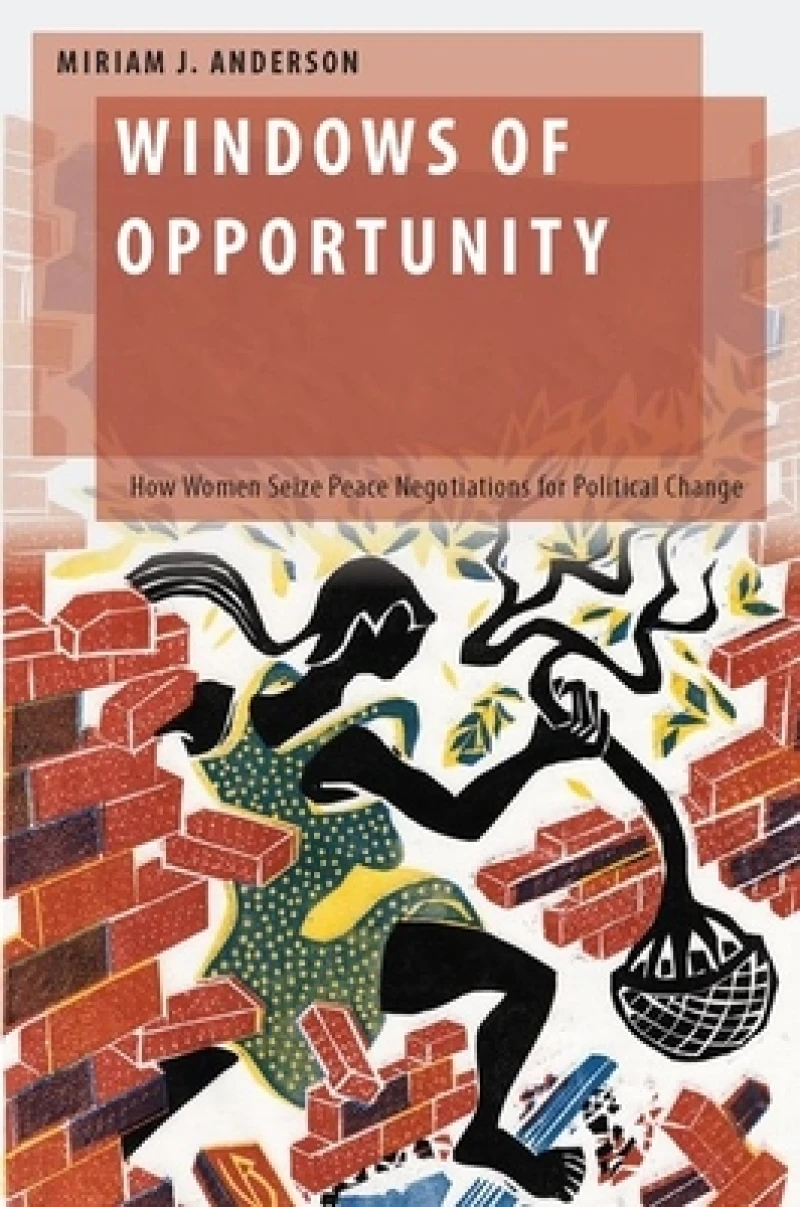
Windows of Opportunity : How Women Seize Peace Negotiations for Political Change
Book Details
Format
Hardback or Cased Book
ISBN-10
0190239530
ISBN-13
9780190239534
Publisher
Oxford University Press Inc
Imprint
Oxford University Press Inc
Country of Manufacture
GB
Country of Publication
GB
Publication Date
Jan 28th, 2016
Print length
232 Pages
Weight
442 grams
Dimensions
24.50 x 16.40 x 2.50 cms
Product Classification:
Peace studies & conflict resolutionPolitical science & theoryPolitical ideologies
Ksh 16,150.00
Manufactured on Demand
0 in stock
Delivery Location
Delivery fee: Select location
Secure
Quality
Fast
Windows of Opportunity depicts how women's advocacy groups seize peace processes to reconfigure their role in the state. It provides an overview of women's rights found in 195 peace agreements signed between 1975 and 2011 as well as an in-depth analysis of three case studies: Burundi, Macedonia, and Northern Ireland.
In 1915, women from over thirty countries met in The Hague to express opposition to World War I and propose ways to end it. The delegates made three demands: for women to be present at all international peace conferences, a womens-only peace conference to be convened alongside any official negotiations, and the establishment of universal suffrage. While these demands went unmet at the time, contemporary womens groups continue to seek participation in peace negotiations and to have language promoting gender equality inserted into all peace agreements. Between 1975 and 2011 about 40% of all conflicts that produced peace agreements resulted in at least one with references to women. Many of these clauses addressed compensation for wartime gender-based violence and guarantees for womens participation in the post-conflict transitional period. Others included electoral quotas and changes to inheritance legislation. Curiously, the language used to address women is near consistent across these agreements, and that is because it reflects international womens rights norms rather than more local norms. Why is it that though a peace agreements primary objective is to end conflict, some include potentially controversial provisions about gender that might delay or complicate reaching an agreement? Why do these provisions echo international norms rather than local, cultural ones? And which factors make it more likely that womens rights will appear in peace agreements? Windows of Opportunity answers these questions by examining peace negotiations in Burundi, Macedonia, and Northern Ireland along with 195 peace agreements signed between 1975 and 2011. It looks at the key actors involved in lobbying for womens participation, along with their motivations, objectives, and strategies. It also explores the reasons for similarities among the gender provisions.
Get Windows of Opportunity by at the best price and quality guaranteed only at Werezi Africa's largest book ecommerce store. The book was published by Oxford University Press Inc and it has pages.

