
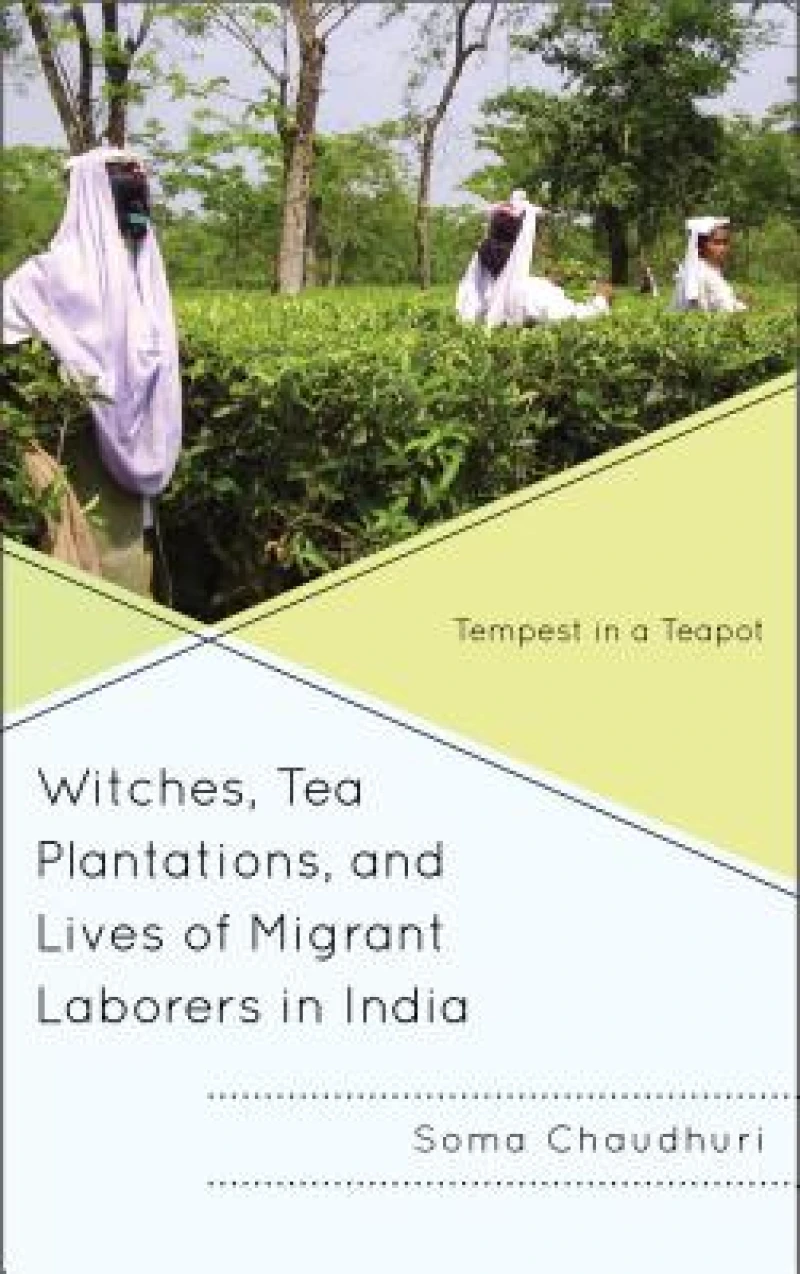
Witches, Tea Plantations, and Lives of Migrant Laborers in India : Tempest in a Teapot
Book Details
Format
Paperback / Softback
ISBN-10
0739185241
ISBN-13
9780739185247
Publisher
Bloomsbury Publishing Plc
Imprint
Lexington Books
Country of Manufacture
GB
Country of Publication
GB
Publication Date
Jun 3rd, 2016
Print length
190 Pages
Weight
316 grams
Dimensions
15.30 x 22.80 x 1.90 cms
Ksh 8,300.00
Werezi Extended Catalogue
0 in stock
Delivery Location
Delivery fee: Select location
Secure
Quality
Fast
Witches, Tea Plantations, and Lives of Migrant Laborers in India: Tempest in Teapot is a unique book that brings together a holistic theoretical approach on the subject of witchcraft accusations, specifically those taking place inside a tea workers'' community in India. Using a combination of in-depth and extensive qualitative methods, and drawing on sociological, anthropological, and historical perspectives, Chaudhuri explores how adivasi (tribal) migrant workers use witchcraft accusations to deal with worker-management conflict. Chaudhuri argues that witchcraft accusations can be interpreted as a periodic reaction of the adivasi worker community against their oppression by the plantation management. The typical avenues of social protest are often unavailable to marginalized workers due to lack of organizational and political representation and resources. As a result, the dain (witch) becomes a scapegoat for the malice of the plantation economy. Within this discourse, witch hunts can be seen not as exotic and primitive rituals of a backward community, but rather as a powerful protest by a community against its oppressors. The book attempts to understand the complex network of relationships—ties of friendship, family, politics, and gender—that provide the necessary legitimacy for the witch hunt to take place. In most cases examined here, seemingly petty conflicts within the villagers often escalate to a hunt. At the height of the conflict, the exploitative relationship between the plantation management and the adivasi migrant workers often gets hidden. The book demonstrates how witchcraft accusations should be interpreted within this backdrop of labor-planters relationship, characterized by rigidity of power, patronage, and social distance.Witches, Tea Plantations, and Lives of Migrant Laborers in India should appeal to criminologists, sociologists, anthropologists, labor historians, gender scholars, labor migration scholars, witch hunt and witchcraft accusation global scholars, adivasi scholars, South Asian scholars, and anyone interested in India’s tribes, witchcraft accusations, gender in a global world, labor conflict, and Indian tea plantations.
Witches, Tea Plantations, and Lives of Migrant Laborers in India: Tempest in Teapot is a unique book that brings together a holistic theoretical approach on the subject of witchcraft accusations, specifically those taking place inside a tea workers' community in India. Using a combination of in-depth and extensive qualitative methods, and drawing on sociological, anthropological, and historical perspectives, Chaudhuri explores how adivasi (tribal) migrant workers use witchcraft accusations to deal with worker-management conflict. Chaudhuri argues that witchcraft accusations can be interpreted as a periodic reaction of the adivasi worker community against their oppression by the plantation management. The typical avenues of social protest are often unavailable to marginalized workers due to lack of organizational and political representation and resources. As a result, the dain (witch) becomes a scapegoat for the malice of the plantation economy. Within this discourse, witch hunts can be seen not as exotic and primitive rituals of a backward community, but rather as a powerful protest by a community against its oppressors. The book attempts to understand the complex network of relationships—ties of friendship, family, politics, and gender—that provide the necessary legitimacy for the witch hunt to take place. In most cases examined here, seemingly petty conflicts within the villagers often escalate to a hunt. At the height of the conflict, the exploitative relationship between the plantation management and the adivasi migrant workers often gets hidden. The book demonstrates how witchcraft accusations should be interpreted within this backdrop of labor-planters relationship, characterized by rigidity of power, patronage, and social distance. Witches, Tea Plantations, and Lives of Migrant Laborers in India should appeal to criminologists, sociologists, anthropologists, labor historians, gender scholars, labor migration scholars, witch hunt and witchcraft accusation global scholars, adivasi scholars, South Asian scholars, and anyone interested in India’s tribes, witchcraft accusations, gender in a global world, labor conflict, and Indian tea plantations.
Get Witches, Tea Plantations, and Lives of Migrant Laborers in India by at the best price and quality guaranteed only at Werezi Africa's largest book ecommerce store. The book was published by Bloomsbury Publishing Plc and it has pages.

