
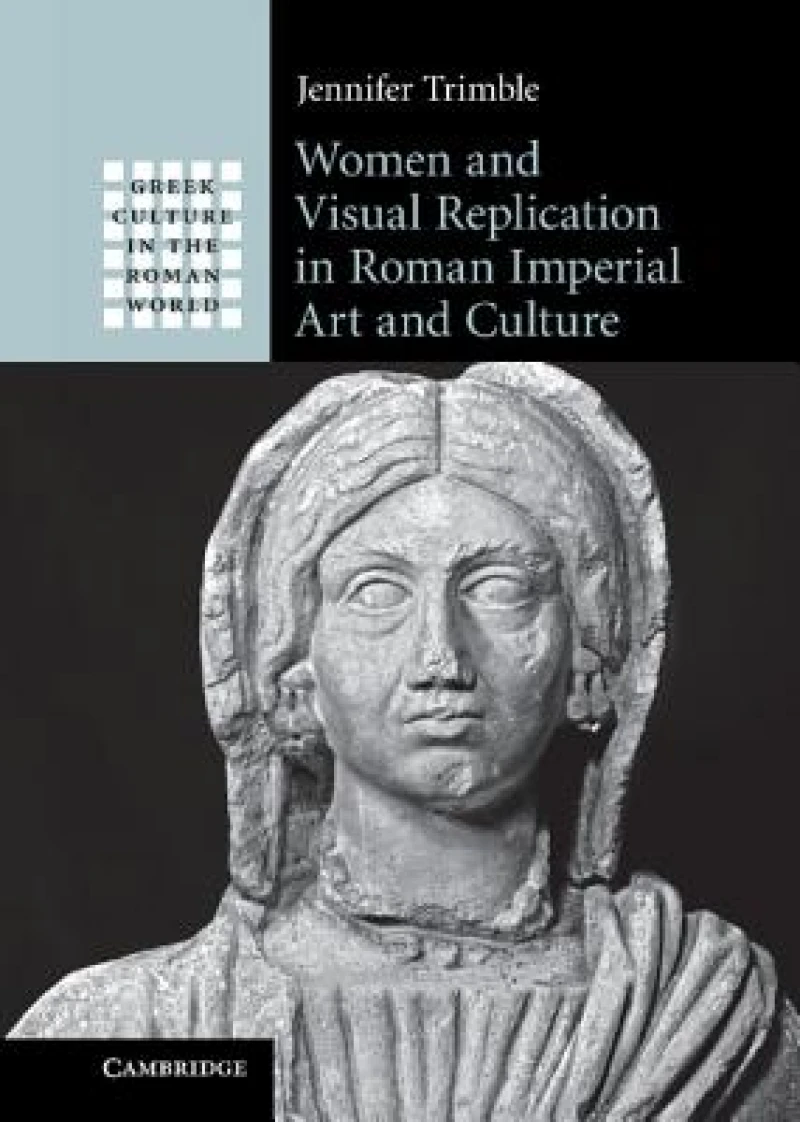
Women and Visual Replication in Roman Imperial Art and Culture
Book Details
Format
Hardback or Cased Book
Book Series
Greek Culture in the Roman World
ISBN-10
0521825156
ISBN-13
9780521825153
Publisher
Cambridge University Press
Imprint
Cambridge University Press
Country of Manufacture
GB
Country of Publication
GB
Publication Date
Sep 15th, 2011
Print length
500 Pages
Weight
1,140 grams
Dimensions
25.30 x 18.20 x 1.70 cms
Product Classification:
History of art: ancient & classical art,BCE to c 500 CEHistory of art
Ksh 22,700.00
Manufactured on Demand
0 in stock
Delivery Location
Delivery fee: Select location
Secure
Quality
Fast
Roman portrait statues, famed for their individuality, repeatedly employed the same body forms. This book examines the 'Large Herculaneum Woman' statue type, a draped female body common in the second century CE and surviving in about two hundred examples, to demonstrate how sameness helped to communicate a woman's social identity.
Why did Roman portrait statues, famed for their individuality, repeatedly employ the same body forms? The complex issue of the Roman copying of Greek 'originals' has so far been studied primarily from a formal and aesthetic viewpoint. Jennifer Trimble takes a broader perspective, considering archaeological, social historical and economic factors, and examines how these statues were made, bought and seen. To understand how Roman visual replication worked, Trimble focuses on the 'Large Herculaneum Woman' statue type, a draped female body particularly common in the second century CE and surviving in about two hundred examples, to assess how sameness helped to communicate a woman's social identity. She demonstrates how visual replication in the Roman Empire thus emerged as a means of constructing social power and articulating dynamic tensions between empire and individual localities.
Get Women and Visual Replication in Roman Imperial Art and Culture by at the best price and quality guaranteed only at Werezi Africa's largest book ecommerce store. The book was published by Cambridge University Press and it has pages.

