
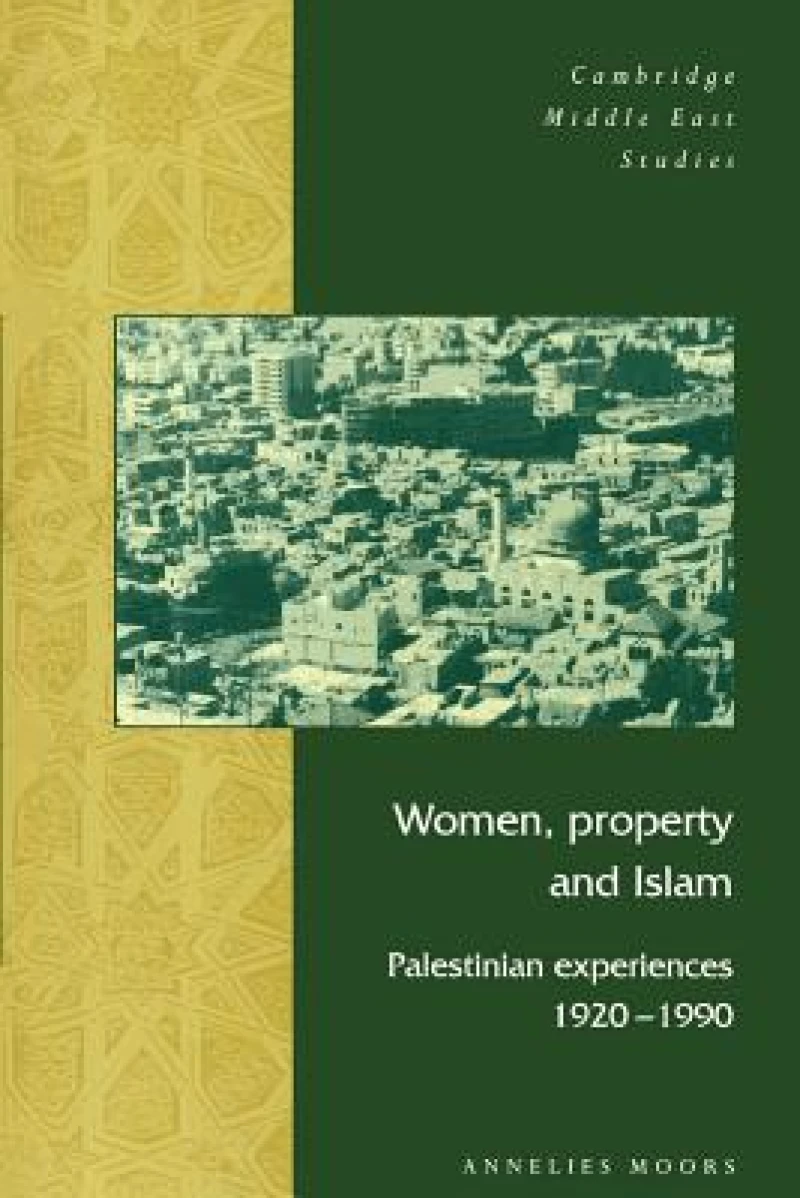
Women, Property and Islam : Palestinian Experiences, 1920–1990
Book Details
Format
Paperback / Softback
Book Series
Cambridge Middle East Studies
ISBN-10
0521483557
ISBN-13
9780521483551
Publisher
Cambridge University Press
Imprint
Cambridge University Press
Country of Manufacture
GB
Country of Publication
GB
Publication Date
Feb 29th, 1996
Print length
288 Pages
Weight
430 grams
Dimensions
22.60 x 15.00 x 1.60 cms
Ksh 4,800.00
Manufactured on Demand
0 in stock
Delivery Location
Delivery fee: Select location
Secure
Quality
Fast
Islamic law entitles women to inherit property and to manage their own income. This book examines under what circumstances they claim property rights and when they are prevented from doing so.
According to Islamic law, women are entitled to inherit property, to receive a dower at marriage, and to manage their own income. Through an anthropological study of Palestinian women in the Jabal Nablus region of the West Bank, Annelies Moors demonstrates that this is not always the case in practice. In fact, their options vary greatly depending on whether they gain access to property through inheritance, through the dower or through paid labour, and, indeed, on their background and position in society. The narratives of wealthy and poor urban women, and of women in the villages and in the refugee camps, indicate under what circumstances they claim property rights, and when they are prevented from doing so, and in which contexts they prefer to give up property in order to gain other advantages. While this is essentially an ethnographic work, the author''s use of court records has enabled her to address major historical changes in women''s ability to negotiate their rights to properly, focusing on the relation between local traditions, international politics and transnational labour migration.
Get Women, Property and Islam by at the best price and quality guaranteed only at Werezi Africa's largest book ecommerce store. The book was published by Cambridge University Press and it has pages.

