
Cart 0
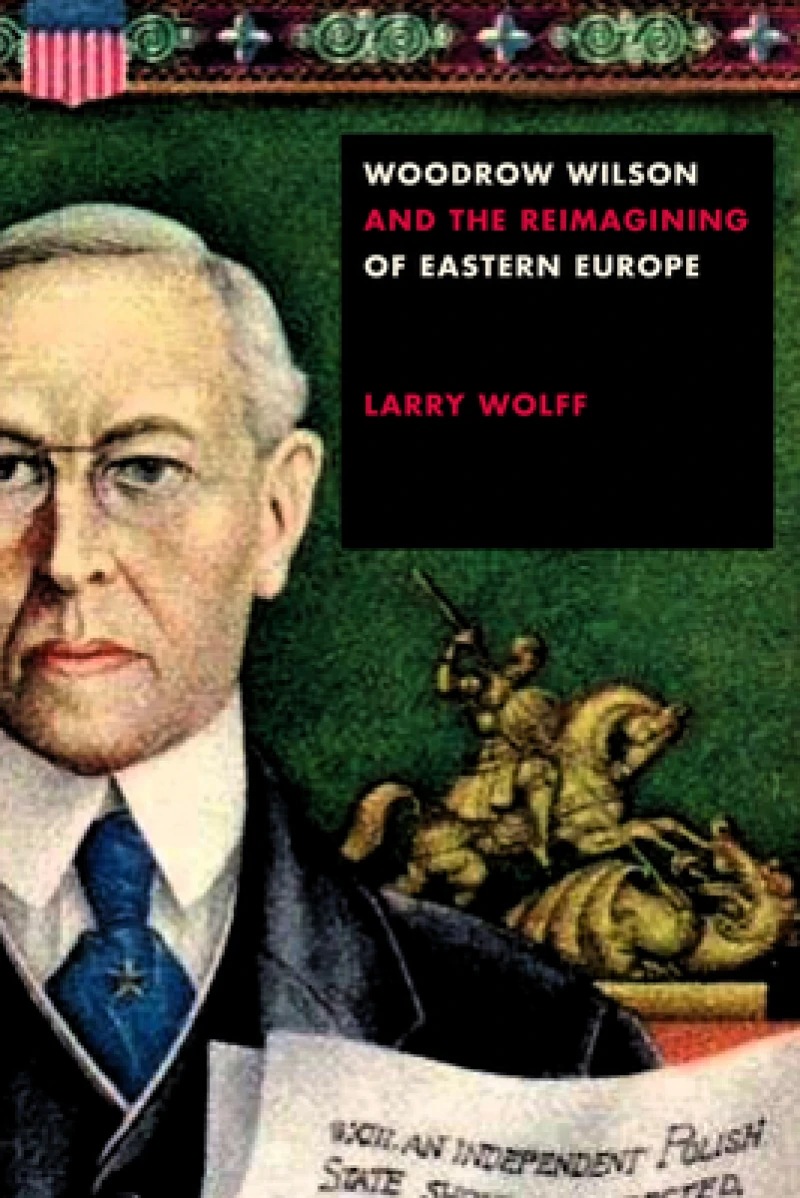
Woodrow Wilson and the Reimagining of Eastern Europe
Click to zoom

Share this book

Woodrow Wilson and the Reimagining of Eastern Europe

New

Book Details

Format Paperback / Softback
ISBN-10 1503611191
ISBN-13 9781503611191
Edition New
Publisher Stanford University Press
Imprint Stanford University Press
Country of Manufacture US
Country of Publication GB
Publication Date Jan 21st, 2020
Print length 277 Pages
Weight 450 grams
Dimensions 15.20 x 22.80 x 2.10 cms
Ksh 5,050.00
Werezi Extended Catalogue Delivery in 14 days

Delivery Location

Delivery fee: Select location

Delivery in 14 days

Secure
Quality
Fast
At the 1919 Paris Peace Conference, where the victorious Allied powers met to reenvision the map of Europe in the aftermath of World War I, President Woodrow Wilson's influence on the remapping of borders was profound. But it was his impact on the modern political structuring of Eastern Europe that would be perhaps his most enduring international legacy: neither Czechoslovakia nor Yugoslavia exist today, but their geopolitical presence persisted across the twentieth century from the end of World War I to the end of the Cold War. They were created in large part thanks to Wilson's advocacy, and in particular, his Fourteen Points speech of January 1918, which hinged in large part on the concept of national self-determination. But despite his deep involvement in the region's geopolitical transformation, President Wilson never set eyes on Eastern Europe, and never traveled to a single one of the eastern lands whose political destiny he so decisively influenced. Eastern Europe, invented in the age of Enlightenment by the travelers and philosophies of Western Europe, was reinvented on the map of the early twentieth century with the crucial intervention of an American president who deeply invested his political and emotional energies in lands that he would never visit. This book traces how Wilson's emerging definition of national self-determination and his practical application of the principle changed over time as negotiations at the Paris Peace Conference unfolded. Larry Wolff exposes the contradictions between Wilson's principles and their implementation in the peace settlement for Eastern Europe, and sheds light on how his decisions were influenced by both personal relationships and his growing awareness of the history of the Ottoman and Habsburg empires.

At the 1919 Paris Peace Conference, where the victorious Allied powers met to reenvision the map of Europe in the aftermath of World War I, President Woodrow Wilson''s influence on the remapping of borders was profound. But it was his impact on the modern political structuring of Eastern Europe that would be perhaps his most enduring international legacy: neither Czechoslovakia nor Yugoslavia exist today, but their geopolitical presence persisted across the twentieth century from the end of World War I to the end of the Cold War. They were created in large part thanks to Wilson''s advocacy, and in particular, his Fourteen Points speech of January 1918, which hinged in large part on the concept of national self-determination.

But despite his deep involvement in the region''s geopolitical transformation, President Wilson never set eyes on Eastern Europe, and never traveled to a single one of the eastern lands whose political destiny he so decisively influenced. Eastern Europe, invented in the age of Enlightenment by the travelers and philosophies of Western Europe, was reinvented on the map of the early twentieth century with the crucial intervention of an American president who deeply invested his political and emotional energies in lands that he would never visit.

This book traces how Wilson''s emerging definition of national self-determination and his practical application of the principle changed over time as negotiations at the Paris Peace Conference unfolded. Larry Wolff exposes the contradictions between Wilson''s principles and their implementation in the peace settlement for Eastern Europe, and sheds light on how his decisions were influenced by both personal relationships and his growing awareness of the history of the Ottoman and Habsburg empires.


Get Woodrow Wilson and the Reimagining of Eastern Europe by at the best price and quality guaranteed only at Werezi Africa's largest book ecommerce store. The book was published by Stanford University Press and it has pages.


Mind, Body, & Spirit

Price

Ksh 5,050.00

Shopping Cart

Africa largest book store

Sub Total:
Ebooks

Digital Library
Coming Soon

Our digital collection is currently being curated to ensure the best possible reading experience on Werezi. We'll be launching our Ebooks platform shortly.