
Book Details
Format
Paperback / Softback
ISBN-10
3631583729
ISBN-13
9783631583722
Edition
New
Publisher
Peter Lang AG
Imprint
Peter Lang AG
Country of Manufacture
DE
Country of Publication
GB
Publication Date
Sep 19th, 2008
Print length
142 Pages
Weight
200 grams
Dimensions
15.00 x 21.10 x 0.80 cms
Ksh 6,600.00
Manufactured on Demand
0 in stock
Delivery Location
Delivery fee: Select location
Secure
Quality
Fast
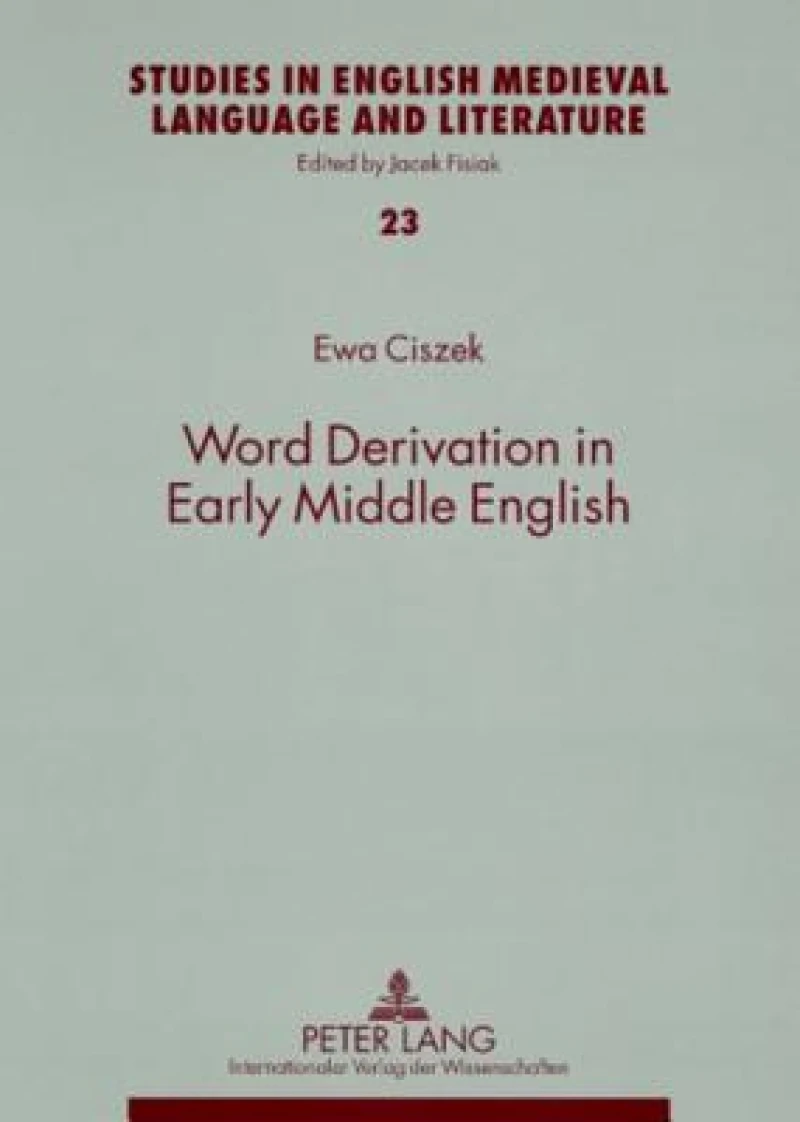
No comprehensive study of Early Middle English derivation has been published thus far. This book is an attempt to remedy the situation, at least to give a detailed analysis of one class of suffixes, i.e., seven suffixes forming abstract nouns. They are both of native (-dom, -s(c)hipe(e), -hod(e) and –nes(se)) and French origin (-age, -(e)rie and -ment). The analysis includes the semantics of the suffixes both from a diachronic and a synchronic perspective as well as their productivity and dialect distribution. The study is data-oriented, hence the analysis of linguistic facts is dominating. The analysed material comes from the Dictionary of Old English (A-F) based on the Toronto Corpus of Old English Texts, the Toronto Corpus and the Middle English Dictionary on-line. The unique features of the study are the account of the senses of the suffixes in Old and Early Middle English, and the semantic evolution of the native suffixes from Old to Early Middle English as well as the demonstration that some of the French suffixes were productive already in Early Middle English.
Get Word Derivation in Early Middle English by at the best price and quality guaranteed only at Werezi Africa's largest book ecommerce store. The book was published by Peter Lang AG and it has pages.

