
Cart 0
Work and Family in Japanese Society
Click to zoom

Share this book

Work and Family in Japanese Society

2020 ed.

Book Details

Format Paperback / Softback
ISBN-10 9811324956
ISBN-13 9789811324956
Edition 2020 ed.
Publisher Springer Verlag, Singapore
Imprint Springer Verlag, Singapore
Country of Manufacture SG
Country of Publication GB
Publication Date Dec 11th, 2019
Print length 61 Pages
Weight 454 grams
Dimensions 23.50 x 15.90 x 2.80 cms
Ksh 5,200.00
Werezi Extended Catalogue Delivery in 28 days

Delivery Location

Delivery fee: Select location

Delivery in 28 days

Secure
Quality
Fast
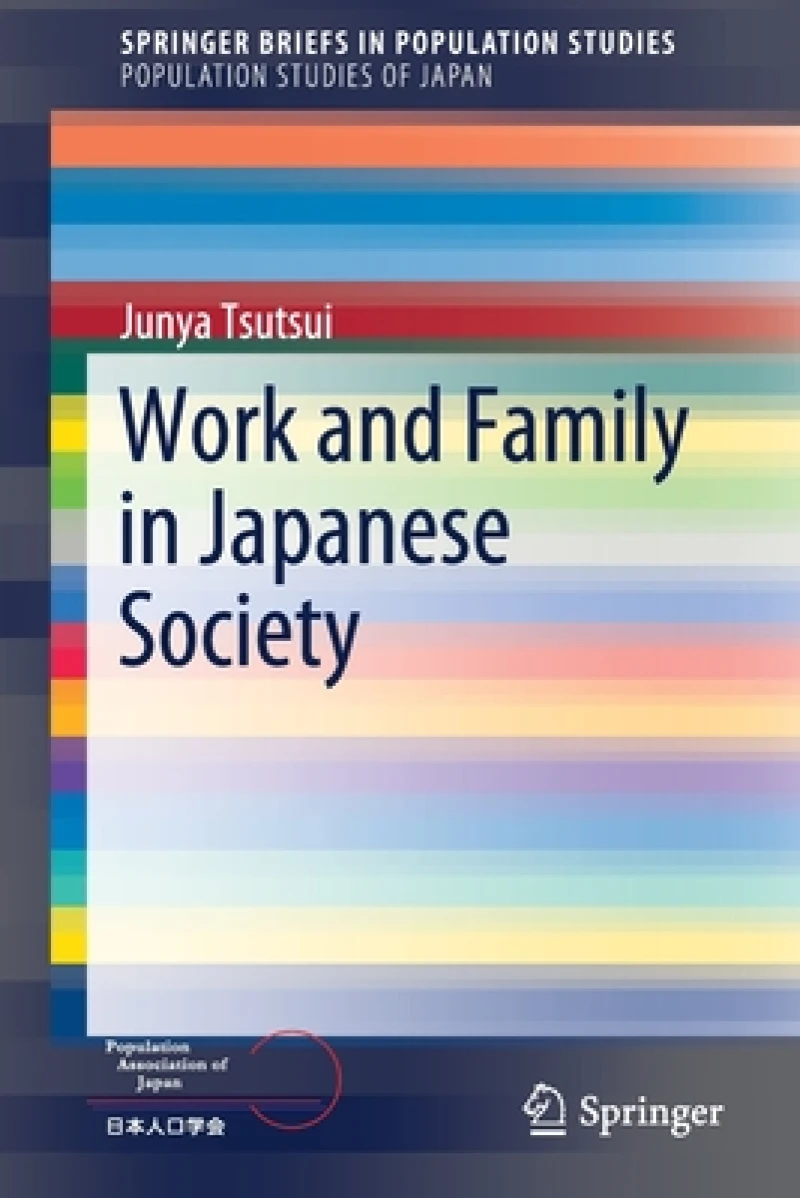
This book provides a systematic framework for interpreting the fertility decline in Japan. It situates the change in fertility rates in a broader context, such as family life and working customs. The basic argument it puts forward is that Japan has failed to establish a “dual-earner” society: women still face the trade-off between having a career or starting a family, which has led to an extremely low fertility rate in Japanese society. Further to this rather common explanation, which could also be applied to other low-fertility societies such as Germany and Italy, the author presents an original view. Japan has had its own momentum in holding on to its strong “men as breadwinners and women as housekeepers” model by creating a unique regime, namely, a Japanese model of a welfare society. This regime places special emphasis on the welfare provided by private companies and family members instead of by the government. Private firms are expected to secure men’s jobs and income to the greatest extent, taking advantage of Japanese employment customs. On the other hand, women are expected to provide care for their family members. The book argues that the familialist orientation is still dominant in Japan and is repeatedly reinforced in the policy context. 

This book provides a systematic framework for interpreting the fertility decline in Japan. It situates the change in fertility rates in a broader context, such as family life and working customs. The basic argument it puts forward is that Japan has failed to establish a "dual-earner" society: women still face the trade-off between having a career or starting a family, which has led to an extremely low fertility rate in Japanese society.

Further to this rather common explanation, which could also be applied to other low-fertility societies such as Germany and Italy, the author presents an original view. Japan has had its own momentum in holding on to its strong "men as breadwinners and women as housekeepers" model by creating a unique regime, namely, a Japanese model of a welfare society. This regime places special emphasis on the welfare provided by private companies and family members instead of by the government. Private firms are expected to secure men''s jobs and income to the greatest extent, taking advantage of Japanese employment customs. On the other hand, women are expected to provide care for their family members. The book argues that the familialist orientation is still dominant in Japan and is repeatedly reinforced in the policy context. 


Get Work and Family in Japanese Society by at the best price and quality guaranteed only at Werezi Africa's largest book ecommerce store. The book was published by Springer Verlag, Singapore and it has pages.


Mind, Body, & Spirit

Price

Ksh 5,200.00

Shopping Cart

Africa largest book store

Sub Total:
Ebooks

Digital Library
Coming Soon

Our digital collection is currently being curated to ensure the best possible reading experience on Werezi. We'll be launching our Ebooks platform shortly.