
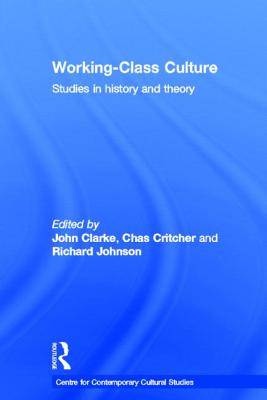
Working Class Culture : Studies in History and Theory
Book Details
Format
Hardback
ISBN-10
0415405130
ISBN-13
9780415405133
Publisher
Taylor & Francis Ltd
Imprint
Routledge
Country of Manufacture
GB
Country of Publication
GB
Publication Date
Nov 28th, 2006
Print length
306 Pages
Weight
584 grams
Dimensions
24.20 x 16.60 x 2.20 cms
Product Classification:
Social & cultural historySocial classes
KSh 26,300.00
Currently unavailable
0 in stock
Delivery Location
Delivery fee: Select location
Secure
Quality
Fast
First published in 2013. How can we define working class culture? Since the late 1950s, the term has become more complex, because of both social changes and intense debates about the meaning of ‘culture’. Through this collection of original case studies and theoretical essays, the authors explore some central problems in the field. The first part of the book provides a unique critical review of existing literature, focusing on two main traditions of writing about the working class. Examining the empirical sociology tradition, the authors analyse a group of books from the post-war debate about affluence and its immediate aftermath. In looking at the related tradition of working class historiography, they examine the origins of social and labour history from the 1880s up to the 1960s, and conclude by discussing some of the dilemmas of history writing in the 1970s. Part two is a series of case studies which span the whole period that a working class has existed, with emphasis on the late nineteenth and twentieth centuries, and which examine the most important spheres of working class life: politics, education, youth, recreation, waged and domestic labour. Part three returns to some of the problems raised in part one, considering three main ways in which working class culture can be understood, through the problematics of ‘consciousness’, ‘culture’ or ‘ideology’, and examining the strengths and weaknesses of each approach. The authors argue for a more fruitful and developed way of thinking about working class culture, and suggest some guidelines for a history of the post-war working class.
First published in 2013. How can we define working class culture? Since the late 1950s, the term has become more complex, because of both social changes and intense debates about the meaning of ‘culture’. Through this collection of original case studies and theoretical essays, the authors explore some central problems in the field. The first part of the book provides a unique critical review of existing literature, focusing on two main traditions of writing about the working class. Examining the empirical sociology tradition, the authors analyse a group of books from the post-war debate about affluence and its immediate aftermath. In looking at the related tradition of working class historiography, they examine the origins of social and labour history from the 1880s up to the 1960s, and conclude by discussing some of the dilemmas of history writing in the 1970s. Part two is a series of case studies which span the whole period that a working class has existed, with emphasis on the late nineteenth and twentieth centuries, and which examine the most important spheres of working class life: politics, education, youth, recreation, waged and domestic labour. Part three returns to some of the problems raised in part one, considering three main ways in which working class culture can be understood, through the problematics of ‘consciousness’, ‘culture’ or ‘ideology’, and examining the strengths and weaknesses of each approach. The authors argue for a more fruitful and developed way of thinking about working class culture, and suggest some guidelines for a history of the post-war working class.
Get Working Class Culture by CCCS at the best price and quality guaranteed only at Werezi Africa's largest book ecommerce store. The book was published by Taylor & Francis Ltd and it has 306 pages.
Customers Who Bought This Also Bought
The Finest Hotel in Kabul
KSh 2,150.00

Black Wave
KSh 2,700.00

Migrations
KSh 5,450.00
Art of War / The Book of Lord Shang
KSh 1,100.00

Nexus
KSh 2,350.00

World According to Colour
KSh 2,700.00

Crusade for Justice – The Autobiography of Ida B. Wells, Second Edition
KSh 4,050.00

Modern Classics Road To Wigan Pier
KSh 1,800.00

The Origins of Totalitarianism
KSh 2,700.00
In the Wake
KSh 3,600.00
Question of Palestine
KSh 2,700.00

Palestine
KSh 2,400.00
