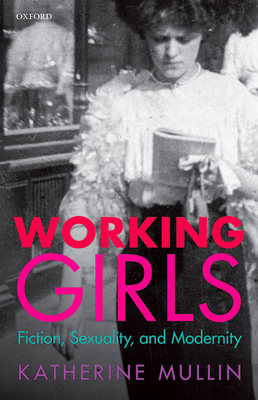
Working Girls : Fiction, Sexuality, and Modernity
Book Details
Format
Hardback
ISBN-10
0198724845
ISBN-13
9780198724841
Publisher
Oxford University Press
Imprint
Oxford University Press
Country of Manufacture
GB
Country of Publication
GB
Publication Date
May 5th, 2016
Print length
288 Pages
Weight
556 grams
Dimensions
16.30 x 24.10 x 2.30 cms
KSh 20,350.00
Currently unavailable
0 in stock
Delivery Location
Delivery fee: Select location
Secure
Quality
Fast
Working Girls offers a cultural and literary history of telegraphists, typists, shop-girls, and barmaids. It argues that these occupations helped to shape a distinctively new identity for emancipated young women, and explores how authors used this to navigate a precarious literary landscape.
Working Girls: Fiction, Sexuality, and Modernity investigates the significance of a new form of sexual identity at the end of the nineteenth and beginning of the twentieth century. Young women of the lower-middle and working classes were increasingly abandoning domestic service in favour of occupations of contested propriety. They inspired both moral unease and erotic fascination. Working Girls considers representations of four highly glamorised yet controversial types of women worker: telegraphists and typists (in newly-feminised offices), shop assistants (in the new department stores), and barmaids (in the new ''gin palaces'' of major British cities).Economically emancipated (more or less) and liberated (more or less) from the protection and constraints of home and family, shop-girls, barmaids, typists, and telegraphists became mass media sensations. They energised a wide range of late-Victorian and Modernist fiction. This study will bring late-Victorian and Modernist British writers into intimate conversation with a substantial new archive of ephemeral sources often regarded as remote from high art and its concerns: popular fiction; music hall and musical comedy; beauty pageants and fairground exhibitions; visual art and early film; careers manuals; magazine and periodical journalism; moral reform crusades, Royal Commissions, and attempts at protective legislation. Working Girls argues that these seductive yet perilous young women helped writers negotiate anxieties about the state of literary culture in the United Kingdom. Crucially, they preoccupy novelists who were themselves beleaguered by anxieties over cultural capital, the shifting pressures of the literary marketplace, or controversies about the morality of fiction (often leading to the threat of censorship). In articulating questions about sexual integrity, Working Girls articulate often submerged questions about textual integrity and the role of the modern novel.
Get Working Girls by Katherine Mullin at the best price and quality guaranteed only at Werezi Africa's largest book ecommerce store. The book was published by Oxford University Press and it has 288 pages.
Customers Who Bought This Also Bought
The Picture of Dorian Gray
KSh 1,250.00
Pride and Prejudice
KSh 1,150.00

Moby-Dick
KSh 1,750.00
Emma
KSh 1,350.00
The Karamazov Brothers
KSh 2,100.00
Persuasion
KSh 1,100.00

Bleak House
KSh 2,150.00
What Matters in Jane Austen?
KSh 2,700.00

A Tale of Two Cities
KSh 1,200.00
Little Women
KSh 1,550.00

David Copperfield
KSh 2,100.00
Mansfield Park
KSh 1,250.00