
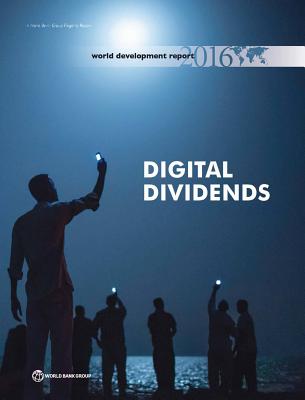
World Development Report 2016 : Digital Dividends
Book Details
Format
Paperback / softback
Book Series
World Development Report
ISBN-10
1464806713
ISBN-13
9781464806711
Publisher
World Bank Publications
Imprint
World Bank Publications
Country of Manufacture
US
Country of Publication
GB
Publication Date
Jan 14th, 2016
Print length
376 Pages
Weight
880 grams
Dimensions
20.70 x 30.30 x 2.40 cms
KSh 5,950.00
Currently unavailable
0 in stock
Delivery Location
Delivery fee: Select location
Secure
Quality
Fast
Analyses the internet’s impact on economic growth, on social and economic opportunity, and on the efficiency of public service delivery. The report explores the factors that have allowed some businesses, people, and governments to benefit greatly from the internet – and others not.
Digital technologies are spreading rapidly, but digital dividends--the broader benefits of faster growth, more jobs, and better services--are not. If more than 40 percent of adults in East Africa pay their utility bills using a mobile phone, why can’t others around the world do the same? If 8 million entrepreneurs in China--one third of them women--can use an e-commerce platform to export goods to 120 countries, why can’t entrepreneurs elsewhere achieve the same global reach? And if India can provide unique digital identification to 1 billion people in five years, and thereby reduce corruption by billions of dollars, why can’t other countries replicate its success? Indeed, what’s holding back countries from realizing the profound and transformational effects that digital technologies are supposed to deliver?
Two main reasons. First, nearly 60 percent of the world’s population are still offline and can’t participate in the digital economy in any meaningful way. Second, and more important, the benefits of digital technologies can be offset by growing risks. Startups can disrupt incumbents, but not when vested interests and regulatory uncertainty obstruct competition and the entry of new firms. Employment opportunities may be greater, but not when the labor market is polarized. The internet can be a platform for universal empowerment, but not when it becomes a tool for state control and elite capture.
The World Development Report 2016 shows that while the digital revolution has forged ahead, its ''analog complements''--the regulations that promote entry and competition, the skills that enable workers to access and then leverage the new economy, and the institutions that are accountable to citizens--have not kept pace. And when these analog complements to digital investments are absent, the development impact can be disappointing.
What, then, should countries do? They should formulate digital development strategies that are much broader than current information and communication technology (ICT) strategies. They should create a policy and institutional environment for technology that fosters the greatest benefits. In short, they need to build a strong analog foundation to deliver digital dividends to everyone, everywhere.
Two main reasons. First, nearly 60 percent of the world’s population are still offline and can’t participate in the digital economy in any meaningful way. Second, and more important, the benefits of digital technologies can be offset by growing risks. Startups can disrupt incumbents, but not when vested interests and regulatory uncertainty obstruct competition and the entry of new firms. Employment opportunities may be greater, but not when the labor market is polarized. The internet can be a platform for universal empowerment, but not when it becomes a tool for state control and elite capture.
The World Development Report 2016 shows that while the digital revolution has forged ahead, its ''analog complements''--the regulations that promote entry and competition, the skills that enable workers to access and then leverage the new economy, and the institutions that are accountable to citizens--have not kept pace. And when these analog complements to digital investments are absent, the development impact can be disappointing.
What, then, should countries do? They should formulate digital development strategies that are much broader than current information and communication technology (ICT) strategies. They should create a policy and institutional environment for technology that fosters the greatest benefits. In short, they need to build a strong analog foundation to deliver digital dividends to everyone, everywhere.
Get World Development Report 2016 by World Bank Group at the best price and quality guaranteed only at Werezi Africa's largest book ecommerce store. The book was published by World Bank Publications and it has 376 pages.
Customers Who Bought This Also Bought

The White Man''s Burden
KSh 2,900.00

We Are Not Able to Live in the Sky
KSh 3,400.00

New Confessions of an Economic Hit Man
KSh 2,700.00

Good Economics for Hard Times
KSh 2,350.00

The Bottom Billion
KSh 2,500.00

How to Win a Trade War
KSh 3,050.00

World for Sale
KSh 2,150.00

Trade Wars Are Class Wars – How Rising Inequality Distorts the Global Economy and Threatens International Peace
KSh 2,600.00

Capital and Ideology
KSh 7,450.00

Doom Loop
KSh 4,150.00

Shared Prosperity in a Fractured World
KSh 4,000.00

Big Con
KSh 2,350.00
More by World Bank Group

World Development Report 2024
KSh 10,900.00

Boosting Productivity in Sub-Saharan Africa
KSh 5,800.00

Design for Impact
KSh 6,150.00

International Debt Report 2024
KSh 5,750.00

Global Economic Prospects, January 2026
KSh 6,500.00

World Development Indicators 2011
KSh 15,000.00

Global Economic Prospects, June 2026
KSh 5,750.00

Climate Change and the World Bank Group
KSh 3,850.00

The Global Health Cost of PM2.5 Air Pollution
KSh 5,400.00
Global Economic Prospects, January 2019
KSh 5,950.00

Global Development Finance 2009
KSh 8,450.00

Equality of Opportunity for Sexual and Gender Minorities 2024
KSh 6,300.00
