
World Ordering : A Social Theory of Cognitive Evolution
Book Details
Format
Paperback / softback
Book Series
Cambridge Studies in International Relations
ISBN-10
110841267X
ISBN-13
9781108412674
Publisher
Cambridge University Press
Imprint
Cambridge University Press
Country of Manufacture
GB
Country of Publication
GB
Publication Date
Mar 7th, 2019
Print length
394 Pages
Weight
578 grams
Dimensions
18.50 x 22.60 x 2.40 cms
Product Classification:
Social & political philosophySocial theoryInternational relationsSocial and political philosophy
KSh 6,350.00
Currently unavailable
0 in stock
Delivery Location
Delivery fee: Select location
Secure
Quality
Fast
Building on his research on constructivist theory, and communities and practices, Adler suggests cognitive evolution, a timely social and normative theory of world ordering. It explains why configurations of practices organize and govern social orders epistemically and normatively, and why and how they evolve from one social order to another.
Drawing on evolutionary epistemology, process ontology, and a social-cognition approach, this book suggests cognitive evolution, an evolutionary-constructivist social and normative theory of change and stability of international social orders. It argues that practices and their background knowledge survive preferentially, communities of practice serve as their vehicle, and social orders evolve. As an evolutionary theory of world ordering, which does not borrow from the natural sciences, it explains why certain configurations of practices organize and govern social orders epistemically and normatively, and why and how these configurations evolve from one social order to another. Suggesting a multiple and overlapping international social orders'' approach, the book uses three running cases of contested orders - Europe''s contemporary social order, the cyberspace order, and the corporate order - to illustrate the theory. Based on the concepts of common humanity and epistemological security, the author also submits a normative theory of better practices and of bounded progress.
Get World Ordering by Emanuel Adler at the best price and quality guaranteed only at Werezi Africa's largest book ecommerce store. The book was published by Cambridge University Press and it has 394 pages.
Customers Who Bought This Also Bought

End of History and the Last Man
KSh 2,700.00

12 Rules for Life
KSh 2,350.00

The 48 Laws of Power
KSh 4,700.00

Second Treatise of Government – Norton Library
KSh 1,600.00

Discipline and Punish
KSh 2,350.00

The Prince The Original Classic
KSh 2,150.00

How to Be a Leader – An Ancient Guide to Wise Leadership
KSh 2,800.00

The Origin of Others
KSh 3,600.00
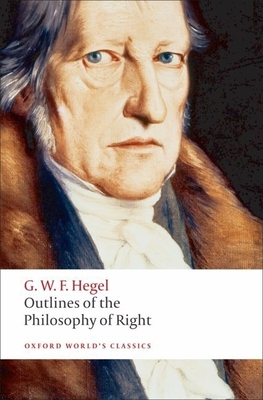
Outlines of the Philosophy of Right
KSh 2,500.00

How Fascism Works
KSh 2,900.00

The Prince
KSh 1,800.00

Who''s Afraid of Gender?
KSh 2,350.00