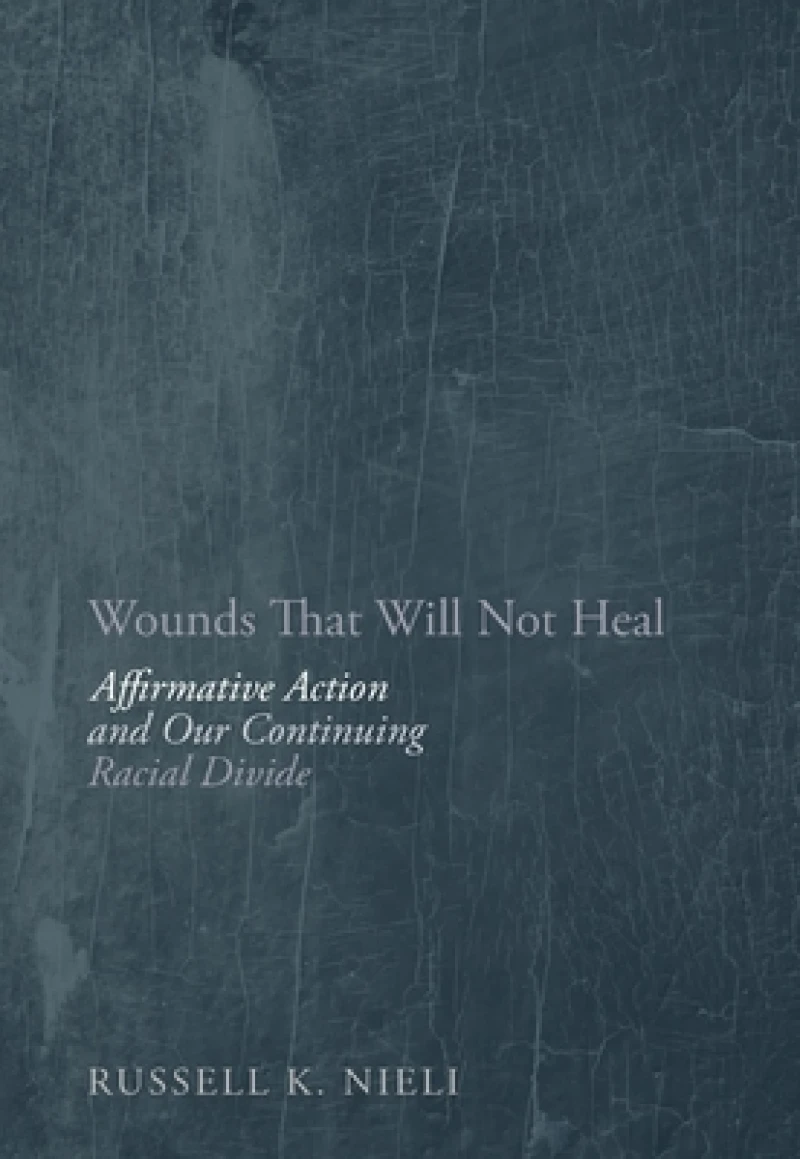
Wounds That Will Not Heal : Affirmative Action and Our Continuing Racial Divide
Book Details
Format
Hardback or Cased Book
ISBN-10
1594035822
ISBN-13
9781594035821
Publisher
Encounter Books,USA
Imprint
Encounter Books,USA
Country of Manufacture
GB
Country of Publication
GB
Publication Date
Jan 3rd, 2013
Print length
456 Pages
Weight
722 grams
Product Classification:
Society & culture: generalCentral government policiesLabour economics
Ksh 4,050.00
Re-Printing
0 in stock
Delivery Location
Delivery fee: Select location
Secure
Quality
Fast
Racial preference policies first came on the national scene as a response to black poverty and alienation in America as dramatically revealed in the destructive urban riots of the late 1960s. From the start, however, preference policies were controversial and were greeted by many, including many who had fought the good fight against segregation and Jim Crow to further a color-blind justice, with a sense of outrage and deep betrayal. In the more than forty years that preference policies have been with us little has changed in terms of public opinion, as polls indicate that a majority of Americans continue to oppose such policies, often with great intensity. In Wounds That Will Not Heal political theorist Russell K. Nieli surveys some of the more important social science research on racial preference policies over the past two decades, much of which, he shows, undermines the central claims of preference policy supporters. The mere fact that preference policies have to be referred to through an elaborate system of euphemisms and code words- "affirmative action," "diversity," "goals and timetables," "race sensitive admissions"- tells us something, Nieli argues, about their widespread unpopularity, their tendency to reinforce negative stereotypes about their intended beneficiaries, and their incompatibility with core principles of American justice. Nieli concludes with an impassioned plea to refocus our public attention on the "truly disadvantaged" African American population in our nation's urban centers-the people for whom affirmative action policies were initially instituted but whose interests, Nieli charges, were soon forgotten as the fruits of the policies were hijacked by members of the black and Hispanic middle class. Few will be able to read this book without at least questioning the wisdom of our current race-based preference regime, which Nieli analyses with a penetrating gaze and an eye for cant that will leave few unmoved.
Racial preference policies first came on the national scene as a response to black poverty and alienation in America as dramatically revealed in the destructive urban riots of the late 1960s. From the start, however, preference policies were controversial and were greeted by many, including many who had fought the good fight against segregation and Jim Crow to further a color-blind justice, with a sense of outrage and deep betrayal. In the more than forty years that preference policies have been with us little has changed in terms of public opinion, as polls indicate that a majority of Americans continue to oppose such policies, often with great intensity.
In Wounds That Will Not Heal political theorist Russell K. Nieli surveys some of the more important social science research on racial preference policies over the past two decades, much of which, he shows, undermines the central claims of preference policy supporters. The mere fact that preference policies have to be referred to through an elaborate system of euphemisms and code words— "affirmative action," "diversity," "goals and timetables," "race sensitive admissions"— tells us something, Nieli argues, about their widespread unpopularity, their tendency to reinforce negative stereotypes about their intended beneficiaries, and their incompatibility with core principles of American justice. Nieli concludes with an impassioned plea to refocus our public attention on the "truly disadvantaged" African American population in our nation''s urban centers—the people for whom affirmative action policies were initially instituted but whose interests, Nieli charges, were soon forgotten as the fruits of the policies were hijacked by members of the black and Hispanic middle class. Few will be able to read this book without at least questioning the wisdom of our current race-based preference regime, which Nieli analyses with a penetrating gaze and an eye for cant that will leave few unmoved.
In Wounds That Will Not Heal political theorist Russell K. Nieli surveys some of the more important social science research on racial preference policies over the past two decades, much of which, he shows, undermines the central claims of preference policy supporters. The mere fact that preference policies have to be referred to through an elaborate system of euphemisms and code words— "affirmative action," "diversity," "goals and timetables," "race sensitive admissions"— tells us something, Nieli argues, about their widespread unpopularity, their tendency to reinforce negative stereotypes about their intended beneficiaries, and their incompatibility with core principles of American justice. Nieli concludes with an impassioned plea to refocus our public attention on the "truly disadvantaged" African American population in our nation''s urban centers—the people for whom affirmative action policies were initially instituted but whose interests, Nieli charges, were soon forgotten as the fruits of the policies were hijacked by members of the black and Hispanic middle class. Few will be able to read this book without at least questioning the wisdom of our current race-based preference regime, which Nieli analyses with a penetrating gaze and an eye for cant that will leave few unmoved.
Get Wounds That Will Not Heal by at the best price and quality guaranteed only at Werezi Africa's largest book ecommerce store. The book was published by Encounter Books,USA and it has pages.