
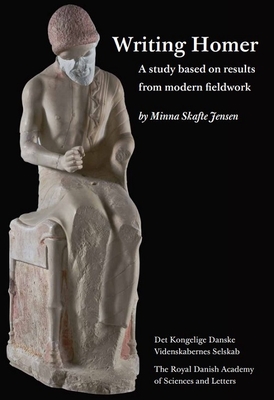
Writing Homer : A Study Based on Results from Modern Fieldwork
Book Details
Format
Paperback / softback
Book Series
Scientia Danica, Series H. Humanistica
ISBN-10
8773043613
ISBN-13
9788773043615
Publisher
Det Kongelige Danske Videnskabernes Selskab
Imprint
Det Kongelige Danske Videnskabernes Selskab
Country of Manufacture
DK
Country of Publication
GB
Publication Date
Apr 1st, 2011
Print length
440 Pages
Weight
802 grams
Dimensions
22.80 x 15.50 x 2.80 cms
Product Classification:
Literary studies: classical, early & medievalAncient history: to c 500 CE
KSh 6,500.00
Currently unavailable
0 in stock
Delivery Location
Delivery fee: Select location
Secure
Quality
Fast
It is unknown, of course, who wrote the Iliad and the Odyssey since in general no reliable contemporary description of how the two epics came into being is to be found. Such sources as there are – first and foremost the two poems themselves – must be interpreted in a comparative framework built on experience from societies in the modern world that are in some respects similar to archaic Greece in order to reach a coherent picture of the process. The oral-formulaic theory formed by Milman Parry (1902-35) and Albert B. Lord (1912-91) not only revolutionised Homeric studies but also had an impact on anthropology and folklore. It led to increased interest in oral epic traditions, and fieldworkers changed their methods towards a focus on composition in performance. Individual singers and their handling of the tradition gained importance. When possible, more than one performance of the "same" song was recorded, by the same singer on different occasions or by different singers, and interaction with the audience was documented. A wealth of editions and studies of oral epics from various parts of the world is accessible and is used in the present study as an inspiration for achieving a deeper understanding of the methods at work in oral epic, for building a likely social context of the Iliad and the Odyssey, and especially for speculating on the circumstances of the writing of the two great poems. Long oral narratives are flexible, and accordingly, the dictation to scribes that must be at the origin of the texts which have been preserved in writing to this day, was a process of the utmost importance as the composition in performance of the Iliad and the Odyssey. The study is directed at classical scholars but will hopefully be of interest to a much broader readership: folklorists, anthropologists, and whoever enjoys reading Homer, in Greek as well as in translation.
Get Writing Homer by Minna Skafte Jensen at the best price and quality guaranteed only at Werezi Africa's largest book ecommerce store. The book was published by Det Kongelige Danske Videnskabernes Selskab and it has 440 pages.
Customers Who Bought This Also Bought
The Odyssey
KSh 1,800.00
The Odyssey
KSh 1,600.00
The Divine Comedy
KSh 2,350.00
Annals
KSh 2,350.00
Classical Literary Criticism
KSh 2,350.00
Great Dialogues of Plato
KSh 1,450.00
The Divine Comedy
KSh 2,700.00
The Iliad
KSh 1,800.00

The Masnavi, Book Six
KSh 2,000.00

The Masnavi, Book Five
KSh 1,800.00
Chaucer's Pardoner and Gender Theory
KSh 8,100.00
Classical Literary Criticism
KSh 1,800.00


