
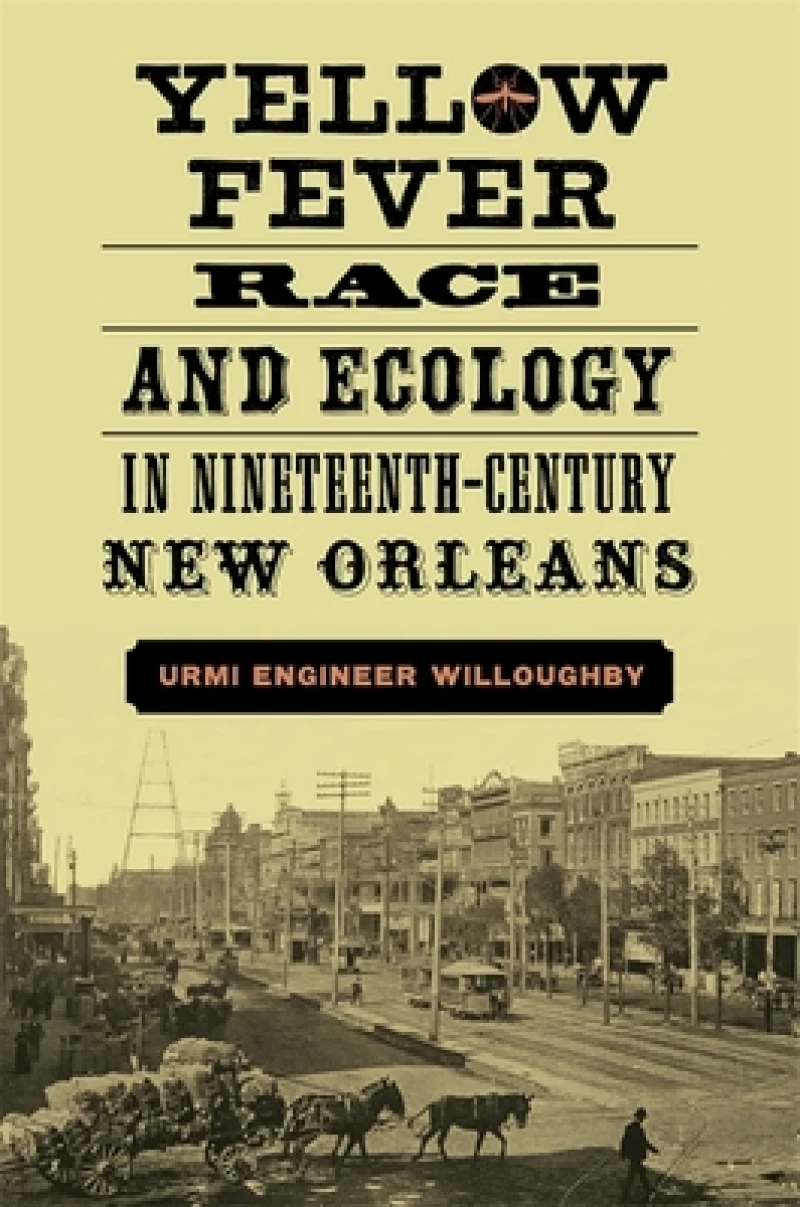
Yellow Fever, Race, and Ecology in Nineteenth-Century New Orleans
Book Details
Format
Hardback or Cased Book
Book Series
The Natural World of the Gulf South
ISBN-10
0807167746
ISBN-13
9780807167748
Publisher
Louisiana State University Press
Imprint
Louisiana State University Press
Country of Manufacture
US
Country of Publication
GB
Publication Date
Dec 13th, 2017
Print length
264 Pages
Weight
333 grams
Dimensions
22.70 x 17.60 x 2.90 cms
Product Classification:
History of the AmericasModern history to 20th century: c 1700 to c 1900Ethnic studies / EthnicityEthnic studiesPublic health & preventive medicinePublic health and preventive medicineDiseases & disordersDiseases and disordersForensic medicineForensic medicineHistoryHistory of the AmericasApplied ecology
Ksh 6,500.00
Temporarily out of stock, due soon
0 in stock
Delivery Location
Delivery fee: Select location
Secure
Quality
Fast
Through the innovative perspective of environment and culture, Urmi Engineer Willoughby examines yellow fever in New Orleans. Linking local epidemics to the city's place in the Atlantic world, Willoughby analyses how incidences of and responses to the disease grew out of an environment shaped by sugar, slavery, and urban development.
Through the innovative perspective of environment and culture, Urmi Engineer Willoughby examines yellow fever in New Orleans from 1796 to 1905. Linking local epidemics to the city's place in the Atlantic world, Yellow Fever, Race, and Ecology in Nineteenth-Century New Orleans analyses how incidences of and responses to the disease grew out of an environment shaped by sugar production, slavery, and urban development.
Willoughby argues that transnational processes, including patterns of migration, industrialization, and imperialism, contributed to ecological changes that enabled yellow fever-carrying Aedes aegypti mosquitoes to thrive and transmit the disease in New Orleans, challenging presumptions that yellow fever was primarily transported to the Americas on slave ships. She then traces the origin and spread of medical and popular beliefs about yellow fever immunity, from the early nineteenth-century contention that natives of New Orleans were protected, to the gradual emphasis on race as a determinant of immunity, reflecting social tensions over the abolition of slavery around the world.
As the nineteenth century unfolded, ideas of biological differences between the races calcified, even as public health infrastructure expanded, and race continued to play a central role in the diagnosis and prevention of the disease. State and federal governments began to create boards and organisations responsible for preventing new outbreaks and providing care during epidemics, though medical authorities ignored evidence of black victims of yellow fever. Willoughby argues that American imperialist ambitions also contributed to yellow fever eradication and the growth of the field of tropical medicine: U.S. commercial interests in the tropical zones that grew crops like sugar cane, bananas, and coffee engendered cooperation between medical professionals and American military forces in Latin America, which in turn enabled public health campaigns to research and eliminate yellow fever in New Orleans.
A signal contribution to the field of disease ecology, Yellow Fever, Race, and Ecology in Nineteenth-Century New Orleans delineates events that shaped the Crescent City's epidemiological history, shedding light on the spread and eradication of yellow fever in the Atlantic World.
Willoughby argues that transnational processes, including patterns of migration, industrialization, and imperialism, contributed to ecological changes that enabled yellow fever-carrying Aedes aegypti mosquitoes to thrive and transmit the disease in New Orleans, challenging presumptions that yellow fever was primarily transported to the Americas on slave ships. She then traces the origin and spread of medical and popular beliefs about yellow fever immunity, from the early nineteenth-century contention that natives of New Orleans were protected, to the gradual emphasis on race as a determinant of immunity, reflecting social tensions over the abolition of slavery around the world.
As the nineteenth century unfolded, ideas of biological differences between the races calcified, even as public health infrastructure expanded, and race continued to play a central role in the diagnosis and prevention of the disease. State and federal governments began to create boards and organisations responsible for preventing new outbreaks and providing care during epidemics, though medical authorities ignored evidence of black victims of yellow fever. Willoughby argues that American imperialist ambitions also contributed to yellow fever eradication and the growth of the field of tropical medicine: U.S. commercial interests in the tropical zones that grew crops like sugar cane, bananas, and coffee engendered cooperation between medical professionals and American military forces in Latin America, which in turn enabled public health campaigns to research and eliminate yellow fever in New Orleans.
A signal contribution to the field of disease ecology, Yellow Fever, Race, and Ecology in Nineteenth-Century New Orleans delineates events that shaped the Crescent City's epidemiological history, shedding light on the spread and eradication of yellow fever in the Atlantic World.
Get Yellow Fever, Race, and Ecology in Nineteenth-Century New Orleans by at the best price and quality guaranteed only at Werezi Africa's largest book ecommerce store. The book was published by Louisiana State University Press and it has pages.

