
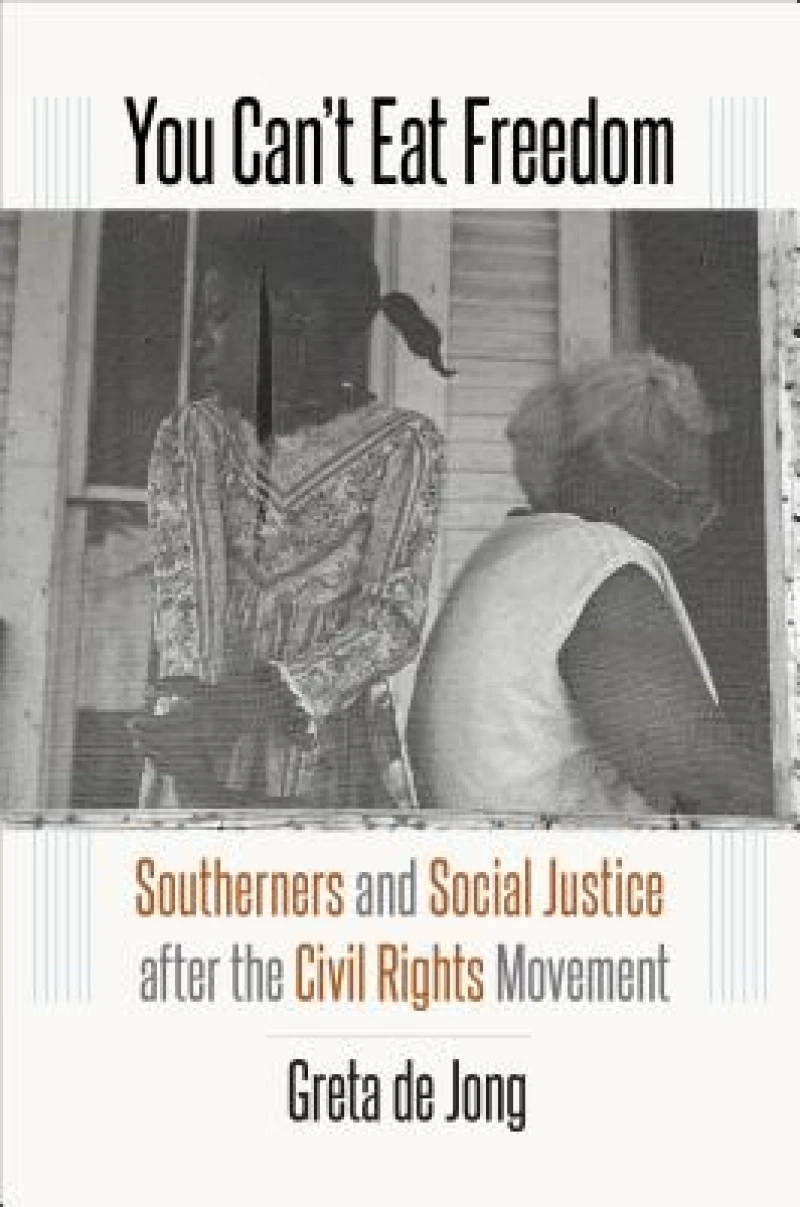
You Can''t Eat Freedom : Southerners and Social Justice After the Civil Rights Movement
Book Details
Format
Paperback / Softback
ISBN-10
1469654792
ISBN-13
9781469654799
Publisher
The University of North Carolina Press
Imprint
The University of North Carolina Press
Country of Manufacture
US
Country of Publication
GB
Publication Date
Aug 1st, 2019
Print length
320 Pages
Weight
477 grams
Dimensions
23.30 x 15.50 x 1.80 cms
Ksh 5,600.00
Werezi Extended Catalogue
0 in stock
Delivery Location
Delivery fee: Select location
Secure
Quality
Fast
Making clear the relationship between the civil rights movement and the War on Poverty, this history of rural organising shows how responses to labor displacement in the South shaped the experiences of other Americans who were affected by mass layoffs in the late twentieth century, shedding light on a debate that continues to reverberate today.
Two revolutions roiled the rural South after the mid-1960s: the political revolution wrought by the passage of civil rights legislation, and the ongoing economic revolution brought about by increasing agricultural mechanization. Political empowerment for black southerners coincided with the transformation of southern agriculture and the displacement of thousands of former sharecroppers from the land. Focusing on the plantation regions of Alabama, Louisiana, and Mississippi, Greta de Jong analyzes how social justice activists responded to mass unemployment by lobbying political leaders, initiating antipoverty projects, and forming cooperative enterprises that fostered economic and political autonomy, efforts that encountered strong opposition from free market proponents who opposed government action to solve the crisis.
Making clear the relationship between the civil rights movement and the War on Poverty, this history of rural organizing shows how responses to labor displacement in the South shaped the experiences of other Americans who were affected by mass layoffs in the late twentieth century, shedding light on a debate that continues to reverberate today.
Making clear the relationship between the civil rights movement and the War on Poverty, this history of rural organizing shows how responses to labor displacement in the South shaped the experiences of other Americans who were affected by mass layoffs in the late twentieth century, shedding light on a debate that continues to reverberate today.
Get You Can''t Eat Freedom by at the best price and quality guaranteed only at Werezi Africa's largest book ecommerce store. The book was published by The University of North Carolina Press and it has pages.

