
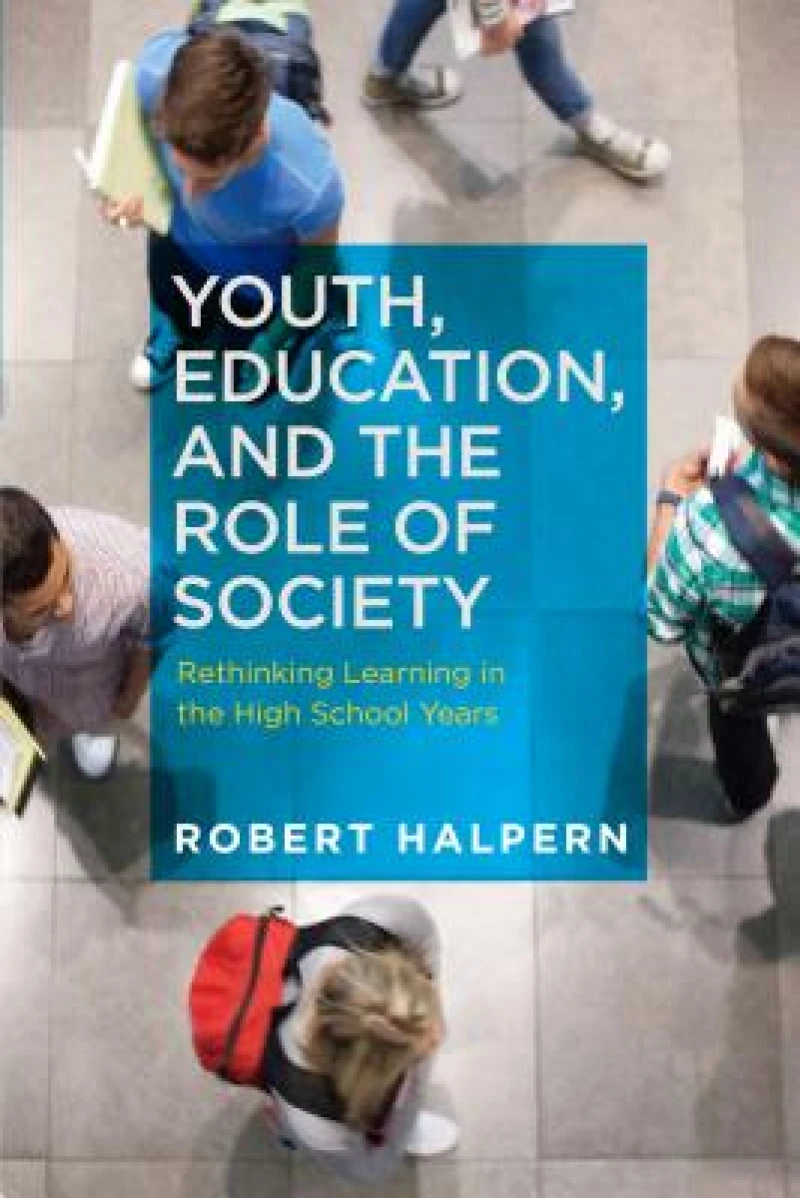
Youth, Education and the Role of Society : Rethinking Learning in the High School Years
Book Details
Format
Paperback / Softback
Book Series
Work and Learning Series
ISBN-10
1612505368
ISBN-13
9781612505367
Publisher
Harvard Educational Publishing Group
Imprint
Harvard Educational Publishing Group
Country of Manufacture
US
Country of Publication
GB
Publication Date
Apr 30th, 2013
Print length
264 Pages
Weight
360 grams
Dimensions
22.80 x 15.10 x 1.40 cms
Product Classification:
Philosophy & theory of educationPhilosophy and theory of educationSecondary schools
Ksh 4,850.00
Temporarily out of stock, due soon
0 in stock
Delivery Location
Delivery fee: Select location
Secure
Quality
Fast
Examines the “learning landscape” currently available to American adolescents, arguing that we need to expand, enrich, and diversify the learning opportunities available to young people today. Central to the book is Robert Halpern’s view that we depend too exclusively on schools to meet the full range of young people’s developmental needs.
Youth, Education, and the Role of Society examines the “learning landscape” currently available to American adolescents, arguing that we need to expand, enrich, and diversify the learning opportunities available to young people today.
Central to the book is Robert Halpern’s view that we depend too exclusively on schools to meet the full range of young people’s developmental needs. “High school learning as typically structured is just too fragmented, isolated, and abstract to meet young people’s developmental needs,” he argues. “It relies too much on century-old curriculum and pedagogy, and is too oriented, in an unreflective way, toward preparing young people for four-year college.”
As Halpern notes, school leaders are already aware of the limitations posed by traditional high schools and are aiming for reformed school institutions and curricula. However, he contends that “better meeting young people’s learning and developmental needs will require far more than a reconceptualised high school experience. It will mean a fundamentally different understanding of where learning can take place and the wholehearted participation of a variety of institutions and sectors of society.”
The book’s initial chapters explore the nature of productive learning experiences for adolescents. The volume then looks at how various institutions—including schools, after-schools, businesses, and nonprofit and civic organisations—can make unique and indispensable contributions to those crucial learning experiences. Halpern also considers how other countries “structure learning” during these formative years, and he concludes with an exploration of the social and cultural challenges ahead—challenges we must meet, he argues, if we are to enlist and sustain the necessary participation of institutions and adults in an expanded and enriched program for preparing young people for adult life and success.
A bold and wide-ranging effort to examine—and reimagine—learning and youth development, this book promises to be a major contribution to the literature on adolescent education.
Central to the book is Robert Halpern’s view that we depend too exclusively on schools to meet the full range of young people’s developmental needs. “High school learning as typically structured is just too fragmented, isolated, and abstract to meet young people’s developmental needs,” he argues. “It relies too much on century-old curriculum and pedagogy, and is too oriented, in an unreflective way, toward preparing young people for four-year college.”
As Halpern notes, school leaders are already aware of the limitations posed by traditional high schools and are aiming for reformed school institutions and curricula. However, he contends that “better meeting young people’s learning and developmental needs will require far more than a reconceptualised high school experience. It will mean a fundamentally different understanding of where learning can take place and the wholehearted participation of a variety of institutions and sectors of society.”
The book’s initial chapters explore the nature of productive learning experiences for adolescents. The volume then looks at how various institutions—including schools, after-schools, businesses, and nonprofit and civic organisations—can make unique and indispensable contributions to those crucial learning experiences. Halpern also considers how other countries “structure learning” during these formative years, and he concludes with an exploration of the social and cultural challenges ahead—challenges we must meet, he argues, if we are to enlist and sustain the necessary participation of institutions and adults in an expanded and enriched program for preparing young people for adult life and success.
A bold and wide-ranging effort to examine—and reimagine—learning and youth development, this book promises to be a major contribution to the literature on adolescent education.
Get Youth, Education and the Role of Society by at the best price and quality guaranteed only at Werezi Africa's largest book ecommerce store. The book was published by Harvard Educational Publishing Group and it has pages.

