

After Hedging : Hard Choices for the Indo-Pacific States Between the US and China
Book Details
Format
Hardback
Book Series
Elements in International Relations
ISBN-10
1009462695
ISBN-13
9781009462693
Publisher
Cambridge University Press
Imprint
Cambridge University Press
Country of Manufacture
GB
Country of Publication
GB
Publication Date
Oct 5th, 2023
Print length
74 Pages
Weight
264 grams
Dimensions
15.90 x 23.70 x 1.20 cms
Product Classification:
International relations
KSh 10,050.00
Currently unavailable
0 in stock
Delivery Location
Delivery fee: Select location
Secure
Quality
Fast
This Element introduces a preference-for-change model to explain the policy variations of states during the order transition. It suggests that policymakers will perceive a potential change in the international order through a cost-benefit prism.This title is also available as Open Access on Cambridge Core.
The strategic rivalry between the United States and China has heightened since COVID-19. Secondary states face increasing difficulties maintaining a 'hedging' strategy between the United States and China. This Element introduces a preference-for-change model to explain the policy variations of states during the order transition. It suggests that policymakers will perceive a potential change in the international order through a cost–benefit prism. The interplays between the perceived costs and the perception of benefits from the order transition will shape states' policy choices among four strategic options: (1) hedging to bet on uncertainties; (2) bandwagoning with rising powers to support changes; (3) balancing against rising powers to resist changes; and (4) buck-passing to ignore changes. Four case studies (Australia, New Zealand, Singapore, and Thailand) are conducted to explore the policy choices of regional powers during the international order transition. This title is also available as Open Access on Cambridge Core.
Get After Hedging by Huiyun Feng, Kai He at the best price and quality guaranteed only at Werezi Africa's largest book ecommerce store. The book was published by Cambridge University Press and it has 74 pages.
Customers Who Bought This Also Bought

Black Wave
KSh 2,700.00

Siege
KSh 2,000.00

Extractive Capitalism
KSh 2,150.00
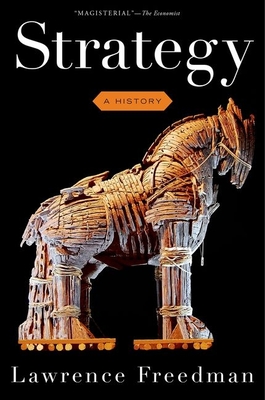
Strategy
KSh 4,350.00

Fourth Industrial Revolution
KSh 2,700.00

On China
KSh 3,400.00
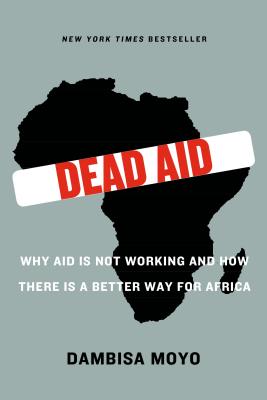
Dead Aid
KSh 3,400.00
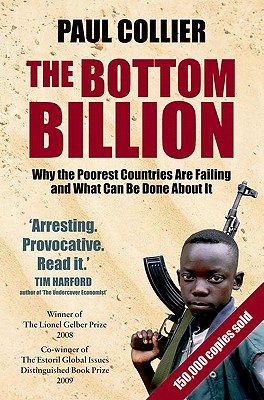
The Bottom Billion
KSh 2,500.00

Leadership
KSh 2,700.00
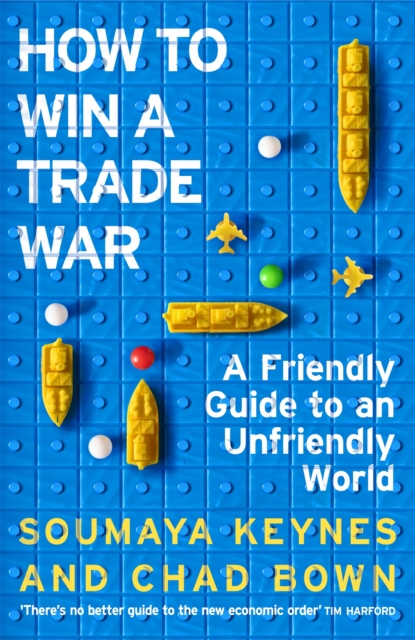
How to Win a Trade War
KSh 3,050.00

Understanding Global Conflict and Cooperation: An Introduction to Theory and History
KSh 14,000.00
Nuclear Age
KSh 5,400.00
More by Huiyun Feng, Kai He
China''s Crisis Behavior
KSh 6,100.00
China''s Crisis Behavior
KSh 17,800.00
Contesting Revisionism
KSh 18,050.00

The Upside of Us-chinese Strategic Competition
KSh 4,950.00
Chinese Strategic Culture and Foreign Policy Decision-Making
KSh 9,200.00
Chinese Strategic Culture and Foreign Policy Decision-Making
KSh 30,950.00

The Upside of Us-chinese Strategic Competition
KSh 15,300.00

Institutional Balancing in the Asia Pacific
KSh 8,800.00
Prospect Theory and Foreign Policy Analysis in the Asia Pacific
KSh 30,950.00
How China Sees the World
KSh 4,500.00
Institutional Balancing in the Asia Pacific
KSh 30,950.00
Prospect Theory and Foreign Policy Analysis in the Asia Pacific
KSh 9,200.00
