
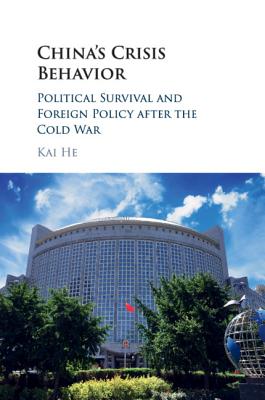
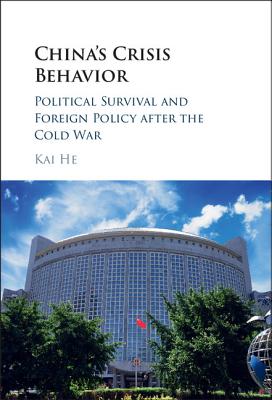
China''s Crisis Behavior : Political Survival and Foreign Policy after the Cold War
by
Kai He
Book Details
Format
Paperback / softback
ISBN-10
1316506789
ISBN-13
9781316506783
Publisher
Cambridge University Press
Imprint
Cambridge University Press
Country of Manufacture
GB
Country of Publication
GB
Publication Date
Mar 1st, 2018
Print length
186 Pages
Weight
294 grams
Dimensions
15.10 x 22.80 x 1.50 cms
KSh 6,100.00
Currently unavailable
0 in stock
Delivery Location
Delivery fee: Select location
Secure
Quality
Fast
Drawing from a wealth of primary sources and interviews, this book offers a systematic analysis of China's crisis behavior since the Cold War. It proposes a new framework to help identify the factors which determine whether Chinese leaders decide to escalate or scale down their response to situations of crisis.
Since the end of the Cold War, China has experienced several notable interstate crises: the 1999 'embassy bombing' incident, the 2001 EP-3 mid-air collision with a United States aircraft, and the Diaoyu/Senkaku dispute with Japan. China's response to each incident, however, has varied considerably. Drawing from a wealth of primary sources and interviews, this book offers a systematic analysis of China's crisis behavior in order to identify the factors which determine when Chinese leaders decide to escalate or scale down their response to crises. Inspired by prospect theory - a Nobel Prize-winning behavioral psychology theory - Kai He proposes a 'political survival prospect' model as a means to understand the disparities in China's behavior. He argues that China's response depends on a combination of three factors that shape leaders' views on the prospects for their 'political survival status', including the severity of the crisis, leaders' domestic authority, and international pressure.
Get China''s Crisis Behavior by Kai He at the best price and quality guaranteed only at Werezi Africa's largest book ecommerce store. The book was published by Cambridge University Press and it has 186 pages.
Customers Who Bought This Also Bought
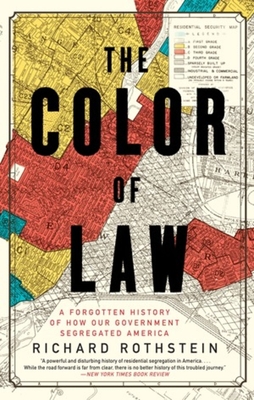
The Color of Law – A Forgotten History of How Our Government Segregated America
KSh 2,550.00

Prince
KSh 1,100.00

The Prince
KSh 1,800.00

Prince
KSh 3,050.00

January 6 and the Politics of History
KSh 4,650.00

Republic
KSh 2,900.00
Seeing Like a State – How Certain Schemes to Improve the Human Condition Have Failed
KSh 3,550.00
Narrow Corridor
KSh 2,350.00

Abundance
KSh 3,400.00

On the Social Contract
KSh 2,350.00
The Social Contract
KSh 2,000.00
The Athenian Constitution
KSh 2,000.00
More by Kai He
China''s Crisis Behavior
KSh 17,800.00

After Hedging
KSh 10,050.00
Contesting Revisionism
KSh 18,050.00

The Upside of Us-chinese Strategic Competition
KSh 4,950.00

The Upside of Us-chinese Strategic Competition
KSh 15,300.00

Institutional Balancing in the Asia Pacific
KSh 8,800.00
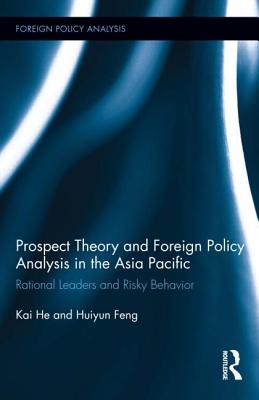
Prospect Theory and Foreign Policy Analysis in the Asia Pacific
KSh 30,950.00
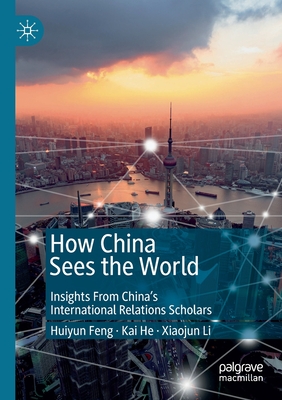
How China Sees the World
KSh 4,500.00
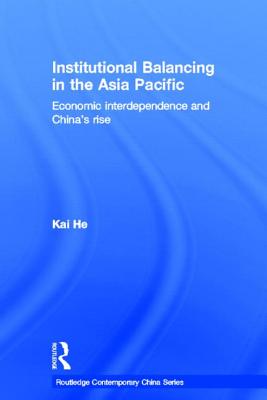
Institutional Balancing in the Asia Pacific
KSh 30,950.00
Prospect Theory and Foreign Policy Analysis in the Asia Pacific
KSh 9,200.00

After Hedging
KSh 3,250.00