
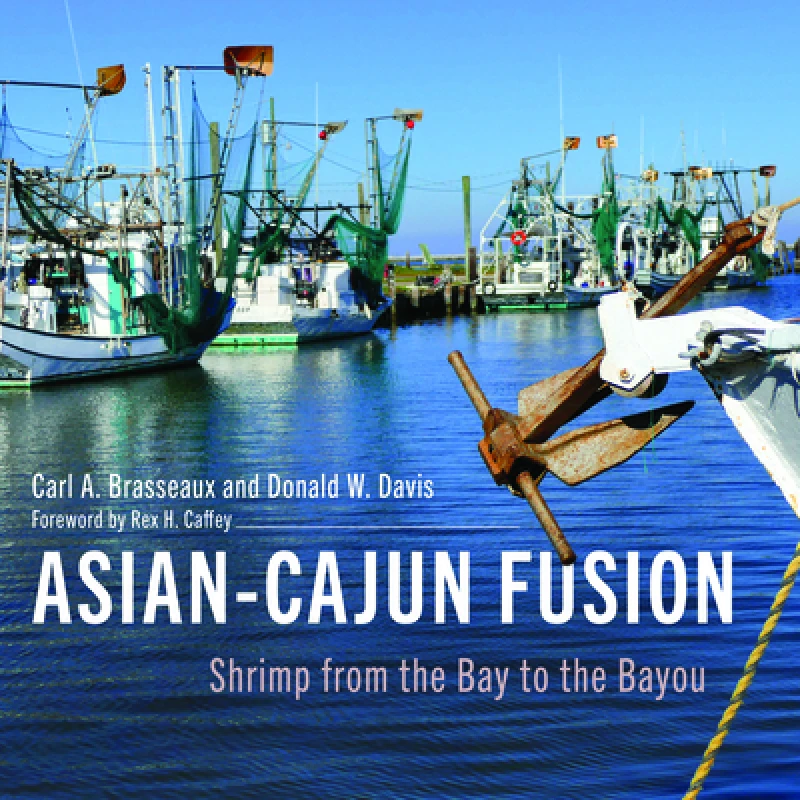
Asian-Cajun Fusion : Shrimp from the Bay to the Bayou
Book Details
Format
Hardback or Cased Book
Book Series
America's Third Coast Series
ISBN-10
149683822X
ISBN-13
9781496838223
Publisher
University Press of Mississippi
Imprint
University Press of Mississippi
Country of Manufacture
GB
Country of Publication
GB
Publication Date
Mar 30th, 2022
Print length
277 Pages
Weight
973 grams
Dimensions
28.10 x 25.90 x 3.30 cms
Ksh 5,700.00
Werezi Extended Catalogue
0 in stock
Delivery Location
Delivery fee: Select location
Secure
Quality
Fast
Shrimp is easily America’s favourite seafood, but its very popularity is the wellspring of problems that threaten the shrimp industry’s existence. Asian-Cajun Fusion provides insightful analysis of this paradox and a detailed, thorough history of the industry in Louisiana.
Shrimp is easily America’s favorite seafood, but its very popularity is the wellspring of problems that threaten the shrimp industry’s existence. Asian-Cajun Fusion: Shrimp from the Bay to the Bayou provides insightful analysis of this paradox and a detailed, thorough history of the industry in Louisiana.
Dried shrimp technology was part of the cultural heritage Pearl River Chinese immigrants introduced into the Americas in the mid-nineteenth century. As early as 1870, Chinese natives built shrimp-drying operations in Louisiana’s wetlands and exported the product to Asia through the port of San Francisco. This trade internationalized the shrimp industry. About three years before Louisiana’s Chinese community began their export endeavors, manufactured ice became available in New Orleans, and the Dunbar family introduced patented canning technology. The convergence of these ancient and modern technologies shaped the evolution of the northern Gulf Coast’s shrimp industry to the present.
Coastal Louisiana’s historic connection to the Pacific Rim endures. Not only does the region continue to export dried shrimp to Asian markets domestically and internationally, but since 2000 the region’s large Vietnamese immigrant population has increasingly dominated Louisiana’s fresh shrimp harvest. Louisiana shrimp constitute the American gold standard of raw seafood excellence. Yet, in the second decade of the twenty-first century, cheap imports are forcing the nation’s domestic shrimp industry to rediscover its economic roots. "Fresh off the boat" signs and real-time internet connections with active trawlers are reestablishing the industry’s ties to local consumers. Direct marketing has opened the industry to middle-class customers who meet the boats at the docks. This "right off the boat" paradigm appears to be leading the way to reestablishment of sustainable aquatic resources. All-one-can-eat shrimp buffets are not going to disappear, but the Louisiana shrimp industry’s fate will ultimately be determined by discerning consumers’ palates.
Dried shrimp technology was part of the cultural heritage Pearl River Chinese immigrants introduced into the Americas in the mid-nineteenth century. As early as 1870, Chinese natives built shrimp-drying operations in Louisiana’s wetlands and exported the product to Asia through the port of San Francisco. This trade internationalized the shrimp industry. About three years before Louisiana’s Chinese community began their export endeavors, manufactured ice became available in New Orleans, and the Dunbar family introduced patented canning technology. The convergence of these ancient and modern technologies shaped the evolution of the northern Gulf Coast’s shrimp industry to the present.
Coastal Louisiana’s historic connection to the Pacific Rim endures. Not only does the region continue to export dried shrimp to Asian markets domestically and internationally, but since 2000 the region’s large Vietnamese immigrant population has increasingly dominated Louisiana’s fresh shrimp harvest. Louisiana shrimp constitute the American gold standard of raw seafood excellence. Yet, in the second decade of the twenty-first century, cheap imports are forcing the nation’s domestic shrimp industry to rediscover its economic roots. "Fresh off the boat" signs and real-time internet connections with active trawlers are reestablishing the industry’s ties to local consumers. Direct marketing has opened the industry to middle-class customers who meet the boats at the docks. This "right off the boat" paradigm appears to be leading the way to reestablishment of sustainable aquatic resources. All-one-can-eat shrimp buffets are not going to disappear, but the Louisiana shrimp industry’s fate will ultimately be determined by discerning consumers’ palates.
Get Asian-Cajun Fusion by at the best price and quality guaranteed only at Werezi Africa's largest book ecommerce store. The book was published by University Press of Mississippi and it has pages.

