
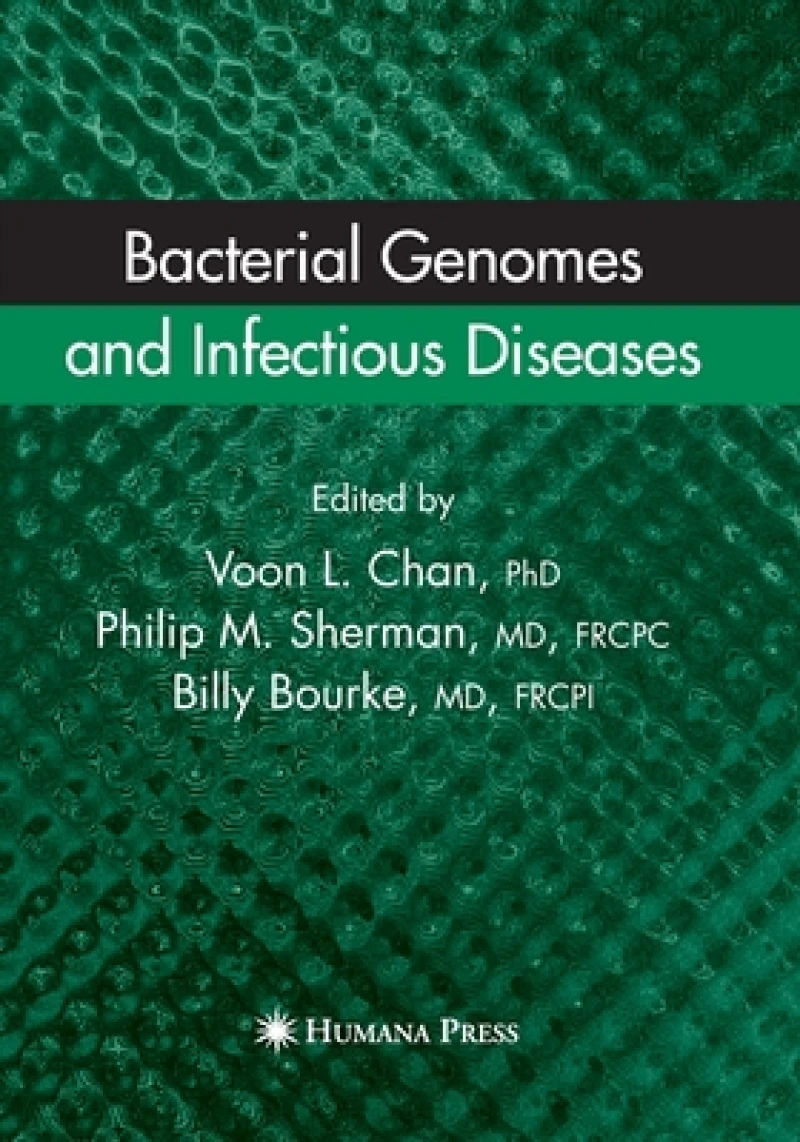
Bacterial Genomes and Infectious Diseases
Softcover Reprint of the Original 1st 2006 ed.
Book Details
Format
Paperback / Softback
ISBN-10
1493961098
ISBN-13
9781493961092
Edition
Softcover Reprint of the Original 1st 2006 ed.
Publisher
Humana Press Inc.
Imprint
Humana Press Inc.
Country of Manufacture
US
Country of Publication
GB
Publication Date
Aug 23rd, 2016
Print length
270 Pages
Ksh 18,000.00
Werezi Extended Catalogue
0 in stock
Delivery Location
Delivery fee: Select location
Secure
Quality
Fast
The first bacterial genome, Haemophilus influenzae, was completely sequenced, annotated, and published in 1995. Today, more than 200 prokaryotic (archaeal and bacterial) genomes have been completed and over 500 prokaryotic genomes are in va- ous stages of completion. Seventeen eukaryotic genomes plus four eukaryotic chro- somes have been completed. The concept of achieving better understanding of an organism through knowledge of the complete genomic sequence was first demonstrated in 1978 when the first bacteriophage genome, X174, was sequenced. Complete genomic sequences of prokaryotes have led to a better understanding of the biology and evolution of the microbes, and, for pathogens, facilitated identification of new vaccine candidates, putative virulence genes, targets for antibiotics, new strategy for rapid diagnosis, and investigation of bacteria–host interactions and disease mec- nisms. Recent increased interest in microbial pathogens and infectious diseases is largely attributed to the re-emergence of infectious diseases like tuberculosis, emergence of new infectious diseases like AIDS and severe acute respiratory syndrome, the problem of an increasing rate of emergence of antibiotic-resistant variants of pathogens, and the fear of bioterrorism. Microbes are highly diverse and abundant in the biosphere. Less than 1% of these morphologically identified microbes can be cultured in vitro using standard techniques and conditions. With such abundance of microbes in nature, we can expect to see new variants and new species evolve and a small number will emerge as pathogens to humans.
The first bacterial genome, Haemophilus influenzae, was completely sequenced, annotated, and published in 1995. Today, more than 200 prokaryotic (archaeal and bacterial) genomes have been completed and over 500 prokaryotic genomes are in va- ous stages of completion. Seventeen eukaryotic genomes plus four eukaryotic chro- somes have been completed. The concept of achieving better understanding of an organism through knowledge of the complete genomic sequence was first demonstrated in 1978 when the first bacteriophage genome, X174, was sequenced. Complete genomic sequences of prokaryotes have led to a better understanding of the biology and evolution of the microbes, and, for pathogens, facilitated identification of new vaccine candidates, putative virulence genes, targets for antibiotics, new strategy for rapid diagnosis, and investigation of bacteria-host interactions and disease mec- nisms. Recent increased interest in microbial pathogens and infectious diseases is largely attributed to the re-emergence of infectious diseases like tuberculosis, emergence of new infectious diseases like AIDS and severe acute respiratory syndrome, the problem of an increasing rate of emergence of antibiotic-resistant variants of pathogens, and the fear of bioterrorism. Microbes are highly diverse and abundant in the biosphere. Less than 1% of these morphologically identified microbes can be cultured in vitro using standard techniques and conditions. With such abundance of microbes in nature, we can expect to see new variants and new species evolve and a small number will emerge as pathogens to humans.
Get Bacterial Genomes and Infectious Diseases by at the best price and quality guaranteed only at Werezi Africa's largest book ecommerce store. The book was published by Humana Press Inc. and it has pages.

