
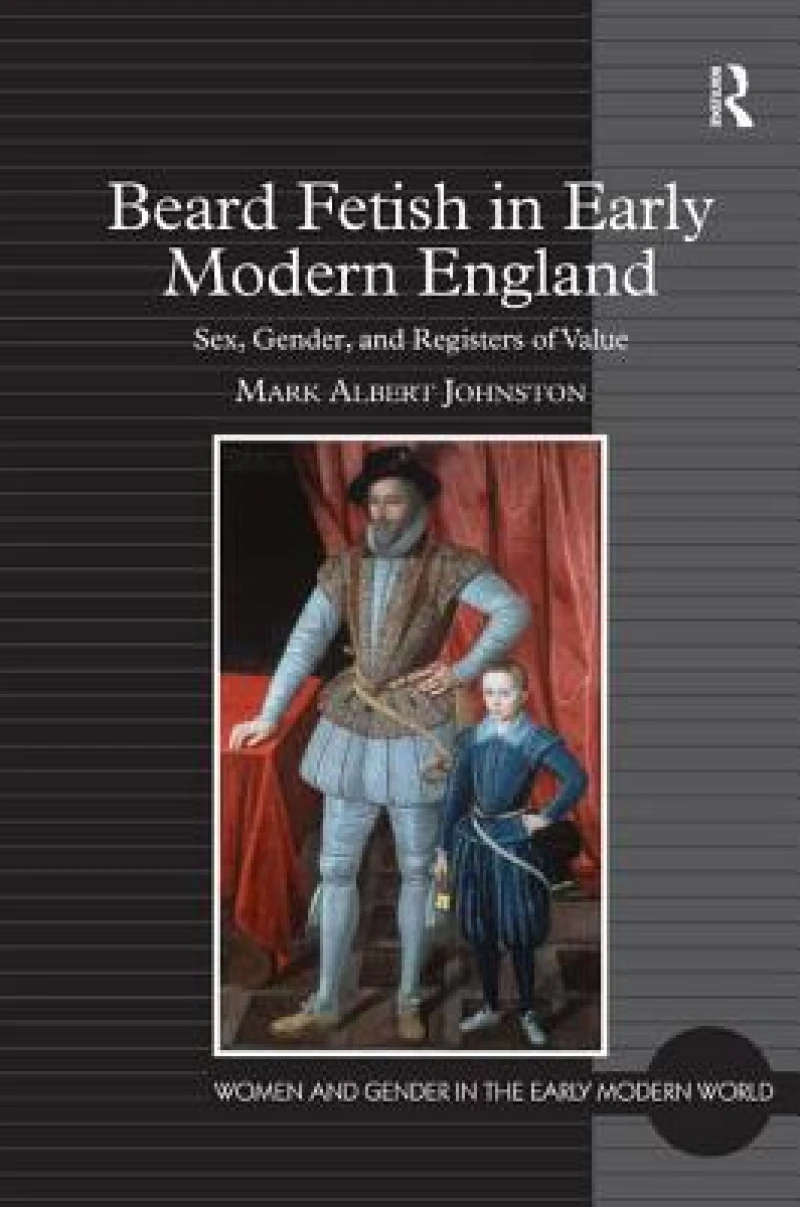
Beard Fetish in Early Modern England : Sex, Gender, and Registers of Value
Book Details
Format
Hardback or Cased Book
ISBN-10
1409405427
ISBN-13
9781409405429
Publisher
Taylor & Francis Ltd
Imprint
Routledge
Country of Manufacture
GB
Country of Publication
GB
Publication Date
Sep 28th, 2011
Print length
312 Pages
Weight
566 grams
Product Classification:
Social & cultural historyGender studies, gender groups
Ksh 30,950.00
Re-Printing
0 in stock
Delivery Location
Delivery fee: Select location
Secure
Quality
Fast
By attending to the multiple values signalled by beards in early modern England, this title elucidates how fetish objects are the vehicles through which phenomena forms and informs ideological systems of power. It provides detailed discussions of not only male beards but also beardless boys, female beards, and half-bearded hermaprodites.
Focusing on representations of beards in English Renaissance culture, this study elucidates how fetish objects validate ideological systems of power by materializing complex value in multiple registers. Providing detailed discussions of not only bearded men but also beardless boys, bearded women, and half-bearded hermaphrodites, author Mark Albert Johnston argues that attending closely to early modern English culture''s treatment of the beard as a fetish object ultimately exposes the contingency of categories like sex, gender, age, race, and sexuality. Johnston mines a diverse cross-section of contemporary discourses -- adult and children’s drama, narrative verse and prose, popular ballads, epigrams and proverbs, historical accounts, pamphlet literature, diaries, letters, wills, court records and legal documents, medical and surgical manuals, lectures, sermons, almanacs, and calendars -- in order to provide proof for his cultural claims. Johnston’s evidence invokes some of the period’s most famous voices -- William Shakespeare, Ben Jonson, John Lyly, Phillip Stubbes, John Marston, George Chapman, Thomas Dekker, Thomas Middleton, and Samuel Pepys, for example -- but Johnston also introduces us to an array of lesser-known Renaissance authors and playwrights whose works support the notion that the beard was a palimpsestic site of contested meaning at which complex and contradictory values clash and converge. Johnston’s reading of Marxist, Freudian, and anthropological theories of the fetish phenomenon acknowledges their divergent emphases -- erotic, economic, racial and religious -- while suggesting that the imbrication of diverse registers that fetish accomplishes facilitates its cultural and psychic naturalizing function.
Get Beard Fetish in Early Modern England by at the best price and quality guaranteed only at Werezi Africa's largest book ecommerce store. The book was published by Taylor & Francis Ltd and it has pages.

