
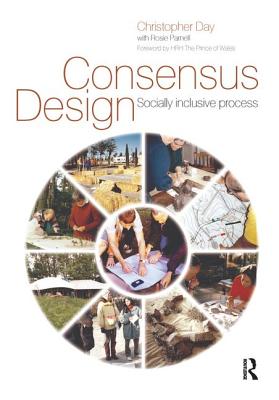
Consensus Design
Book Details
Format
Hardback
ISBN-10
1138151866
ISBN-13
9781138151864
Publisher
Taylor & Francis Ltd
Imprint
Routledge
Country of Manufacture
GB
Country of Publication
GB
Publication Date
Sep 1st, 2016
Print length
240 Pages
Weight
498 grams
KSh 32,700.00
Currently unavailable
0 in stock
Delivery Location
Delivery fee: Select location
Secure
Quality
Fast
Consensus Design offers a practical step by step guide to co-design; an increasingly important consideration for architects as they compete for work.
The text moves from identifying the methodology of the process to developing a series of principles and practical steps which illustrate how consensus design can be established.
For easy reference, flow charts show the process of achieving consensus design and include variations for different types of project and different groups of people. It gives clear timings so that agreements can be reached within a specific time frame, and also features a number of case studies to illustrate consensus design principles in practice. Case studies include projects in the UK, US, and Sweden.
Consensus design isn''t just a utopian ideal. It''s the only meaningful way in which people can be involved in shaping where they live and work. It can have an influence on social stability, crime-reduction, personal health and building longevity, all of which in turn have monetary and environmental cost implications. Its consideration can also greatly help architects win work and commissions.
Day argues that when places are designed by professionals for people, many things obvious to the residents are overlooked. When they are designed by lay people, the design can suffer from the lowest common denominator factor. When places are designed by both it tends to end up in conflict. However, Consensus Design shows that co-design is not doomed to either conflict or banality if it is managed correctly.
The text moves from identifying the methodology of the process to developing a series of principles and practical steps which illustrate how consensus design can be established.
For easy reference, flow charts show the process of achieving consensus design and include variations for different types of project and different groups of people. It gives clear timings so that agreements can be reached within a specific time frame, and also features a number of case studies to illustrate consensus design principles in practice. Case studies include projects in the UK, US, and Sweden.
Consensus design isn''t just a utopian ideal. It''s the only meaningful way in which people can be involved in shaping where they live and work. It can have an influence on social stability, crime-reduction, personal health and building longevity, all of which in turn have monetary and environmental cost implications. Its consideration can also greatly help architects win work and commissions.
Day argues that when places are designed by professionals for people, many things obvious to the residents are overlooked. When they are designed by lay people, the design can suffer from the lowest common denominator factor. When places are designed by both it tends to end up in conflict. However, Consensus Design shows that co-design is not doomed to either conflict or banality if it is managed correctly.
Get Consensus Design by Christopher Day, Rosie Parnell at the best price and quality guaranteed only at Werezi Africa's largest book ecommerce store. The book was published by Taylor & Francis Ltd and it has 240 pages.
Customers Who Bought This Also Bought

Sink or Swim
KSh 3,400.00
Soft City
KSh 5,750.00

Warren H. Manning
KSh 9,050.00

Smart Sustainability
KSh 9,350.00

Smart Sustainability
KSh 30,950.00

The Nature of a House
KSh 4,150.00

Transition Towards a Carbon Free Future
KSh 23,400.00

Carbon Management in the Built Environment
KSh 10,100.00
Green Buildings and Sustainable Engineering
KSh 32,400.00

Sustainable Ecological Engineering Design
KSh 23,400.00

Sustainable Practices and Innovations in Civil Engineering
KSh 36,000.00

Heat Pump Controls to Exploit the Energy Flexibility of Building Thermal Loads
KSh 23,400.00
More by Christopher Day, Rosie Parnell

Built Environment Education for Children and Youth
KSh 7,300.00

Effective Leadership for School Improvement
KSh 11,850.00

Built Environment Education for Children and Youth
KSh 30,950.00

Teachers'' Worlds and Work
KSh 7,550.00

A Passion for Teaching
KSh 9,000.00

Consensus Design
KSh 8,800.00

The Fates of African Rebels
KSh 5,950.00

Insights Into Teachers'' Thinking And Practice
KSh 11,150.00
Environment and Children
KSh 33,100.00

Teachers'' Worlds and Work
KSh 30,950.00

Resilient Teachers, Resilient Schools
KSh 30,950.00

Spatial Design with Children
KSh 19,800.00
