
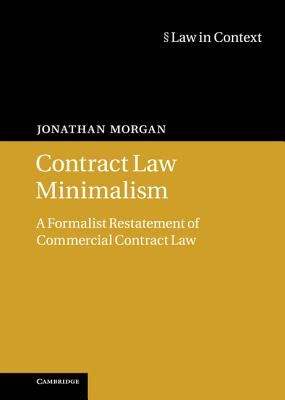
Contract Law Minimalism : A Formalist Restatement of Commercial Contract Law
Book Details
Format
Hardback
Book Series
Law in Context
ISBN-10
1107021073
ISBN-13
9781107021075
Publisher
Cambridge University Press
Imprint
Cambridge University Press
Country of Manufacture
GB
Country of Publication
GB
Publication Date
Nov 7th, 2013
Print length
314 Pages
Weight
718 grams
Dimensions
25.00 x 18.10 x 2.30 cms
Product Classification:
Contract law
KSh 19,600.00
Currently unavailable
0 in stock
Delivery Location
Delivery fee: Select location
Secure
Quality
Fast
How can contract law best provide the framework for commercial exchange? This book contends that a minimalistic regime of strict rules is optimal. The author engages fully with the important arguments of relational contract theory and law and economics, but concludes that courts should not assume an active regulatory role.
Commercial contract law is in every sense optional given the choice between legal systems and law and arbitration. Its 'doctrines' are in fact virtually all default rules. Contract Law Minimalism advances the thesis that commercial parties prefer a minimalist law that sets out to enforce what they have decided - but does nothing else. The limited capacity of the legal process is the key to this 'minimalist' stance. This book considers evidence that such minimalism is indeed what commercial parties choose to govern their transactions. It critically engages with alternative schools of thought, that call for active regulation of contracts to promote either economic efficiency or the trust and co-operation necessary for 'relational contracting'. The book also necessarily argues against the view that private law should be understood non-instrumentally (whether through promissory morality, corrective justice, taxonomic rationality, or otherwise). It sketches a restatement of English contract law in line with the thesis.
Get Contract Law Minimalism by Jonathan Morgan at the best price and quality guaranteed only at Werezi Africa's largest book ecommerce store. The book was published by Cambridge University Press and it has 314 pages.
Customers Who Bought This Also Bought

The Law of Reinsurance
KSh 32,550.00

The Enforceability of Promises in European Contract Law
KSh 26,450.00
Media and Business Contracts Handbook
KSh 45,000.00

Mitigation in the Law of Damages
KSh 20,050.00
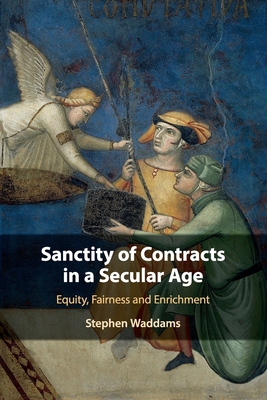
Sanctity of Contracts in a Secular Age
KSh 6,200.00
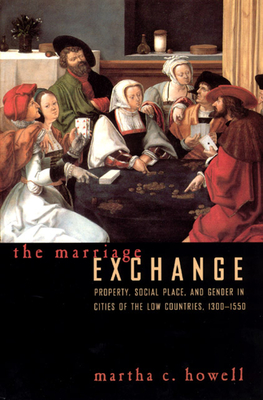
The Marriage Exchange – Property, Social Place, and Gender in Cities of the Low Countries, 1300–1550
KSh 14,600.00

Law, Animals and Toxicity Testing
KSh 8,650.00

Unlocking Torts
KSh 7,550.00

Drafting Agreements in Life Sciences
KSh 89,100.00

Understanding Private Law
KSh 10,100.00

Fundamentals of Indian Contract Law
KSh 5,100.00

Applied Real Estate Law and Practice
KSh 18,700.00


More in This Genre
The Law of Reinsurance
KSh 32,550.00
The Enforceability of Promises in European Contract Law
KSh 26,450.00
Media and Business Contracts Handbook
KSh 45,000.00
Mitigation in the Law of Damages
KSh 20,050.00
Sanctity of Contracts in a Secular Age
KSh 6,200.00
The Marriage Exchange – Property, Social Place, and Gender in Cities of the Low Countries, 1300–1550
KSh 14,600.00
